 SmartHub
 Automation
 Appointment Scheduler
 Lead Management
 Dashboard & Reports
 Task Management
 Communications Hub
 Managed chat
 Voice Receptionist
 Appointment scheduling
 Retainer signing
 Home services
 Lawyers and firms
 Medical services
 College admissions
 Real estate agents
 Marketing agencies
 About
About Partner program
 Estimate Your ROI
 Case Studies
 Blog
Blog FAQs
FAQs Login
LoginWhat Top Teams Automate Before Summer (And What They Never Should)




Products
Industries
Company
Resources

Every summer, businesses tell themselves the same story.
Things will slow down.
Decision-makers will go on vacation. Response times will stretch. Teams will become leaner as employees take time off. Pipelines will soften temporarily before momentum returns in the final quarter.
But for many high-performing sales teams today, summer no longer means slowing down.
It means tightening operations before the pressure hits.
The smartest companies are not entering summer hoping their systems hold together. They are entering it with intentional automation already in place. Not because they want to replace people, but because they understand something many businesses still struggle to accept:
Manual processes break first during busy or fragmented seasons.
Leads get forgotten. Follow-ups slip. Response times stretch longer than they should. Internal coordination weakens. Customers feel the inconsistency almost immediately.
And in an economy where buyers expect fast, personalized communication, inconsistency quietly becomes expensive.
This is exactly why conversations around sales automation tools have become so urgent over the last few years. But somewhere along the way, the conversation became distorted.
Automation was positioned as a replacement for human interaction instead of a support system for it.
The result? Businesses rushed into over-automation, flooding inboxes with robotic sequences, generic AI-generated responses, and lifeless customer journeys that technically functioned but emotionally failed.
Now the pendulum is swinging back.
The best teams today are not asking, “How much can we automate?”
They are asking, “What deserves automation, and what should always stay human?”
That distinction is becoming one of the most important competitive advantages in modern sales.
Top-performing sales teams automate repetitive workflows like lead routing, scheduling, CRM updates, and reminders before summer begins. However, they keep negotiations, customer trust-building, and emotionally sensitive interactions human-led.
Key Takeaways
Automation should support relationships, not replace them
Summer exposes operational weaknesses
Top teams automate repetitive sales tasks
Human interaction remains critical for trust and conversions
AI sales automation works best when paired with empathy
There is a reason experienced operators prepare heavily before summer quarters begin.
Summer magnifies inefficiencies.
A delayed response that might seem manageable during slower internal periods becomes far more damaging when teams are operating with reduced bandwidth. Sales reps taking leave means fewer people managing the same volume of conversations. Customer patience shortens because everyone else is competing for attention simultaneously.
Businesses relying entirely on manual systems begin feeling operational strain almost immediately.
One real estate company discovered this the hard way during a peak summer buying season. Their agents handled inquiries manually through calls, emails, and WhatsApp messages without centralized automation workflows. When multiple team members went on leave simultaneously, lead response times nearly tripled within two weeks.
The problem was not marketing.
Lead volume remained healthy.
The issue was operational dependency on humans for repetitive administrative work.
By the time leadership realized the scale of missed opportunities, several high-value buyers had already moved to competitors who responded faster and more consistently.
This is where AI sales automation begins proving its value when implemented intelligently.
Not by replacing conversations.
By protecting them.

One of the biggest misconceptions around automation is that it exists to eliminate human involvement entirely.
In reality, the strongest automation systems are designed to preserve human energy for moments that actually matter.
Top-performing sales teams automate repetitive, predictable workflows because those tasks drain time without strengthening relationships.
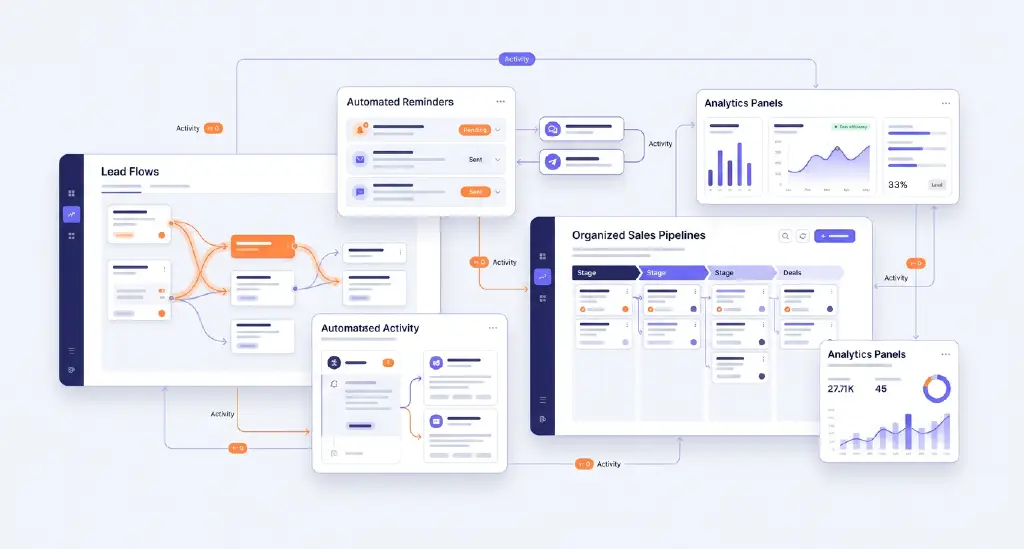
Lead routing is automated so inquiries instantly reach the correct representative. Scheduling coordination helps eliminate endless back-and-forth emails. Meanwhile, reminders, follow-up nudges, CRM updates, and pipeline tracking are handled automatically because these tasks depend more on consistency than emotional intelligence.
But they intentionally keep critical relationship moments human.
That distinction matters enormously.
A software company scaling rapidly across multiple markets learned this balance after initially over-automating its outbound communication. Their AI-generated follow-up sequences were technically efficient but emotionally flat. Prospects began disengaging because every interaction felt templated.
The leadership team noticed something interesting when analyzing performance.
Scheduling emails performed extremely well when automated. Meanwhile, meeting reminders significantly reduced no-shows. Lead qualification workflows also improved efficiency by streamlining repetitive evaluation tasks.
But the highest-converting deals still relied heavily on authentic, personalized conversations led by experienced reps.
The breakthrough came when they stopped viewing automation as a replacement for people and started using it as protection against operational chaos.
That subtle mindset shift changed everything.
Also read: Summer Surge Ready: Can Your Team Handle More Leads Without Dropping Quality?
The best way to answer this question is surprisingly simple.
If a task requires consistency more than empathy, automation likely improves it.
If a task requires trust, emotional nuance, or strategic judgment, humans still outperform machines dramatically.
This is why top teams automate workflows that create friction but preserve human involvement in moments requiring persuasion, reassurance, or relationship-building.
Lead capture is one of the clearest examples. Businesses today receive inquiries from websites, ads, social platforms, emails, and messaging apps simultaneously. Without automation, leads easily disappear into fragmented systems.
Modern sales workflow automation ensures inquiries are instantly organized, tagged, prioritized, and routed appropriately before delays begin affecting conversion rates.
Similarly, follow-up reminders are ideal for automation because consistency matters more than creativity. Sales reps should not waste mental energy remembering whether someone received a proposal three days ago.
The system should remember.
Calendar coordination is another massive operational drain that top teams automate aggressively. Endless scheduling emails consume valuable time while adding no real customer value. Automated booking systems solve this friction instantly.
CRM updates represent another invisible productivity killer. Many sales reps still spend hours manually entering notes, updating statuses, and tracking conversations. Automation removes this burden while improving data accuracy simultaneously.
But the best teams stop short of automating emotionally sensitive interactions.
Negotiations remain human.
Handling objections remains human.
Strategic upselling remains human.
Difficult customer conversations remain deeply human.
Because buyers can instantly recognize when empathy becomes artificial.
While automation improves efficiency, some parts of the sales process still require empathy, trust, and human judgment. The strongest sales teams automate repetitive workflows while keeping high-value customer interactions personal.

Customers today are more technologically aware than ever before.
They know when they are speaking to automation.
And contrary to popular belief, they do not necessarily hate automation itself.
What they hate is emotional dishonesty.
People become frustrated when businesses pretend obviously automated experiences are somehow deeply personal. Generic “checking in” emails written by AI but disguised as authentic outreach create emotional distance rather than connection.
Buyers today crave efficiency, but they still value sincerity.
One e-commerce brand learned this painfully after implementing fully automated customer service responses during a high-growth phase. On paper, efficiency improved dramatically. Average response times fell. Ticket volumes became manageable.
But customer satisfaction scores quietly declined.
Why?
Because every interaction felt emotionally empty.
Customers with genuine frustrations received polished but repetitive responses lacking context or nuance. Over time, trust weakened despite operational improvements.
Eventually, the company redesigned its automation strategy entirely.
Automation handled ticket sorting, FAQs, order tracking, and escalation workflows. Human agents handled emotionally sensitive conversations, complaints, and retention scenarios.
Customer sentiment improved almost immediately.
The lesson became clear:
Automation works best when customers feel supported by it, not trapped inside it.
Also read: From Lead Capture to Lead Confidence: How to Increase Conversion Rate with Trust
The companies outperforming competitors right now are not necessarily the most automated.
They are the most balanced.
They understand that automation is fundamentally about removing friction, not removing humanity.
This distinction becomes especially important in sales because buyers still purchase emotionally before justifying logically. Trust still drives conversion. Relationships still influence retention.
No AI tool fully replaces human intuition during complex buying decisions.
But automation absolutely strengthens the environment around those conversations.
Imagine a sales rep entering every conversation already equipped with organized customer history, automated notes, intelligent lead prioritization, and scheduled follow-ups handled automatically.
That rep becomes more present because operational clutter disappears.
The conversation improves precisely because automation handles everything surrounding it.
This is what modern sales automation tools should ultimately accomplish.
Not replacing relationships.
Protecting the time and focus required to build them properly.
One of the most overlooked advantages of automation is psychological stability inside teams.
When workflows remain manual, summer periods often create panic internally. Managers scramble to redistribute workloads while sales reps juggle follow-ups, missed calls, administrative tasks, and customer conversations simultaneously.
The result is reactive decision-making.
Automation introduces operational calm.
Tasks continue moving even when teams become temporarily stretched. Follow-ups continue. Lead routing continues. Customer inquiries remain visible. Internal systems remain stable even when staffing fluctuates.
That stability matters enormously during seasonal transitions.
One healthcare provider managing appointment inquiries across multiple channels implemented sales workflow automation before a high-demand summer period. Previously, administrative staff manually coordinated inquiries, reminders, and scheduling.
The system worked during normal months.
It collapsed during seasonal surges.
After automating appointment confirmations, reminders, lead tracking, and inquiry routing, staff could finally focus on patient interaction rather than repetitive coordination tasks.
Operational stress dropped significantly.
So did missed opportunities.
Also read: Conversational AI in Healthcare: Improving Patient Outcomes
There is currently enormous pressure across industries to “move faster with AI.”
But speed without thoughtfulness creates shallow systems.
The best businesses approaching AI sales automation today are not asking how to reduce headcount. They are asking how to amplify the effectiveness of their strongest employees.
That difference matters ethically, operationally, and strategically.
Top-performing reps often waste enormous amounts of time on low-value administrative tasks. Automation removes those burdens so human talent can focus where it matters most: conversations, strategy, persuasion, and relationship-building.
This is where automation becomes empowering rather than threatening.
It allows businesses to scale quality instead of merely scaling volume.
And customers feel the difference.
Because despite every technological advancement, people still remember how businesses make them feel.
No automation strategy changes that.
Ironically, the businesses implementing automation most successfully today often feel more personal to customers, not more robotic.
Why?
Because operational efficiency creates space for better human interaction.
Faster responses feel respectful. Organized communication feels professional. Timely follow-ups feel attentive. Seamless handoffs feel thoughtful.
Customers do not care whether systems are automated behind the scenes.
They care whether the experience feels smooth, responsive, and trustworthy.
The companies understanding this distinction are pulling ahead quickly.
Not because they automated everything.
Because they automated intentionally.

Sales automation tools help businesses automate repetitive sales tasks like lead routing, follow-ups, CRM updates, scheduling, and reminders so teams can focus more on customer relationships and closing deals.
Tasks that require consistency rather than emotional judgment are best automated. These include lead capture, email reminders, scheduling, CRM updates, and pipeline tracking.
Negotiations, objection handling, relationship-building, strategic upselling, and emotionally sensitive customer conversations should remain human-led.
Summer often creates operational strain due to vacations, reduced staffing, and slower response times. Automation helps maintain consistency, responsiveness, and lead management during busy seasonal periods.
Yes, when implemented correctly. AI sales automation can improve response times, reduce friction, and organize workflows while still allowing human teams to handle important customer interactions.
The best teams automate repetitive administrative work while preserving human attention for trust-building conversations, strategic thinking, and customer relationships.
The conversation around automation has matured.
Businesses are finally realizing that blindly automating every touchpoint weakens customer relationships instead of strengthening them. At the same time, relying entirely on manual systems creates operational fragility that modern growth demands simply cannot sustain.
The smartest teams heading into summer understand balance.
They automate repetitive workflows that drain time and consistency. They preserve human attention for moments requiring trust, empathy, and strategic thinking.
That is where modern sales performance lives now.
Not in choosing between automation and people.
But in designing systems where both work together seamlessly.
With Blazeo, businesses can build smarter sales workflows, centralize communication, automate repetitive tasks intelligently, and create faster customer experiences without sacrificing the human connection that drives real growth.

