 SmartHub
 Automation
 Appointment Scheduler
 Lead Management
 Dashboard & Reports
 Task Management
 Communications Hub
 Managed chat
 Voice Receptionist
 Appointment scheduling
 Retainer signing
 Home services
 Lawyers and firms
 Medical services
 College admissions
 Real estate agents
 Marketing agencies
 About
About Partner program
 Estimate Your ROI
 Case Studies
 Blog
Blog FAQs
FAQs Login
LoginWhat Happens When Your Business Responds to Leads in Under 60 Seconds




Products
Industries
Company
Resources

Every business owner has experienced it.
A lead fills out a form. A call comes in. A prospect sends a message through your website. A potential customer raises their hand and signals interest.
Then nothing happens.
Five minutes pass. Then thirty. Then an hour. Sometimes an entire day.
Meanwhile, the prospect who was actively searching for a solution has moved on.
Most businesses assume they lose leads because of pricing, competition, or product fit. In reality, a surprising number of opportunities disappear long before any of those factors come into play. They disappear because businesses simply respond too slowly.
The difference between responding in under sixty seconds and responding an hour later can be the difference between winning a customer and losing them forever.
The concept is known as speed to lead, and it has become one of the most powerful drivers of modern sales performance.
The question isn't whether fast responses matter.
The question is what actually happens when your business becomes one of the few that responds before everyone else.
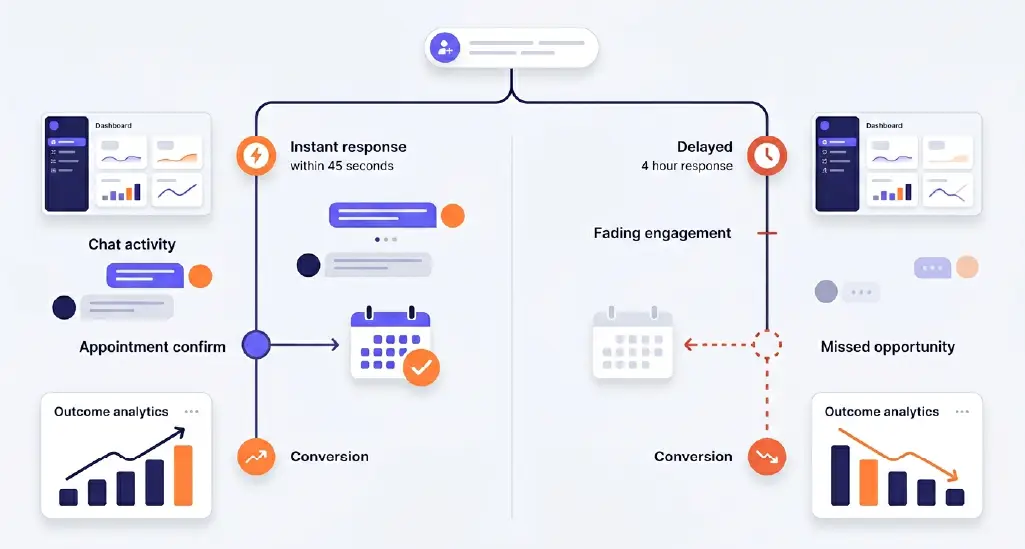
Lead response time under 60 seconds has become one of the most important factors influencing modern sales performance. When a prospective customer fills out a form, sends a message, or requests information, their interest is at its highest point. Every minute that passes increases the likelihood that they'll become distracted, contact a competitor, or postpone their decision.
Businesses that respond within the first minute gain a significant advantage because they engage prospects while buying intent is still strong. Fast responses demonstrate professionalism, build trust immediately, and create momentum that can move a lead toward a consultation, appointment, or sale.
In contrast, delayed responses often result in missed opportunities. Even if a business offers better pricing, superior service, or a stronger product, prospects may never stay engaged long enough to discover those advantages. The first company to respond often becomes the first company considered.
This is why speed to lead is no longer just a sales metric. It is a competitive advantage. By reducing lead response time and engaging prospects instantly, businesses can increase conversion rates, improve customer experience, and maximize the value of every marketing dollar spent.
Think about the last time you searched for a service online.
Perhaps your air conditioner stopped working during a heatwave. Maybe you needed legal advice after an accident. Maybe you were researching software solutions for your company.
In that moment, your motivation was at its highest.
You weren't casually browsing. You were actively looking for answers.
The same psychology applies to every lead your business receives.
When someone submits a form, calls your office, or sends a message, they're operating with a sense of urgency. They have a problem they want solved. Their attention is focused. Their intent is strong.
What happens next shapes their entire perception of your business.
A fast response signals professionalism, reliability, and competence.
A delayed response creates uncertainty.
If a company can't answer a new inquiry promptly, prospects naturally wonder how responsive they'll be after becoming a customer.
This is why lead response time matters so much. You're not simply answering a question. You're making a first impression when the prospect is most engaged.
Also read: Why High-Intent Leads Go Cold in Under 24 Hours
Many businesses don't realize how much revenue is leaking through delayed follow-up.
The issue is rarely obvious.
A prospect doesn't usually send an email saying, "I chose your competitor because you took three hours to respond."
They simply disappear.
By the time sales teams review reports, the opportunity is already gone.
Research consistently shows that the odds of connecting with and qualifying a lead decrease dramatically as response times increase. The longer a prospect waits, the more likely they are to contact competitors, become distracted, or postpone their decision altogether.
What makes this particularly dangerous is that most businesses believe they're responding reasonably quickly.
An hour feels fast.
Half a day seems acceptable.
Even responding the next morning might feel responsible.
But from the prospect's perspective, those delays can feel enormous.
Especially when competitors are responding almost instantly.
Yes. Studies consistently show that businesses responding within the first minute significantly improve their chances of connecting with prospects before competitors do. Faster responses maintain buyer intent, build trust immediately, and reduce lead abandonment. As response times increase, conversion rates typically decline because prospects lose interest or engage with another provider.
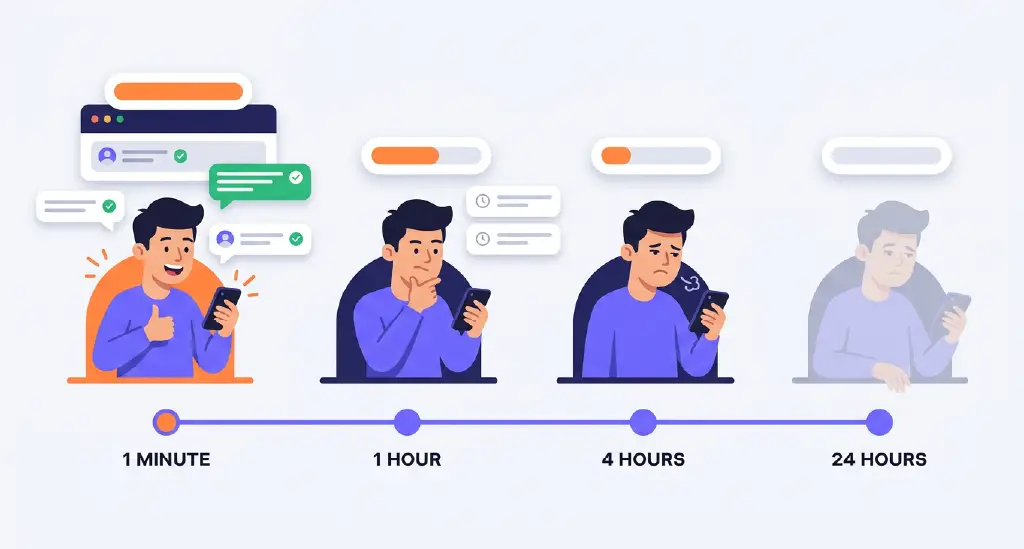
The impact of instant lead response isn't just operational. It's psychological.
Humans naturally associate speed with competence.
When a restaurant serves food promptly, customers assume the kitchen is efficient.
When a doctor returns a call quickly, patients feel reassured.
When a business responds immediately after an inquiry, prospects feel valued.
There's also an emotional component.
Fast responses reduce uncertainty.
Imagine requesting information about a product and receiving an answer within seconds.
You feel acknowledged.
You feel heard.
Most importantly, you remain engaged in the conversation.
Now imagine waiting six hours.
During that time, doubts emerge.
Questions multiply.
Other options appear.
The emotional momentum that initially drove the inquiry begins to fade.
This is why businesses that prioritize speed often experience higher conversion rates even when their products are similar to competitors'.
They're capturing attention while it still exists.
Also read: Why Speed to Lead Matters Even More During Peak Demand Seasons
Consider industries like HVAC, legal services, home improvement, med spas, insurance, or real estate.
In many cases, prospects contact multiple providers simultaneously.
They're gathering information and evaluating options.
The business that responds first gains a significant advantage.
Not necessarily because it's better.
Not necessarily because it's cheaper.
Simply because it started the conversation first.
Sales professionals often describe this as "being first into the mind."
Once a prospect is already speaking with a company, scheduling a consultation, or receiving answers, competitors are forced into a reactive position.
The first business has already established trust and momentum.
This phenomenon explains why companies investing in sales conversion optimization increasingly focus on response speed rather than solely improving sales scripts or pricing structures.
The fastest responder frequently gets the first opportunity to build a relationship.
And relationships drive conversions.
Imagine two dental practices in the same city.
A prospective patient visits both websites and requests an appointment.
Practice A receives the inquiry and sends it to an inbox monitored by staff during business hours.
The patient receives a response three hours later.
Practice B immediately sends a personalized acknowledgment, answers common questions, offers appointment availability, and provides a direct booking link.
Within five minutes, the patient has scheduled an appointment.
The services may be similar.
The pricing may be similar.
The patient may never even compare them.
Practice B won because it eliminated friction while interest was highest.
This scenario plays out thousands of times every day across virtually every appointment-based industry.
The businesses capturing those opportunities aren't necessarily generating more leads.
They're simply converting more of the leads they already have.

Many organizations respond to conversion challenges by placing more pressure on sales teams.
They ask representatives to make more calls.
They increase quotas.
They create additional follow-up requirements.
But the reality is that most teams aren't intentionally slow.
They're overwhelmed.
Leads arrive after hours.
Calls come in during meetings.
Website forms arrive while employees are helping existing customers.
Messages are scattered across channels.
The issue is often a broken process rather than poor effort.
Even highly motivated teams struggle when lead volume increases.
This is where businesses begin to realize that speed isn't solely a staffing issue.
It's a systems issue.
Businesses asking, "How fast should businesses respond to leads?" often assume the answer requires hiring more people.
In reality, technology has changed the equation.
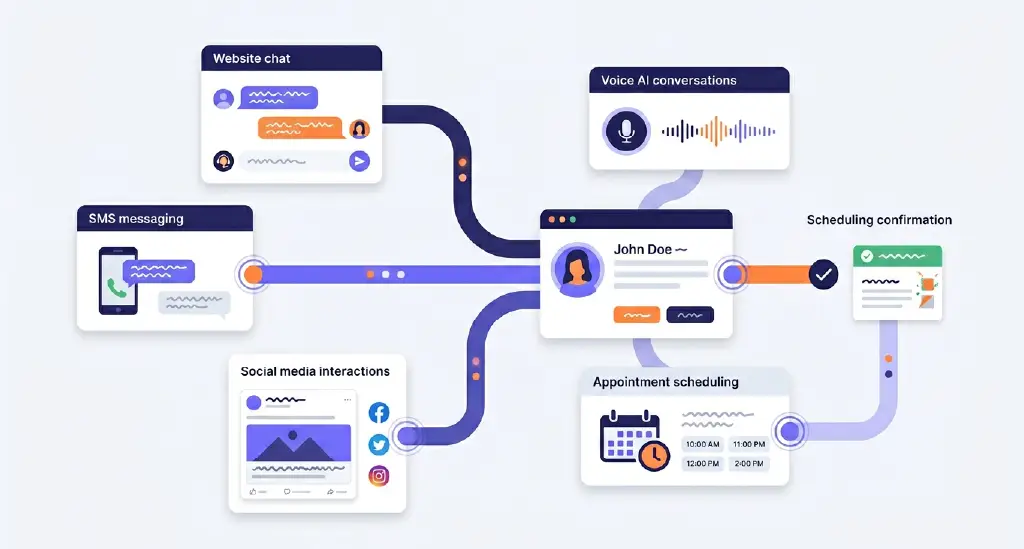
Modern automation allows companies to acknowledge, engage, qualify, and route leads instantly.
A prospect submits a form.
Within seconds they receive a personalized response.
Questions are answered automatically.
Appointments can be scheduled immediately.
Relevant information is collected before a human conversation even begins.
The result isn't replacing human interaction.
It's accelerating it.
Automation ensures prospects never experience silence while waiting for the right person to become available.
Instead of losing momentum, businesses maintain engagement until a sales representative takes over.
This is one of the most effective ways to reduce lead response time with automation while improving customer experience simultaneously.
Also read: What Top Teams Know About Live Chat for Lead Generation
Marketing teams spend enormous amounts of money generating leads.
They invest in advertising.
They optimize landing pages.
They refine messaging.
They improve SEO.
Yet many of those hard-earned leads enter a slow, fragmented follow-up process.
It's similar to filling a bucket without noticing the hole at the bottom.
Improving speed to lead often produces stronger results than increasing lead volume because it maximizes the value of traffic and inquiries already being generated.
Instead of spending more to acquire additional prospects, businesses convert more of the prospects they already have.
From a profitability standpoint, that's often a far more efficient strategy.
Consumer expectations have fundamentally changed.
People order groceries in minutes.
They receive ride confirmations instantly.
They communicate with businesses through messaging apps around the clock.
As a result, waiting hours for a response increasingly feels outdated.
Customers may not consciously articulate these expectations, but they certainly notice when businesses fail to meet them.
The gap between consumer expectations and business response times continues to widen.
Companies that embrace instant engagement are aligning with modern customer behavior.
Companies that don't risk appearing slow, inaccessible, and difficult to work with.
The market has changed.
Customer expectations have changed.
Response strategies must evolve too.
Also read: Mid-Year Revenue Check: Where Leads Are Slipping Through the Cracks
When businesses consistently respond within the first minute, several things happen simultaneously.
More conversations begin because prospects are still available.
More appointments are scheduled because momentum remains intact.
More trust is established because responsiveness signals professionalism.
More opportunities remain in the pipeline because fewer leads disappear.
Over time, these small improvements compound.
A modest increase in response speed can generate a meaningful increase in conversions without requiring additional advertising spend.
That's what makes speed to lead such a powerful growth lever.
It doesn't rely on attracting more visitors.
It focuses on maximizing the value of every inquiry already coming through your doors.
Also read: Mid-Year Revenue Check: Where Leads Are Slipping Through the Cracks
The businesses that win in the coming years won't necessarily be the largest organizations or the ones with the biggest marketing budgets.
Increasingly, they'll be the businesses that remove friction faster than everyone else.
The companies that respond immediately.
The companies that acknowledge inquiries instantly.
The companies that make it easy for prospects to take the next step while interest is still high.
Because every lead arrives with a limited window of attention.
Every minute that passes reduces the likelihood of conversion.
Every delay creates an opportunity for competitors.
And every instant response increases the chance of turning interest into revenue.

Businesses should aim to respond within 60 seconds whenever possible. The sooner a lead receives a response, the higher the likelihood of engagement and conversion.
Speed to lead is important because customer interest is highest immediately after an inquiry. Delayed responses often result in lost opportunities and lower conversion rates.
Yes. Faster responses help businesses connect with prospects before competitors, increasing appointments, conversations, and closed deals.
A response time of under five minutes is considered good, while responding within 60 seconds is considered best-in-class performance.
Yes. Automation tools can instantly acknowledge inquiries, answer common questions, qualify leads, and schedule appointments without requiring immediate human intervention.
Fast responses signal professionalism, reliability, and attentiveness. Customers are more likely to trust businesses that respond quickly to inquiries.
The conversation around speed to lead has evolved beyond customer service. It is now a critical component of growth strategy.
Businesses that consistently respond in under sixty seconds aren't simply being faster. They're capitalizing on peak buyer intent, building trust earlier, reducing lead abandonment, and creating smoother customer journeys.
The challenge is that maintaining that level of responsiveness manually becomes increasingly difficult as lead volume grows.
That's where platforms like Blazeo help bridge the gap. By combining AI-powered engagement, intelligent automation, instant lead routing, and unified communication tools, Blazeo enables businesses to respond immediately, stay connected across channels, and convert more opportunities before competitors even have a chance to reply.
In a marketplace where every second matters, the fastest response often becomes the first step toward winning the sale.

