 SmartHub
 Automation
 Appointment Scheduler
 Lead Management
 Dashboard & Reports
 Task Management
 Communications Hub
 Managed chat
 Voice Receptionist
 Appointment scheduling
 Retainer signing
 Home services
 Lawyers and firms
 Medical services
 College admissions
 Real estate agents
 Marketing agencies
 About
About Partner program
 Estimate Your ROI
 Case Studies
 Blog
Blog FAQs
FAQs Login
LoginWhy Speed to Lead Matters Even More During Peak Demand Seasons





Products
Industries
Company
Resources

Peak demand seasons create a strange kind of illusion for businesses. However, speed to lead during peak demand seasons can make all the difference when it comes to capitalising on opportunities.
At first, everything feels exciting.
Traffic spikes. Inquiry forms flood in. Demo requests increase. Sales dashboards suddenly look healthier. Teams celebrate rising numbers because, on the surface, demand appears stronger than ever.
But somewhere beneath the momentum, another reality quietly unfolds.
Leads start waiting longer for responses.
Sales teams become overwhelmed.
Follow-ups get delayed.
Conversations lose momentum.
And opportunities that looked promising just days earlier disappear without explanation.
Most businesses assume revenue problems during busy seasons happen because there are “too many leads to manage.” But the real issue is often much simpler and far more expensive: response speed collapses precisely when buyer intent is highest.
This is where speed to lead becomes one of the most important growth factors in modern sales and marketing.
Not during slow months.
Not when pipelines are quiet.
But during the exact moments businesses think demand alone will carry them forward.
Because high-volume periods do not just increase opportunity. They also increase competition, urgency, customer expectations, and the cost of hesitation.
And businesses that fail to respond quickly enough during these moments often discover too late that demand means nothing if attention is lost before conversations even begin.
“And businesses that fail to respond quickly enough during these moments often discover too late that demand means nothing if attention is lost before conversations even begin.”
Businesses that respond to leads first often win more customers during peak demand seasons. Faster response times improve trust, increase conversions, and prevent buyer intent from fading. AI-powered lead engagement tools help businesses maintain fast response speeds even when inquiry volume spikes.
Speed to lead refers to how quickly a business responds after a potential customer expresses interest. This could include submitting a form, requesting a demo, sending a chat message, or asking a question through social media or email.
Fast response times matter because buyer intent is strongest immediately after a customer takes action. The longer a business waits to engage, the greater the risk that attention fades or competitors step in first.
Many businesses misunderstand speed to lead as simply replying “fast.”
But speed alone is not the point.
Speed to lead refers to how quickly a business engages a potential customer after they express intent. That intent could be a form submission, demo request, WhatsApp inquiry, live chat message, or even a social media interaction signaling interest.
And timing matters more than most businesses realize because buying intent is emotional before it becomes transactional.
When someone reaches out, they are actively thinking about a problem they want solved. Their attention is focused. Their curiosity is elevated. Their willingness to take action is strongest in that moment.
But attention decays quickly.
Especially during peak seasons when consumers are comparing multiple businesses at once.
A delayed response does not simply “postpone” the sale. In many cases, it redirects the sale elsewhere.
This is why speed to lead matters has become such a central conversation in modern revenue strategy. Businesses are no longer competing only on price or product quality. They are competing on responsiveness.
And during peak demand periods, responsiveness becomes trust.
A busy sales or support team handling an overload of notifications, chats, and inquiries.
Busy months have a way of revealing operational cracks businesses usually ignore.
A slow lead routing process that seemed manageable during quieter periods suddenly becomes chaotic. Sales reps who once handled inquiries comfortably become overloaded. Manual workflows create bottlenecks. Follow-ups become inconsistent.
Meanwhile, customer expectations continue accelerating.
Consumers today are conditioned by instant experiences. Food arrives in minutes. Customer support responds in real time. Purchases happen with one click.
That expectation carries into B2B and service industries too.
When businesses fail to respond quickly, customers rarely interpret the silence generously. They do not assume teams are “busy.” They assume disinterest, inefficiency, or poor service.
This is where declining lead response time begins quietly hurting revenue.
Not dramatically.
Not obviously.
But steadily.
And peak demand seasons amplify those losses because every delayed conversation creates room for a competitor to step in faster.
Also read: When Fast Replies Fail: The Real Reasons Leads Don’t Move Forward
Businesses should respond to new leads as quickly as possible — ideally within minutes. During peak demand seasons, customers often compare several providers at once, and response speed heavily influences who wins the conversation first.
Even a short delay can reduce momentum, lower engagement, and increase the likelihood that buyers move on to competitors.
Fast lead response does not always require a human instantly available. Automated acknowledgments, AI chat systems, and smart lead routing can help businesses maintain responsiveness at scale.
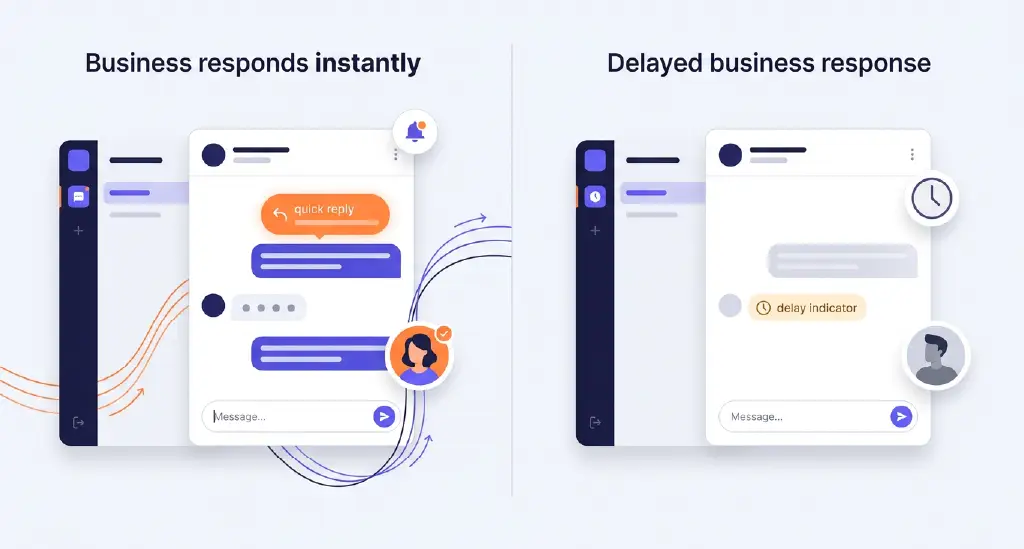
Imagine someone searching for a software solution during a busy quarter-end period.
They submit inquiries to three companies within ten minutes.
The first company replies instantly with a personalized message and offers to schedule a quick call. The second responds six hours later with a generic email. The third follows up the next day.
Who is most likely to win the deal?
In many cases, the answer has little to do with product superiority.
It comes down to momentum.
Fast engagement signals reliability. It creates confidence before the actual sales process even begins. Customers subconsciously associate responsiveness with competence.
This is especially true during high-volume shopping and buying seasons when decision-making speeds up significantly.
People do not want to wait when demand feels urgent.
And they rarely do.
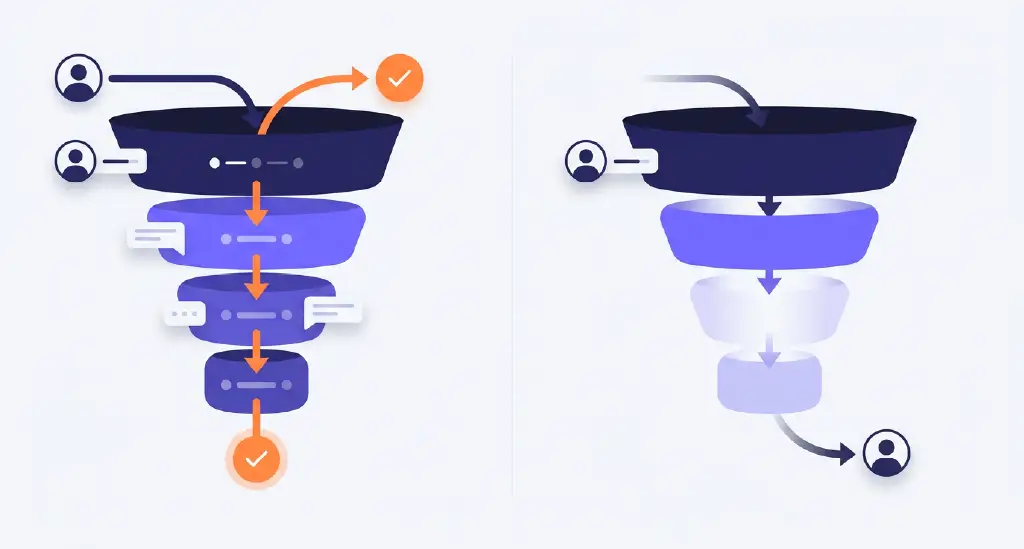
One of the most damaging misconceptions in sales is the belief that interested leads will simply “wait.”
Most will not.
Because intent is fragile.
A customer browsing solutions during peak demand periods is usually already overwhelmed with choices. The moment they fill out a form or request information, they are seeking reassurance, clarity, or momentum.
Silence interrupts that momentum.
And once momentum fades, distractions take over.
Another ad appears.
Another competitor responds.
Another priority emerges.
The lead that once looked “hot” becomes difficult to recover not because the customer stopped needing the solution, but because the emotional urgency behind the decision disappeared.
This is the hidden cost of poor sales response speed. Businesses often calculate missed revenue based on lost deals they can identify directly. What they fail to measure are the invisible opportunities that disappeared before conversations even properly started.
Those losses are often much larger.
Also read: The Anatomy of a Winning Sales Conversation: What Top-Performing Teams Do Differently
A fast-growing ecommerce brand experienced its highest traffic month during a seasonal sales campaign.
At first glance, performance looked exceptional. Website visits surged. Ads performed well. Product interest increased dramatically.
But revenue did not grow proportionally.
Something was wrong.
After investigating, the business discovered customer inquiries across chat and social media were receiving delayed responses because support teams were overwhelmed by the sudden spike in volume.
Potential buyers asking simple pre-purchase questions waited hours — sometimes an entire day — for replies.
By then, many had already purchased from competitors.
The issue was not demand generation.
It was delayed engagement.
After implementing automated first-response systems and intelligent lead routing, response times dropped significantly. Conversions improved almost immediately during the next campaign cycle.
The business did not need more traffic.
It needed faster conversations.
The uncomfortable truth is that most businesses are still responding far slower than customers expect.
When people ask how fast you should respond to leads, the answer is increasingly simple: as quickly as possible.
Not eventually.
Not “within business hours.”
Not tomorrow morning.
Research consistently shows that conversion probability drops sharply as response times increase. A lead contacted within minutes behaves very differently from one contacted hours later.
This is because responsiveness shapes perception before the actual sales interaction even happens.
A fast response communicates attentiveness.
A slow one creates doubt.
And during peak seasons, doubt becomes dangerous because alternatives are everywhere.
That does not mean every business needs human agents available every second of the day. But it does mean businesses need systems capable of acknowledging, engaging, and guiding leads immediately while preserving conversational quality.
Customers do not necessarily expect full solutions instantly.
But they do expect to feel seen instantly.
Also read: From Lead Capture to Lead Confidence: How to Increase Conversion Rate with Trust
Peak seasons create operational stress most businesses underestimate.
Leads increase faster than internal systems can adapt. Sales reps spend more time triaging inquiries than building meaningful relationships. Follow-up quality declines because teams prioritize volume over connection.
Ironically, this often happens during the exact months businesses should be converting most efficiently.
The problem becomes even worse when teams rely heavily on manual processes.
Spreadsheets.
Delayed notifications.
Disconnected CRMs.
Missed assignments.
All of these create invisible friction that slows engagement.
And slow engagement compounds rapidly during busy periods.
One delayed lead becomes five.
Five become fifty.
Soon, entire pipelines lose momentum.
This is why businesses increasingly invest in AI-assisted workflows, automated lead qualification, and real-time communication systems. Not to remove human interaction, but to protect responsiveness when demand becomes difficult to manage manually.
Because no sales strategy works if conversations start too late.
Most companies obsess over crafting perfect campaigns, polished branding, and detailed presentations.
Yet customers often remember something far simpler.
Who responded first.
Who made things easy.
Who reduced uncertainty quickly.
This matters because trust is emotional before it becomes logical.
Fast engagement creates reassurance during moments of decision-making. Customers feel prioritized rather than processed.
And during peak seasons, that emotional reassurance becomes a competitive advantage.
Especially when competitors are struggling with delays themselves.
Businesses that maintain strong speed to lead during high-volume months often outperform larger competitors simply because they preserve responsiveness while others become overwhelmed.
That advantage is powerful.
And increasingly difficult to replicate once customers have already formed trust elsewhere.
AI improves lead response time by helping businesses engage customers immediately, even during periods of overwhelming demand. Automated systems can acknowledge inquiries, qualify leads, route conversations to the right teams, and maintain engagement while human reps focus on high-value discussions.
This allows businesses to preserve responsiveness without sacrificing customer experience. During peak demand seasons, AI-assisted engagement helps reduce delays that often lead to lost revenue opportunities.
There was a time when delayed responses during busy seasons felt understandable.
Today, customers expect smarter systems.
Businesses no longer operate in environments where inquiries arrive only during office hours. Leads come through websites, ads, WhatsApp, live chat, social media, and email at every hour of the day.
Without automation, maintaining fast lead response time becomes nearly impossible at scale.
But automation only works when it feels human.
This is where many businesses fail. They implement rigid automated flows that sound cold, robotic, or disconnected from customer intent.
Customers can sense when conversations feel transactional instead of helpful.
The goal is not simply automation.
The goal is intelligent engagement.
That means acknowledging inquiries immediately, qualifying intent quickly, routing conversations efficiently, and maintaining context throughout the customer journey.
Businesses that do this well protect revenue even during overwhelming demand spikes because responsiveness remains consistent regardless of volume.
Businesses often underestimate how expensive slow response times truly are because the losses rarely appear in obvious ways.
No customer sends an email saying:
“You lost this sale because you replied four hours too late.”
They simply move on.
Quietly.
Meanwhile, leadership teams continue analyzing campaign performance without realizing revenue leaks are happening inside the response window itself.
This is why speed to lead deserves far more strategic attention than it traditionally receives.
It is not merely an operational metric.
It is a revenue metric.
A trust metric.
A customer experience metric.
And during peak demand seasons, it becomes one of the clearest indicators of whether a business is equipped to scale effectively or merely generate noise.
When leads wait too long for responses, buyer intent weakens quickly. Customers lose momentum, explore alternatives, or stop engaging entirely. Many businesses never realize these opportunities were lost because conversations never fully began.
During peak demand periods, slow response times quietly create revenue leakage. The businesses that maintain fast engagement are often the ones that convert demand into actual sales growth.
Speed to lead refers to how quickly a business responds after a customer expresses interest through a form, chat, email, or inquiry.
Fast response times help maintain buyer intent, improve trust, and increase conversion rates before competitors engage the customer first.
Businesses should respond as quickly as possible, ideally within minutes, because conversion rates decline sharply over time.
Delayed responses reduce customer interest, interrupt buying momentum, and often cause potential buyers to choose competitors.
AI tools automate first responses, qualify leads instantly, route inquiries faster, and maintain engagement during high-demand periods.
Peak seasons increase competition and customer urgency. Faster responses help businesses capture demand before attention shifts elsewhere.
Peak demand seasons create enormous growth opportunities, but they also magnify every weakness inside a business’s sales and engagement process.
When response times slow down, buyer intent fades quickly. Leads that looked promising disappear silently. Revenue opportunities slip away not because demand was weak, but because conversations started too late.
That is why speed to lead matters more than ever today.
Customers expect responsiveness. They expect immediacy. And increasingly, they reward the businesses that engage them first, fastest, and most intelligently.
The companies that succeed during high-volume months are not always the ones generating the most leads. They are the ones protecting momentum after leads arrive.
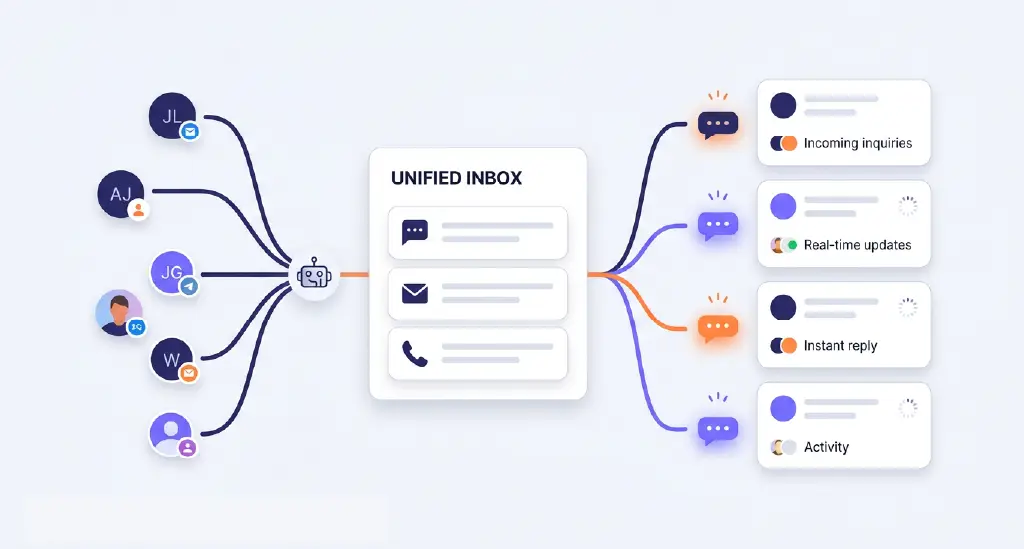
If your business is looking to improve lead response time, streamline customer engagement, and maintain fast, meaningful conversations during peak demand periods, Blazeo helps brands respond instantly with AI-powered lead engagement designed to convert interest into revenue before opportunities disappear.

