 SmartHub
 Automation
 Appointment Scheduler
 Lead Management
 Dashboard & Reports
 Task Management
 Communications Hub
 Managed chat
 Voice Receptionist
 Appointment scheduling
 Retainer signing
 Home services
 Lawyers and firms
 Medical services
 College admissions
 Real estate agents
 Marketing agencies
 About
About Partner program
 Estimate Your ROI
 Case Studies
 Blog
Blog FAQs
FAQs Login
LoginEvery Customer Conversation Is Data - Most Businesses Waste It




Products
Industries
Company
Resources

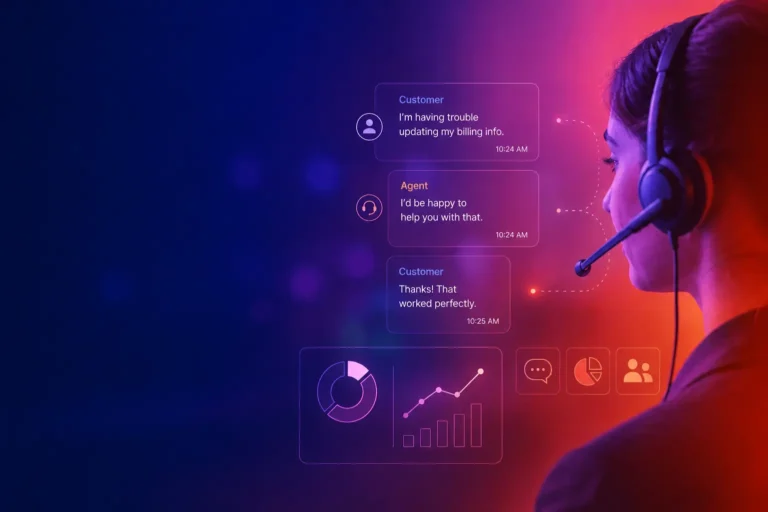
Every day, businesses spend thousands of dollars generating leads.
They invest in paid advertising, SEO, email campaigns, social media, referrals, and partnerships. When those efforts succeed, the phone rings, a live chat starts, or a customer fills out a contact form. A conversation begins.
And then something surprisingly common happens.
The conversation ends, the immediate task is completed, and the interaction disappears into history. Maybe someone writes a brief note inside the CRM. Maybe the call recording sits untouched in cloud storage. Maybe nobody will look at it again.
The customer spoke. The business listened just enough to respond.
But almost nobody stopped to learn.
This is one of the biggest blind spots in modern business.
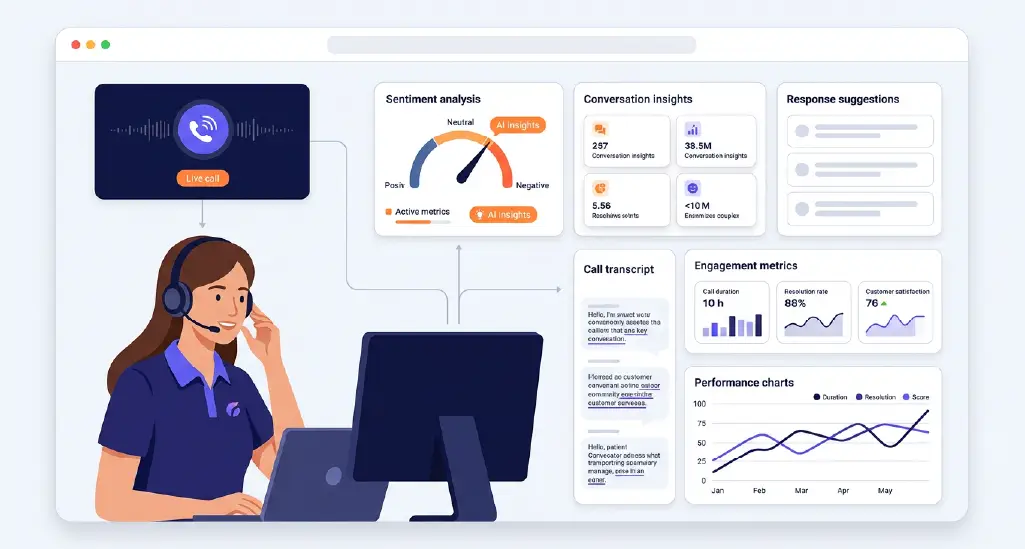
Every customer conversation contains valuable information about why people buy, why they hesitate, what competitors they're considering, which products confuse them, what expectations they have, and where businesses are creating friction without realizing it. Yet most organizations continue treating conversations as temporary exchanges instead of strategic assets.
That is precisely where conversation intelligence changes the equation.
Rather than seeing calls, chats, and messages as isolated customer interactions, conversation intelligence helps businesses uncover patterns that improve marketing, sales, customer service, and operational decision-making.
The conversation itself becomes one of the richest sources of business intelligence available.
Most companies are comfortable measuring what is easy.
Website traffic.
Click-through rates.
Conversion rates.
Cost per acquisition.
Email opens.
Customer lifetime value.
These numbers matter. They help measure performance. But they rarely explain why customers behave the way they do.
Imagine a roofing company noticing that quote requests suddenly dropped by 18%.
Analytics can tell them that fewer visitors converted.
But analytics cannot explain why prospective customers left without booking.
The answer often exists inside conversations.
Maybe callers repeatedly asked whether financing was available. Maybe the website left customers unsure whether the company served their neighborhood. Or perhaps prospects kept mentioning a competitor offering faster installation.
Traditional dashboards rarely surface these insights because they live inside conversations, not spreadsheets.
That is why customer conversation analytics has become increasingly important. Instead of focusing solely on numbers, businesses begin understanding the stories behind those numbers.
When hundreds—or even thousands—of conversations are analyzed together, patterns begin to emerge that no single employee could identify manually.
Customers rarely intend to provide business feedback.
They're simply trying to solve a problem.
But every question they ask reveals something meaningful.
When customers repeatedly ask whether appointments are available after work hours, they're highlighting unmet demand.
When callers hesitate after hearing pricing, they may be signaling that expectations were set incorrectly before reaching sales.
When multiple prospects ask whether a service includes something it actually does, marketing may not be communicating value clearly enough.
When support teams repeatedly explain the same process, onboarding may be unnecessarily confusing.
None of these insights appear in a CRM checkbox.
They emerge naturally through conversation.
This is why organizations adopting conversation intelligence increasingly view customer conversations as continuous research rather than isolated service interactions.
Unlike surveys, conversations happen in real time.
Customers are honest because they are focused on solving their immediate problem—not completing a feedback form.
That honesty is incredibly valuable.
Also read: What Happens When Your Business Responds to Leads in Under 60 Seconds
Many businesses already record customer calls.
Very few actually learn from them.
There is an important distinction.
Recording creates storage.
Understanding creates intelligence.
Listening to thousands of calls manually simply isn't realistic. Even quality assurance teams typically review only a small sample of conversations.
That means most customer knowledge remains hidden.
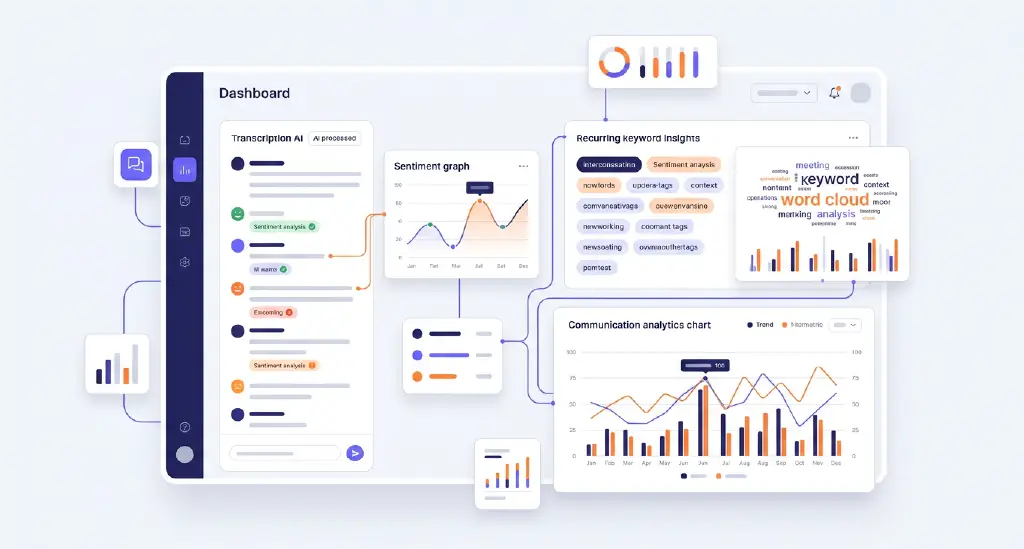
Modern AI call analytics changes this by analyzing conversations at scale.
Instead of randomly reviewing calls, AI can identify recurring questions, common objections, emotional sentiment, buying intent, competitor mentions, missed opportunities, compliance issues, and trends developing across hundreds or thousands of customer interactions.
Rather than depending on anecdotal feedback from sales representatives, leadership gains objective visibility into what customers are actually saying.
The result is better decision-making based on evidence instead of assumptions.
Also read: How an Automated Voice System Handles Calls Around the Clock
Individual customer conversations are anecdotes.
Patterns across conversations become insight.
Consider a healthcare clinic experiencing an unusually high number of appointment cancellations.
Front desk staff believe patients simply forget.
Marketing assumes reminders aren't working.
Leadership wonders whether pricing is the issue.
Conversation analysis reveals something completely different.
Patients repeatedly mention confusion around insurance eligibility during scheduling. They're canceling after discovering unexpected out-of-pocket costs.
The real issue wasn't reminders.
It was communication.
Fixing appointment reminders wouldn't solve the problem.
Clarifying insurance information earlier in the conversation would.
This distinction matters because businesses often spend months solving the wrong problem.
Conversation intelligence shortens that cycle by showing leaders what customers consistently experience rather than what internal teams assume is happening.
Experienced salespeople often develop remarkable intuition.
They know which objections appear most frequently.
They understand what convinces hesitant buyers.
They recognize which competitor is mentioned most often.
The challenge is that this knowledge usually remains inside individual employees' heads.
When experienced team members leave, much of that understanding leaves with them.
Conversation intelligence captures institutional knowledge before it disappears.
Instead of relying solely on tribal knowledge, businesses can identify what top-performing representatives consistently do differently.
Perhaps successful salespeople spend more time discussing outcomes instead of features.
Maybe they ask stronger discovery questions.
Perhaps they introduce pricing later in the conversation after establishing value.
These patterns become teachable because they're measurable.
This is one of the most practical ways conversation intelligence improves sales.
Rather than coaching based on opinion, managers coach using evidence gathered across thousands of successful conversations.
Support teams hear things no other department hears.
Customers explain what confused them.
They describe frustrating experiences.
They reveal where products fall short.
They explain why they nearly chose a competitor.
Unfortunately, this information often stays within customer service.
Marketing rarely sees it.
Product teams rarely hear it.
Sales may never know it exists.
Conversation analytics break down these silos.
Suppose an e-commerce company notices that support conversations repeatedly begin with customers asking about delivery estimates.
Instead of training agents to answer faster, the company updates product pages with clearer shipping information.
Support volume decreases.
Customer satisfaction improves.
Conversion rates increase because uncertainty disappears before customers even ask.
This is what effective conversation analytics for customer service looks like.
It doesn't simply make support more efficient.
It prevents unnecessary support conversations altogether.
Also read: Every Inquiry Answered: How Omnichannel Communication Increases Conversion Rates
Many marketing teams spend hours debating headlines and messaging.
Meanwhile, customers have already told them exactly how they describe their problems.
Businesses often discover that the words customers naturally use differ dramatically from internal terminology.
A software company might describe its platform as "workflow automation."
Customers might consistently say they're simply trying to "stop wasting time."
A legal practice might promote "comprehensive legal representation."
Potential clients may just want someone who will "actually call me back."
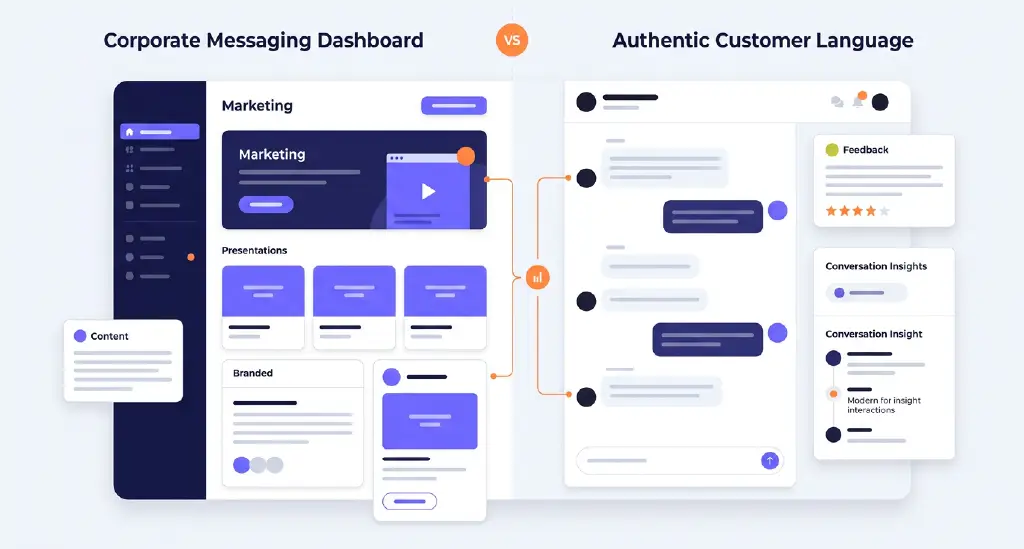
These differences matter because effective marketing reflects the customer's language rather than the company's preferred vocabulary.
Conversation intelligence allows marketers to hear recurring phrases across thousands of interactions.
Those phrases often become stronger website copy, more persuasive advertisements, higher-converting landing pages, and more relevant content.
The best messaging isn't invented in conference rooms.
It's discovered in customer conversations.
Leadership teams constantly make decisions with incomplete information.
Should they launch a new service?
Expand into another market?
Hire more salespeople?
Adjust pricing?
Update onboarding?
Improve follow-up?
Without reliable customer insights, these decisions rely heavily on assumptions.
Conversation intelligence adds another layer of evidence.
Imagine a home services company planning to expand into weekend appointments.
Instead of relying solely on market research, leaders review six months of customer conversations.
They discover hundreds of callers asking for Saturday availability.
Expansion becomes less of a gamble because customer demand already exists.
This ability to turn customer conversations into business insights fundamentally changes how organizations prioritize investments.
Instead of reacting to internal opinions, they respond to recurring customer needs.
Not long ago, analyzing thousands of customer interactions required enormous manual effort.
Today, AI can process conversations in minutes.
Modern AI conversation intelligence software identifies recurring themes, summarizes conversations, highlights buying signals, measures sentiment, detects coaching opportunities, tracks competitor mentions, and surfaces trends long before humans would notice them manually.
Importantly, AI isn't replacing human judgment.
It's amplifying it.

Leaders still decide what actions to take.
Sales managers still coach their teams.
Customer service still builds relationships.
Marketing still creates campaigns.
AI simply ensures those decisions begin with better information.
Rather than asking, "What do we think customers want?"
Businesses can finally ask, "What have customers consistently told us?"
That shift alone creates smarter organizations.
Businesses often talk about becoming customer-centric.
Conversation intelligence provides one of the clearest ways to actually achieve it.
Companies that consistently analyze conversations tend to identify friction sooner.
They improve onboarding faster.
They refine messaging more effectively.
They coach sales teams more accurately.
They uncover emerging customer needs before competitors do.
Most importantly, they stop making decisions based solely on internal assumptions.
Customers constantly tell businesses what needs improvement.
The challenge has never been collecting feedback.
The challenge has been recognizing that feedback already exists inside everyday conversations.
Every phone call.
Every live chat.
Every appointment request.
Every support interaction.
Every sales conversation.
Each one contains valuable knowledge waiting to be uncovered.
Businesses that recognize this don't simply answer customers more effectively.
They learn from them continuously.

The businesses that outperform their competitors in the coming years won't necessarily be the ones generating the most conversations.
They'll be the ones learning the most from them.
Conversation intelligence transforms ordinary customer interactions into an ongoing source of customer insights that improve marketing, strengthen sales, enhance customer service, and support smarter business decisions. Instead of treating conversations as one-time exchanges, organizations can turn them into a continuous feedback loop that drives measurable growth.
At Blazeo, we believe every customer interaction has the potential to create more than just a response—it can reveal opportunities to improve the entire customer journey. With AI-powered conversation intelligence, customer conversation analytics, and AI call analytics, businesses can uncover the insights hidden inside every conversation and use them to deliver better experiences, make more informed decisions, and convert more leads into loyal customers.

