 SmartHub
 Automation
 Appointment Scheduler
 Lead Management
 Dashboard & Reports
 Task Management
 Communications Hub
 Managed chat
 Voice Receptionist
 Appointment scheduling
 Retainer signing
 Home services
 Lawyers and firms
 Medical services
 College admissions
 Real estate agents
 Marketing agencies
 About
About Partner program
 Estimate Your ROI
 Case Studies
 Blog
Blog FAQs
FAQs Login
LoginHow an Automated Voice System Handles Calls Around the Clock


Products
Industries
Company
Resources

Your phone rings, nobody answers, and that customer just booked an appointment with the business listed directly below yours. An automated voice system ensures your business never loses another lead to an unanswered call again. Every missed call costs your business more than you currently realize daily.
Businesses bleed leads silently through unanswered calls every single day without knowing the true financial damage involved. Customers do not wait, and they rarely call back after reaching silence or a voicemail box. That gap between a ringing phone and a real answer is exactly where revenue disappears fast.
This technology closes that gap permanently and handles every inquiry before a competitor even gets the chance. This blog reveals exactly what happens inside the system and why the results will genuinely surprise you.
Customers who hit voicemail rarely call the same business a second time. That reality catches most owners off guard because missed calls never show up on sales reports. The technology answers every call before that decision to leave ever gets made.
It greets callers, asks the right questions, and routes them without your team getting involved. Every caller gets directed based on what they actually said during the conversation itself. That process feels intentional rather than robotic, which keeps callers engaged and on the line.
Every detail captured during the call gets organized without anyone typing notes afterward. Your team starts each shift with clean, structured lead information ready to act on immediately. That organized starting position changes how productive every single workday actually feels for your team.
Phones ring during meetings, lunch breaks, and late at night without any warning. Manual call handling creates gaps that swallow leads your business paid good money to generate. An automated voice system covers every one of those gaps without adding a single person to payroll.
Morning calls get handled while your team is still settling into the workday. Afternoon spikes get absorbed without callers sitting on hold or abandoning the line, frustrated. That consistency across every hour is something no human team can sustain long-term.
Callers judge your business within the first thirty seconds of that call being answered. A fast and professional response signals that your business is organized and genuinely worth trusting. That first impression shapes everything that follows in the customer relationship going forward.
A single well-placed ad can send call volume soaring before your team prepares. Four people cannot handle forty simultaneous callers without the whole process falling apart completely. The result is missed opportunities arriving exactly when your marketing spend is working hardest.
Every caller during a spike gets the same response speed as the very first caller. The technology does not slow down because ten other people are calling at the same time. Seasonal rushes and campaign launches get handled without your team scrambling to keep up.
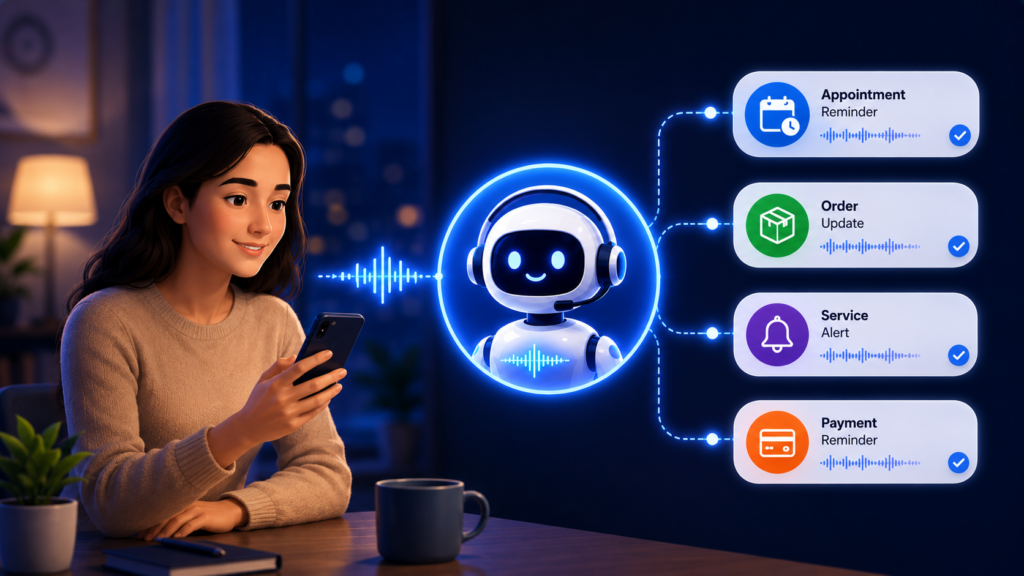
Silence after a booking is one of the fastest ways to lose a customer. No confirmation and no reminder signals disorganization to customers who were already feeling uncertain. Automated voice messaging fills that silence with professional communication that customers actually appreciate receiving from businesses.
Confirmations go out the same day a booking gets made without anyone stopping their work. Reminders land before appointments so customers show up prepared rather than forgetting the scheduled time completely. That consistent rhythm reduces no-shows and keeps your daily schedule running tighter than before.
The relationship does not end at payment when automated voice messaging stays active consistently. A follow-up call after a completed job tells customers their experience genuinely mattered to you. That single outreach drives more repeat bookings than most businesses realize until they track it properly.
Nine-thirty at night is when homeowners finally search for the service they urgently need. They find your business, call the number, and hit voicemail because your office closed hours ago. That caller moves straight to the next business without leaving any message behind for you.
After-hours callers have already made their decision and want someone to answer right now. Reaching voicemail at that exact moment does not just lose the call permanently. It loses the customer entirely before your team even knows the opportunity ever existed last night.
Coverage at every hour means competing for leads that most competitors surrender every single night. Those overnight wins stack into real revenue across a full month and quarter consistently. Your team arrives each morning to a pipeline that built itself while everyone was sleeping soundly.
Answering is only half the job during any after-hours call that comes in. An automated voice call intake process walks every caller through the structured questions your team needs. Name, number, service needed, and urgency all get captured before the call ends completely.
The script runs identically at 2 AM Saturday as it does at 10 AM Wednesday. No shortcuts are taken because a caller happened to call during an unusual hour. Every lead gets the same thorough intake process regardless of when they decided to call.
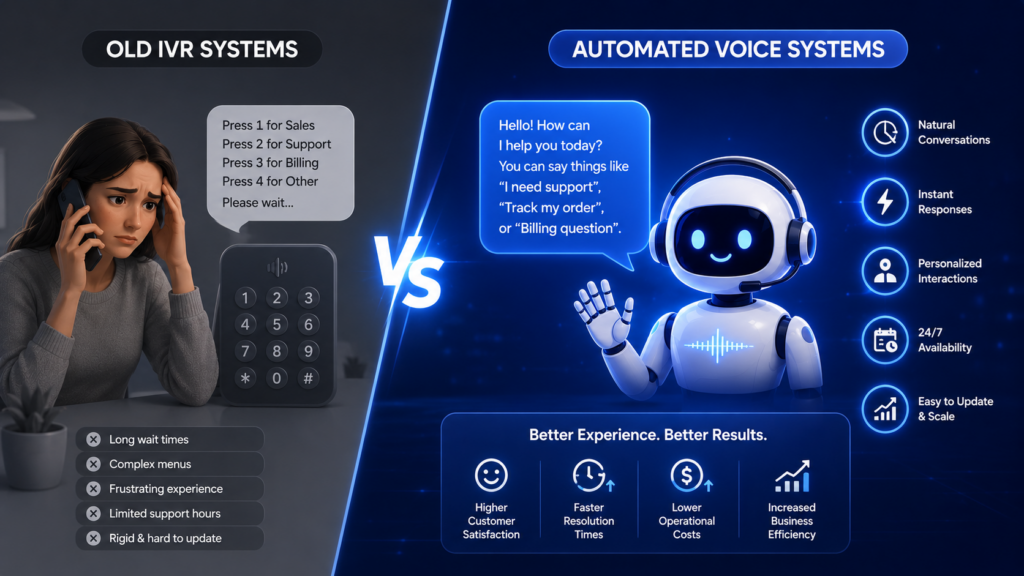
Press one for sales and press two for support taught customers to dread calling businesses. Old IVR systems were built around internal convenience with no thought for the caller's experience. That design flaw made them famous for driving customers away rather than converting them.
Callers abandoned those systems because friction was built directly into every single interaction. Each additional menu level became another exit point where potential customers decided to hang up. Businesses lost leads not because of pricing but because of phone menus nobody wanted to navigate.
Automated voice response works differently because conversation moves naturally rather than mechanically through forced choices. Callers say what they need, and the system responds without anyone pressing a single number. An automated voice response that flows naturally keeps callers engaged long enough to actually convert properly.
Choosing based on price alone almost always leads to a system that fumbles real calls. The wrong fit creates caller frustration and a team spending more time fixing errors than closing leads. Getting this right starts with understanding your actual call types before evaluating any product at all.
Appointment-heavy businesses need scheduling integration that removes friction between callers and confirmed bookings completely. Lead generation businesses need qualification scripts that surface intent and push clean data into their CRM. Knowing your primary call type narrows the field and saves weeks of testing wrong systems.
Our team at Blazeo builds around the specific call flows each business actually runs daily. A roofing company and a law firm both need after-hours coverage, but for completely different reasons. We configure each system so nothing important gets lost between the technology and your team.
Rushing this decision because options look similar on the surface leads to serious regret quickly.
Missed calls do not just sit in a log; they walk straight to a competitor. An automated voice system makes sure every caller gets a real response the moment they dial your number.
It picks up, asks the right questions, and records everything before the caller hangs up. The automated voice response system hands your team a clean lead file before they even sit down in the morning.
For bookings, routing, and lead capture, it actually outperforms most front desks on consistency alone. Emotional or complicated conversations are still better handled by a real person who can read the situation.
Old IVR made callers work just to get basic help, and most of them gave up halfway through. Automated voice response holds a real back-and-forth conversation that feels nothing like navigating a phone menu.
Customers stop falling through the cracks because every confirmation and reminder goes out on schedule without fail. Automated voice messaging keeps your business looking organized even when your team is slammed with other work.
Most small businesses are surprised by how little technical knowledge the setup actually requires from them. An automated voice call system is built to be configured and managed by regular business owners, not IT departments.
Most businesses go live within a few days once the call flows and scripts are mapped out properly. There is no long, drawn-out implementation process that pulls your team away from running the business.
Any business where the phone is the front door to new revenue feels the impact almost immediately after setup. Law firms, home service companies, and medical practices tend to see the fastest and most measurable results.
Every lead your business would have lost to an unanswered call gets captured by an automated voice system working through the night without a single gap in coverage. It sorts callers, filters time-wasters, and feeds your pipeline while your team stays focused on what actually closes revenue.
The businesses pulling ahead right now are not working harder than their competitors; they just stop dropping calls that were already halfway to a sale. Every hour this technology runs, it does the repetitive front-end work that used to eat into your team's productive selling time.
Your competitors picked up three calls while you read this. Install the system today, lock in every incoming lead, and make sure your business never hands another sale to a competitor again.