 SmartHub
 Automation
 Appointment Scheduler
 Lead Management
 Dashboard & Reports
 Task Management
 Communications Hub
 Managed chat
 Voice Receptionist
 Appointment scheduling
 Retainer signing
 Home services
 Lawyers and firms
 Medical services
 College admissions
 Real estate agents
 Marketing agencies
 About
About Partner program
 Estimate Your ROI
 Case Studies
 Blog
Blog FAQs
FAQs Login
LoginHow to Fix a Slow Sales Pipeline Fast





Products
Industries
Company
Resources

There’s a particular kind of panic that starts creeping into sales teams around May.
Q1 optimism has worn off. The excitement of annual planning has faded. The leads that looked “promising” in February are still sitting in the pipeline untouched, marked as “follow-up next week” for the fifth time. Revenue targets suddenly feel closer than expected, while actual conversions feel frustratingly far away.
And yet, most businesses respond the wrong way.
They assume the answer is more leads.
So they increase ad spend, push harder on outreach, buy another tool, or flood the funnel with unqualified prospects hoping something sticks. But a slow pipeline is rarely just a top-of-funnel problem. More often, it’s a momentum problem. Deals are stalling. Responses are delayed. Follow-ups are inconsistent. Teams are chasing activity instead of movement.
That’s where a proper May reset matters.
Mid-year is one of the best opportunities to step back, identify what’s quietly broken, and rebuild pipeline velocity before the second half of the year accelerates. Because once Q3 begins, slow systems become expensive systems.
The good news is this: most pipelines don’t need a complete overhaul. They need clarity, urgency, and better execution.
This guide breaks down exactly how to fix a slow sales pipeline fast, without relying on generic advice or bloated sales theory. Just practical, realistic changes that actually improve sales pipeline management and help restore momentum.
A slow sales pipeline is usually caused by stalled follow-ups, weak lead qualification, delayed responses, inconsistent nurturing, or bottlenecks between sales stages. Most pipelines do not fail because of a lack of leads. They slow down because deals lose momentum over time.
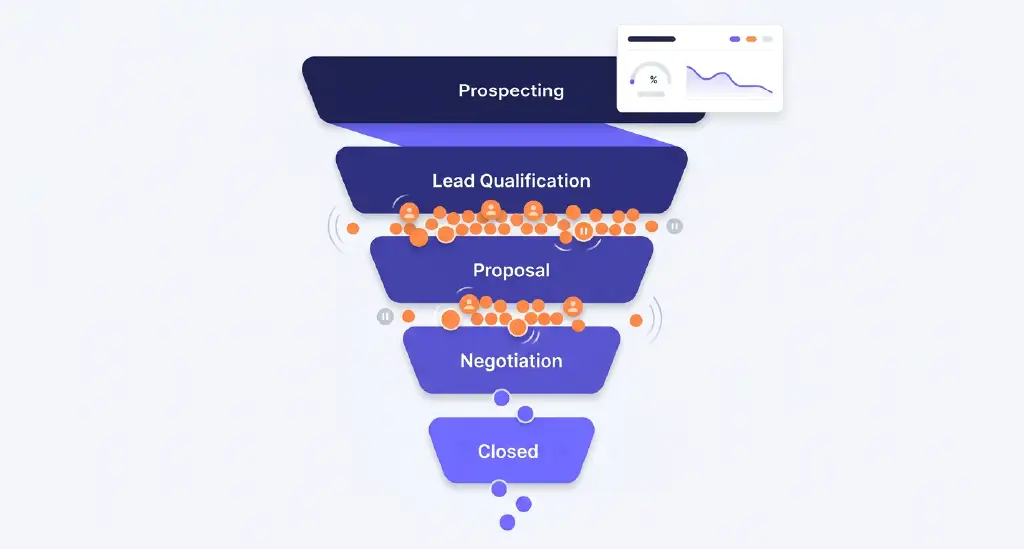
One of the biggest issues in pipeline growth strategy is that teams confuse “having opportunities” with “having movement.”
A CRM filled with deals can create the illusion of progress. But if those deals haven’t moved stages in weeks, they’re not opportunities anymore. They’re dead weight disguised as optimism.
A SaaS company selling marketing automation software learned this the hard way earlier this year. Their dashboard showed over 700 active opportunities, which initially looked healthy. But when leadership analyzed deal movement, they discovered nearly 45% of those leads hadn’t responded in over 30 days.
The pipeline wasn’t healthy. It was bloated.
This happens constantly because most teams avoid cleaning pipelines. Sales reps don’t want to close-lost deals too early. Managers don’t want shrinking numbers in reports. So stalled opportunities stay alive indefinitely, making forecasting unreliable and sales strategy reactive instead of proactive.
A slow pipeline is rarely caused by a single catastrophic issue. It’s usually dozens of tiny inefficiencies compounding over time.
Delayed follow-ups. Weak qualification. Poor lead timing. Generic outreach. Manual admin work. Missed reminders. Inconsistent nurturing.
None of these problems seem dramatic individually. Together, they quietly kill momentum.
That’s why fixing a slow pipeline starts with honesty.
Not every lead deserves saving. Not every deal deserves attention. And not every prospect is actually ready to buy.
The faster you accept that, the faster your pipeline starts moving again.
Most sales teams want growth before cleanup.
That’s backwards.
If your pipeline is slow, the first step is removing friction, not adding volume.
This means auditing every stage of your funnel and asking difficult questions:
Why are deals stalling here?
How long are leads sitting untouched?
Which stage has the biggest drop-off?
Are prospects disengaging because of timing, messaging, or process delays?
One B2B agency discovered their biggest bottleneck wasn’t lead generation at all. It was proposal delivery. Prospects were waiting four to six days after discovery calls to receive pricing documents. By then, interest had cooled.
Once they reduced proposal turnaround time to under 24 hours, conversions increased within weeks.
This is the uncomfortable truth about sales pipeline management: speed matters more than most teams realize.
Buyers today don’t disappear because they hate your product. They disappear because someone else responded faster, followed up better, or made decisions easier.
And speed isn’t only about replying quickly. It’s about reducing unnecessary waiting at every stage.
If a lead books a demo, what happens next?
If someone downloads a resource, who contacts them?
If a prospect goes quiet, how long before re-engagement starts?
Most pipelines slow down in the gaps between actions.
That’s where momentum dies.
Also read: Why Speed to Lead Matters Even More During Peak Demand Seasons
January feels exciting because goals are new.
May feels revealing because reality has arrived.
This is usually the point where businesses can clearly see whether their current systems are sustainable or simply surviving on early-year energy.
The strongest teams use this moment strategically.
Instead of waiting until Q4 panic sets in, they treat May as an operational reset point.
They revisit qualification criteria.
They rework follow-up systems.
They analyze conversion leaks.
They simplify bloated workflows.
They rebuild urgency.
Most importantly, they stop relying on “hope” as a pipeline strategy.
One cybersecurity company realized mid-year that sales reps were spending too much time nurturing leads that would never realistically convert. Their qualification process focused heavily on interest instead of buying readiness.
After tightening qualification standards, pipeline volume actually dropped — but close rates increased significantly because reps focused on prospects with genuine intent.
This is an important reminder for businesses wondering how to fix a slow sales pipeline.
A healthy pipeline isn’t necessarily bigger.
It’s cleaner, faster, and more intentional.
Also read: Mid-Year Revenue Check: Where Leads Are Slipping Through the Cracks
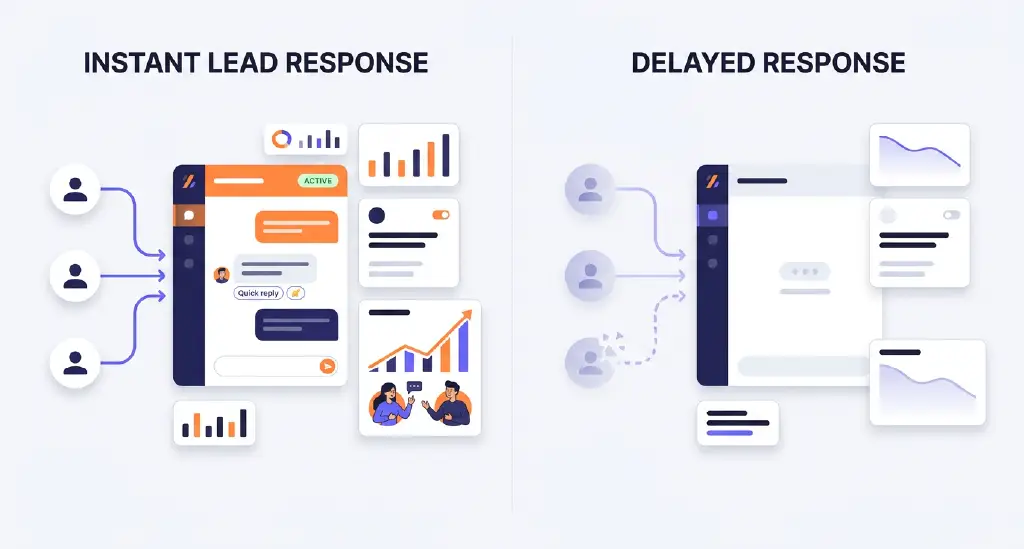
There’s a dangerous assumption that more leads automatically mean more sales.
In reality, poor handling destroys pipeline potential long before volume becomes the issue.
A real estate business generating hundreds of inquiries monthly found that over 60% of leads never received a personalized response. Many got automated emails days later. Some received nothing at all.
The business blamed the market.
The actual problem was operational.
Lead decay is one of the most overlooked revenue killers in modern sales. Interest has a shelf life. The longer a prospect waits, the colder they become.
This becomes even more critical during mid-year slowdowns because buyer attention fragments faster. Budgets tighten. Vacations begin. Decision cycles stretch. Competition increases.
If your response systems are slow, your pipeline naturally slows with them.
That’s why businesses focused on pipeline growth strategy are increasingly investing in automation that improves responsiveness instead of just generating more leads.
Not robotic automation. Intelligent automation.
The difference matters.
People still want conversations that feel human. They just expect them to be faster now.
A healthcare service provider improved conversions simply by implementing automated lead routing paired with personalized follow-ups within minutes instead of hours. Prospects felt acknowledged immediately, while sales reps spent less time manually assigning inquiries.
The result wasn’t just efficiency. It was momentum.
And momentum changes everything in sales.
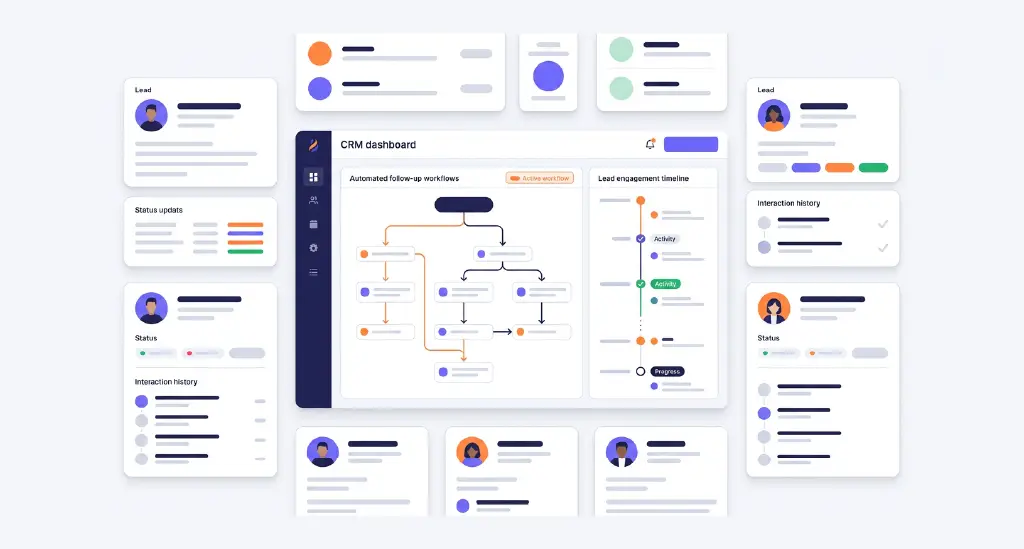
Nearly every company claims follow-up matters.
Very few execute it well consistently.
The issue is rarely laziness. It’s bandwidth.
Sales reps juggle demos, admin work, reporting, prospecting, meetings, CRM updates, proposals, and customer conversations simultaneously. Follow-ups become reactive instead of structured.
That’s when deals slip through cracks.
And those cracks are expensive.
A retail software company discovered that their highest-converting leads often required between five to seven touchpoints before responding meaningfully. But most reps stopped after two attempts because they assumed silence meant rejection.
Once the company implemented a structured follow-up cadence with personalized messaging, dormant conversations began reactivating again.
This matters because silence rarely means “not interested.”
Sometimes it means:
“I forgot.”
“I got busy.”
“I’m comparing options.”
“I need internal approval.”
“I wasn’t ready yet.”
Strong sales pipeline management accounts for buyer behavior instead of expecting perfect responsiveness.
This is also where AI-driven systems are reshaping pipeline performance.
Modern sales teams increasingly use AI not to replace relationships, but to maintain consistency. Automated reminders, smart follow-up triggers, lead prioritization, and behavioral insights help sales teams respond at the right moment instead of relying on memory.
And timing often determines whether a deal moves forward or disappears entirely.
A surprising number of pipelines slow down because every prospect receives nearly identical communication.
Generic outreach creates generic responses.
Or worse, no response at all.
Today’s buyers are overwhelmed with templated messaging. They instantly recognize when they’re part of an automated sequence that wasn’t built for them.
That doesn’t mean every email must be handcrafted from scratch. It means relevance matters.
A logistics company struggling with pipeline conversion adjusted their messaging strategy by segmenting prospects based on industry pain points instead of company size alone.
Their healthcare messaging focused on compliance delays.
Their ecommerce messaging focused on fulfillment speed.
Their manufacturing messaging focused on operational downtime.
Engagement rates improved because the messaging finally reflected real problems instead of generic product pitches.
This is one of the simplest ways to improve pipeline conversion without increasing spend.
Better messaging creates stronger movement.
Because buyers don’t care how advanced your solution sounds. They care whether it solves something urgent for them.
When pipelines slow, external factors often become the convenient explanation.
Economic uncertainty. Seasonal trends. Budget cuts. Competition.
And yes, sometimes those factors matter.
But internal friction quietly damages far more pipelines than external conditions do.
A company may have excellent products and strong lead generation while still struggling because their internal workflows are chaotic.
Maybe marketing and sales aren’t aligned.
Maybe lead handoffs are delayed.
Maybe CRM data is incomplete.
Maybe no one owns re-engagement campaigns.
Maybe reporting focuses on activity instead of conversions.
These operational gaps compound over time until pipeline slowdown becomes unavoidable.
One financial services business discovered leads were being contacted by multiple reps simultaneously due to poor CRM management. Prospects became confused, trust dropped, and response rates declined.
Fixing the workflow improved conversion rates without generating a single additional lead.
That’s the thing about pipeline performance.
Sometimes growth comes less from adding and more from simplifying.
Also read: The Cost of Unstructured Conversations: Why Growth Breaks at Scale
When revenue pressure increases, businesses often respond with bursts of activity.
Mass outreach campaigns. Aggressive cold emailing. Endless promotional offers.
But short-term intensity rarely fixes long-term pipeline problems.
Consistency does.
The businesses with stable pipelines aren’t necessarily the loudest. They’re usually the most disciplined.
They follow up consistently.
They qualify consistently.
They track movement consistently.
They nurture consistently.
They respond consistently.
Momentum compounds when systems are predictable.
This is why sustainable sales pipeline management depends heavily on operational reliability rather than motivational spikes.
Because buyers notice consistency.
And trust is often built through reliability more than persuasion.
One of the biggest shifts happening in sales right now is proactive engagement.
Companies can no longer afford passive pipelines where leads sit untouched waiting for manual action.
The fastest-growing businesses are building systems that identify intent early, trigger conversations quickly, and maintain engagement automatically without losing personalization.
That’s especially important during mid-year slowdowns when competition for buyer attention becomes more aggressive.
A delayed response today doesn’t just risk losing momentum. It risks losing the entire deal.
This is where platforms like Blazeo are helping businesses rethink pipeline management entirely.
Instead of relying on scattered follow-ups and disconnected workflows, businesses can automate lead engagement, improve response times, centralize conversations, and maintain consistent communication across the customer journey.
And in a market where speed, personalization, and timing increasingly determine conversions, that operational advantage matters.
Because fixing a slow pipeline isn’t about chasing more chaos.
It’s about building systems that create momentum naturally.
A slow sales pipeline is usually caused by delayed follow-ups, weak lead qualification, poor nurturing, or bottlenecks between stages.
You improve pipeline velocity by shortening response times, automating follow-ups, removing stalled deals, and simplifying sales processes.
Deals often stall because prospects lose urgency, communication slows down, or decision-makers are not properly engaged.
Most businesses should review and clean their pipeline weekly to remove inactive or unqualified opportunities.
Pipeline hygiene refers to maintaining accurate CRM data, removing dead leads, and ensuring deals move consistently through stages.
Yes. Automation improves response speed, lead nurturing, reminders, and follow-up consistency, which helps maintain momentum.
A slow pipeline doesn’t mean your business is failing.
But it does mean something in your process needs attention.
Maybe your leads are aging too quickly. Maybe follow-ups are inconsistent. Maybe qualification is weak. Maybe internal workflows are slowing momentum without anyone realizing it.
The important thing is addressing the problem before it compounds into a revenue crisis later in the year.
The May reset is an opportunity to clean up what’s stalled, simplify what’s bloated, and rebuild the systems that actually move deals forward.
Because pipeline growth rarely comes from doing everything harder.
It comes from doing the right things faster, smarter, and more consistently.
And if your business is looking for a better way to manage conversations, automate follow-ups, and improve sales pipeline management without sacrificing personalization, Blazeo can help turn stalled momentum into measurable growth.