 SmartHub
 Automation
 Appointment Scheduler
 Lead Management
 Dashboard & Reports
 Task Management
 Communications Hub
 Managed chat
 Voice Receptionist
 Appointment scheduling
 Retainer signing
 Home services
 Lawyers and firms
 Medical services
 College admissions
 Real estate agents
 Marketing agencies
 About
About Partner program
 Estimate Your ROI
 Case Studies
 Blog
Blog FAQs
FAQs Login
LoginWhy Businesses Don't Have a Lead Problem - They Have a Qualification Problem




Products
Industries
Company
Resources

The conversation usually starts the same way.
"We need more leads."
Sales numbers have slowed. Revenue has flattened. Growth isn't happening as quickly as expected. Marketing is asked to increase traffic, launch another campaign, or spend more on paid advertising. More leads become the solution before anyone has taken a closer look at the problem.
For a while, the numbers look promising. Website visits climb. Form submissions increase. The CRM fills with new names. Marketing celebrates hitting its targets.
Then something strange happens.
Sales don't improve.
The pipeline becomes larger, but revenue barely moves. Sales teams complain about poor-quality leads. Marketing insists they're delivering enough opportunities. Leadership wonders why customer acquisition costs continue to rise while conversion rates remain unchanged.
This isn't an unusual story.
In fact, it's one of the most common growth challenges businesses face today.
The issue isn't that companies aren't generating enough interest. It's that they haven't built a reliable way to identify which opportunities deserve immediate attention and which require nurturing over time.
In other words, they don't have a lead problem.
They have a lead qualification problem.
When every inquiry is treated exactly the same, valuable prospects get buried beneath casual browsers, price shoppers, and people who simply aren't ready to buy. The result is a sales process filled with activity but surprisingly little progress.
Improving lead qualification doesn't mean rejecting more prospects. It means understanding them better. And for businesses looking to grow efficiently, that distinction changes everything.
Imagine owning a busy home services company after a severe storm.
Within a few hours, your phone rings nonstop.
One homeowner has a leaking roof causing water damage inside the house.
Another wants a quote for replacing a roof next spring.
A third is simply researching prices because they recently bought a new property.
Technically, all three are leads.
Practically, they require completely different responses.
Yet many businesses place them into the same workflow. Every inquiry receives identical follow-up, regardless of urgency, buying intent, or likelihood of becoming a customer.
The result is predictable.
Sales teams spend valuable time chasing people who were never close to purchasing while genuinely qualified prospects wait longer than they should.
This happens across industries.
A law firm receives hundreds of consultation requests, but only a fraction involve cases they actually handle.
A healthcare clinic answers appointment inquiries alongside general questions that could have been resolved online.
A software company schedules product demonstrations with people who haven't even identified a business need yet.
Without an effective lead qualification process, businesses confuse activity with opportunity.
Every inquiry deserves respect.
Not every inquiry deserves the same priority.
Recognizing that difference is where stronger conversion begins.
It's easy to assume that increasing lead volume automatically creates more sales.
In reality, more leads can amplify existing weaknesses.
Picture a busy restaurant kitchen.
If orders are already arriving faster than chefs can prepare them, adding more customers doesn't improve service. It increases delays, creates mistakes, and frustrates everyone involved.
Sales pipelines work much the same way.
When qualification is weak, additional leads simply create more noise.
Sales representatives spend hours sorting through inquiries instead of speaking with serious buyers. Response times grow longer because everyone is trying to manage everything. High-intent prospects slip away while teams focus on conversations that were never likely to result in revenue.
Ironically, businesses often respond by increasing marketing spend again, believing lead quantity is still the issue.
The cycle repeats itself.
More inquiries.
More confusion.
Very little additional growth.
This is why businesses struggle with lead qualification even when demand appears healthy. The challenge isn't filling the pipeline. It's creating enough clarity within it.
Also read: Stop Chasing More Leads - Start Maximizing the Ones You Already Have
Some business owners worry that qualification creates unnecessary barriers for potential customers.
Done poorly, it certainly can.
Done well, qualification improves the customer experience.
Think about visiting a hospital emergency department.
Patients aren't treated in the exact order they arrive. Medical professionals assess urgency first. Someone with a life-threatening condition receives immediate attention, while less urgent cases may safely wait.
Nobody views that as unfair.
It's simply an effective use of limited resources.
Sales qualification works the same way.
Businesses aren't deciding who matters.
They're deciding who needs immediate attention.
A prospect requesting pricing, asking implementation questions, and comparing vendors is demonstrating very different buying intent than someone downloading a free guide for future research.
Both deserve engagement.
Only one likely needs a salesperson today.
This distinction helps businesses allocate time where it creates the greatest impact without ignoring future opportunities.
Qualification isn't exclusion.
It's intelligent prioritization.
Customers reveal their intentions long before they explicitly ask to buy.
The problem is that many businesses aren't listening.
Someone who visits your pricing page three times in two days tells a different story than someone who briefly reads a blog article and then leaves.
A prospect requesting a same-day callback signals stronger urgency than someone subscribing to a newsletter.
A customer asking detailed implementation questions has likely moved much further through the buying journey than someone requesting a general brochure.
Each interaction provides valuable context.
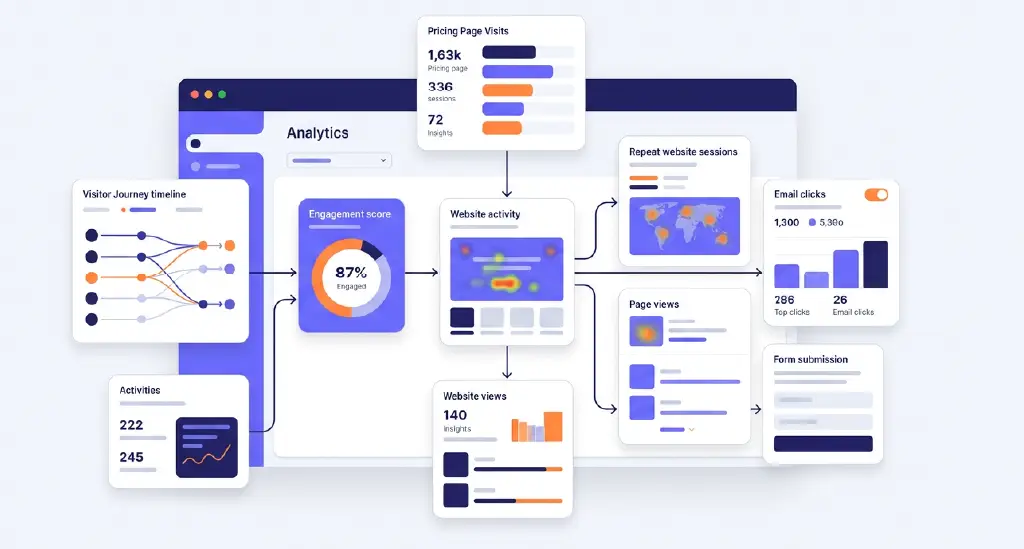
Yet businesses frequently rely on only one piece of information—a completed form.
Modern lead qualification combines multiple behavioral signals to more accurately assess readiness.
Website activity.
Previous conversations.
Communication preferences.
Response times.
Requested services.
Purchase history.
Together, these indicators create a far clearer picture than demographic information alone.
Understanding behavior often matters more than understanding background.
Also read: What Happens When Your Business Responds to Leads in Under 60 Seconds
Few workplace disagreements are as common as the one between marketing and sales.
Marketing celebrates generating hundreds of leads.
Sales insists only a handful were worth pursuing.
Both teams may be correct.
Marketing measures volume.
Sales measures revenue.
Without shared qualification standards, success looks completely different depending on which department you're sitting in.
Imagine a software company defining success as every webinar registration.
Sales, meanwhile, only considers companies with sufficient budget and decision-making authority as genuine opportunities.
Both groups are discussing leads.
They're simply talking about different kinds of leads.
Establishing a shared sales qualification framework changes that conversation.
Marketing begins optimizing for quality instead of quantity.
Sales gains greater confidence in incoming opportunities.
Leadership finally measures pipeline health using consistent criteria.
Alignment doesn't happen because departments suddenly agree.
It happens because everyone begins evaluating opportunities through the same lens.

Businesses no longer need employees manually reviewing every inquiry before deciding what happens next.
Artificial intelligence is transforming how organizations evaluate opportunities, particularly as inquiry volumes continue growing across multiple channels.
The goal isn't replacing human judgment.
It's making human judgment more effective.
Imagine an accounting firm receiving inquiries through phone calls, website forms, email, and live chat.
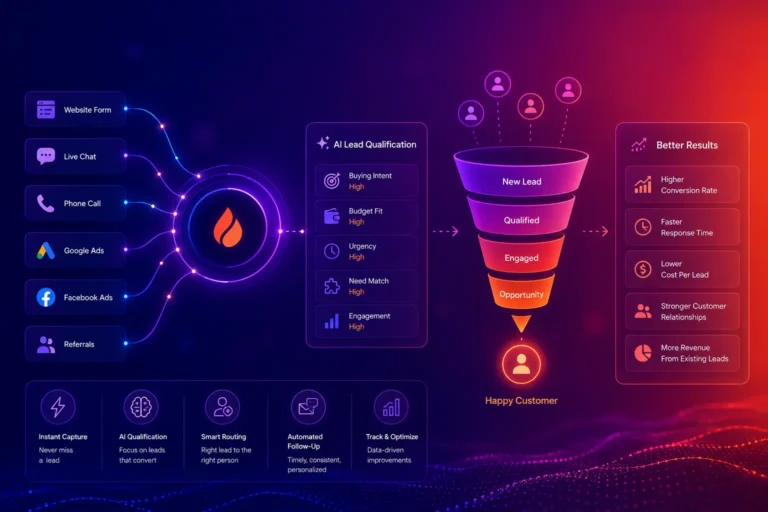
Instead of requiring staff to review every submission individually, AI lead qualification software can analyze responses, identify urgency, recognize buying signals, categorize inquiry types, and recommend next actions within seconds.
Someone requesting immediate tax assistance before a filing deadline can automatically receive higher priority than someone asking a general question about future services.
A prospective customer mentioning a large commercial project can be routed directly to senior sales staff instead of entering the standard queue.
Technology doesn't decide whether someone deserves attention.
It simply ensures the right conversations happen at the right time.
For growing businesses, that consistency becomes increasingly valuable.
Also read: What Smart Businesses Automate First — And What Still Needs a Human Touch
Every experienced salesperson develops instincts.
They know which conversations feel promising and which ones probably won't progress.
Experience matters.
But relying solely on intuition creates inconsistency.
One representative follows up aggressively.
Another dismisses the same opportunity.
A third forgets entirely.
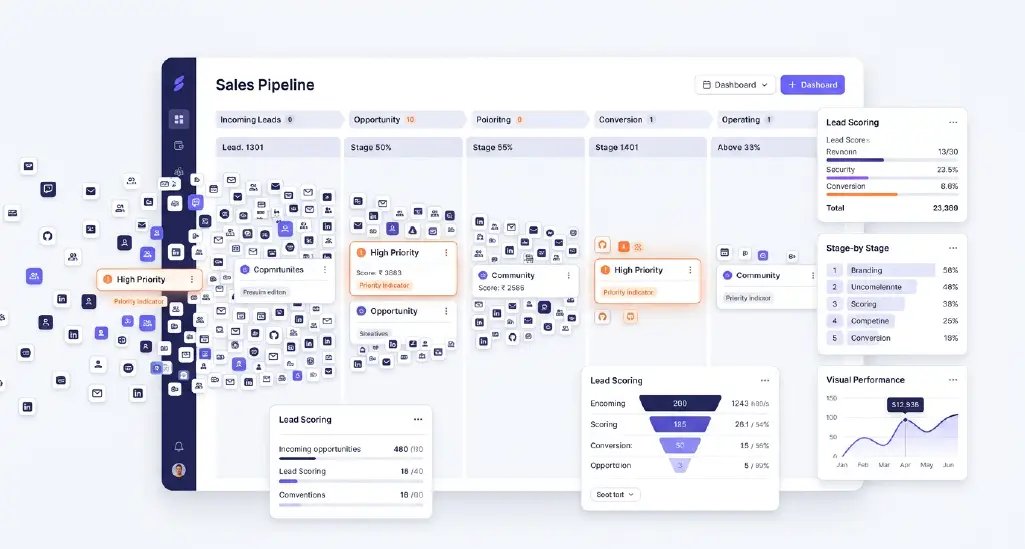
Lead scoring introduces structure without eliminating human judgment.
Instead of treating every inquiry equally, businesses assign value based on meaningful indicators.
Recent engagement.
Buying intent.
Service requested.
Company size.
Location.
Previous interactions.
Combined together, these factors help identify which opportunities deserve immediate follow-up and which belong in long-term nurturing campaigns.
Good lead scoring doesn't guarantee a sale.
It helps ensure promising opportunities don't disappear because they looked similar to less qualified inquiries.
Consistency becomes a competitive advantage.

Consider a regional legal practice specializing in personal injury cases.
The firm generated plenty of consultation requests each month, yet attorneys constantly complained that calendars were filled with conversations that rarely turned into clients.
Initially, management blamed marketing.
After examining incoming inquiries more closely, they discovered something unexpected.
Many consultation requests involved legal areas the firm didn't even practice.
Others came from people outside their licensed states.
Some were simply asking hypothetical questions rather than seeking representation.
Meanwhile, genuinely qualified cases sometimes waited a full day before receiving a callback because intake staff worked through inquiries in the order they arrived.
Instead of increasing advertising, the firm redesigned its qualification process.
Website forms collected more meaningful information.
AI categorized inquiry types before routing them.
High-value cases reached the appropriate legal team immediately.
Lower-priority inquiries received educational resources and scheduled follow-ups instead of consuming immediate attorney time.
The number of leads barely changed.
The number of signed clients increased.
Nothing magical happened.
The business simply stopped treating every inquiry as though it represented the same opportunity.
Customers don't think in terms of lead qualification.
They think in terms of responsiveness.
Relevance.
Convenience.
When businesses understand what customers actually need, interactions become noticeably smoother.
Questions receive appropriate answers.
Appointments happen faster.
Sales conversations feel more helpful than persuasive.
Customers spend less time repeating information.
The buying process feels organized rather than chaotic.
This is why effective qualification improves more than conversion rates.
It improves trust.
People naturally prefer businesses that appear prepared, attentive, and capable of understanding their needs quickly.
Behind that seamless experience often sits an intelligent qualification process working quietly in the background.
Customers may never notice it.
They'll certainly notice its absence.
Businesses don't fail because they lack opportunities.
They fail because opportunities become difficult to distinguish from distractions.
As marketing channels multiply and customer journeys become increasingly complex, simply generating more inquiries is no longer enough.
Growth depends on understanding which conversations deserve immediate attention, which require nurturing, and which fall outside your ideal customer profile altogether.
That's why the best lead qualification process isn't built around rejecting people.
It's built around helping the right customers receive the right experience at exactly the right moment.
When businesses qualify leads intelligently, sales teams become more productive, marketing investments perform better, and customers enjoy faster, more relevant interactions.
Everyone wins.

Also read: How to Fix a Slow Sales Pipeline Fast
If your business feels trapped in a cycle of chasing more leads without seeing proportional revenue growth, the answer may not be another marketing campaign. It may be a better qualification strategy.
By understanding buyer intent, prioritizing high-value opportunities, implementing consistent lead scoring, and using AI to streamline qualification, businesses can convert more of the opportunities they already have instead of constantly searching for new ones.
At Blazeo, we help businesses transform lead qualification into a competitive advantage. From AI-powered lead qualification software and intelligent routing to automated follow-up and unified customer communication, Blazeo helps your team focus on the conversations that matter most—so you can convert more leads, improve sales efficiency, and grow without simply generating more traffic.

