 SmartHub
 Automation
 Appointment Scheduler
 Lead Management
 Dashboard & Reports
 Task Management
 Communications Hub
 Managed chat
 Voice Receptionist
 Appointment scheduling
 Retainer signing
 Home services
 Lawyers and firms
 Medical services
 College admissions
 Real estate agents
 Marketing agencies
 About
About Partner program
 Estimate Your ROI
 Case Studies
 Blog
Blog FAQs
FAQs Login
LoginReal Estate Automation: Top Lead Capture Tools for Agents




Products
Industries
Company
Resources

It's 9 PM on a Friday, and a buyer just called about a listing. Nobody picks up. By Saturday morning, that same buyer has already walked through three other homes with someone else's agent. This isn't a rare story. It plays out in brokerages every single week, and it rarely comes down to laziness. Agents can't physically answer every call at once, no matter how good they are.
The ones who stay ahead usually aren't working harder; they're just not losing leads to silence. Real estate automation exists for exactly this reason: to close the gap between when someone reaches out and when they get a real response.
The right tools take care of intake, qualification, and follow-up while you're mid-showing or asleep. But not every tool in this space does the same job, and picking the wrong one burns both time and budget. Here's a breakdown of the categories, a handful of tools worth testing, and guidance on figuring out which one fits your team.
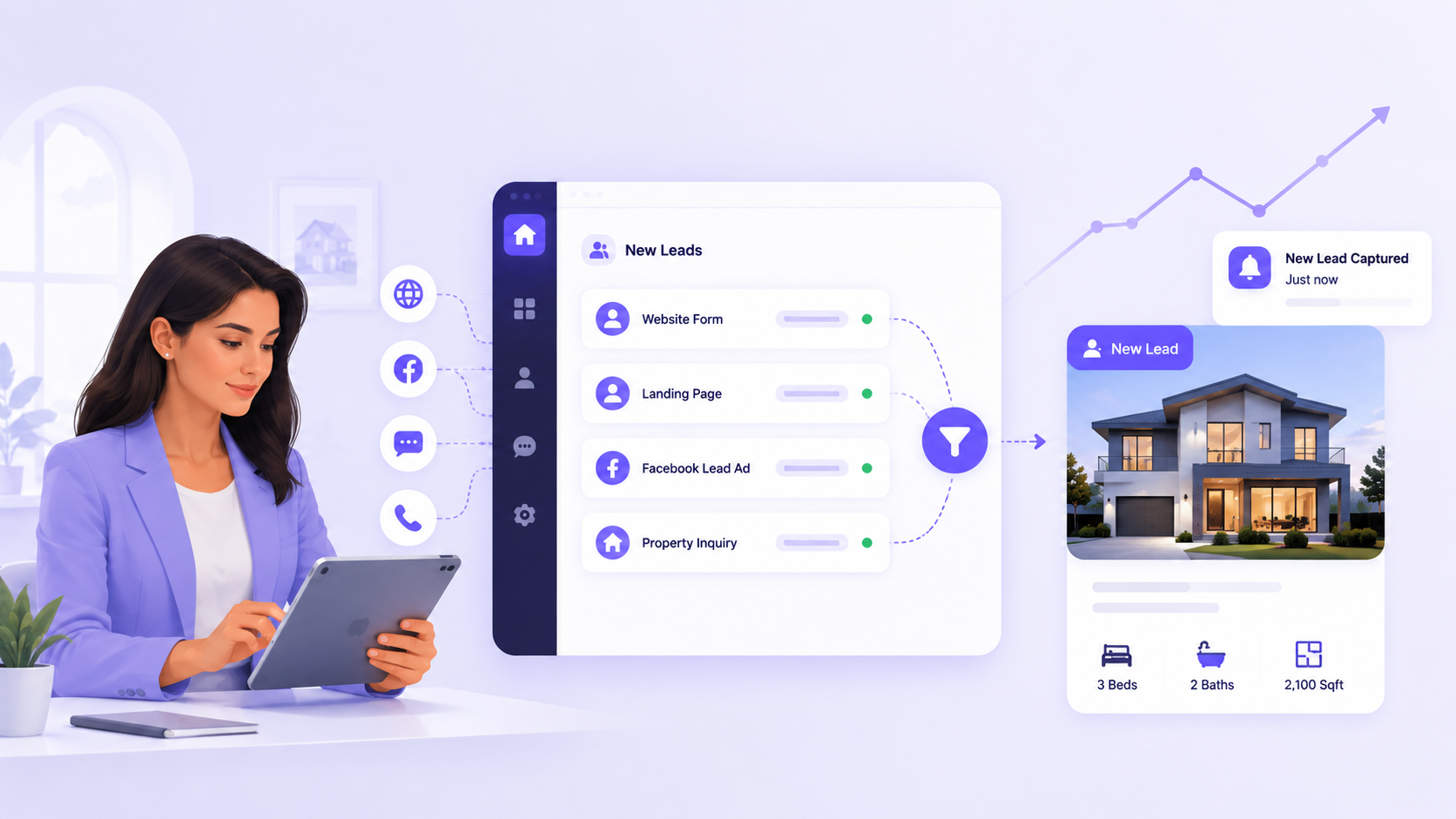
At its core, real estate automation just means software doing the repetitive stuff so you don't have to. Lead intake forms, CRM updates that happen on their own, follow-up texts that go out on a schedule, appointment reminders nobody had to type. If you've ever sent the same welcome email fifty times in a month by hand, this is the fix.
None of this is brand new, honestly. Drip campaigns have been around for well over a decade at this point. What's actually shifted is how smart the trigger behind it has gotten. A modern piece of real estate automation software can read what a lead actually wrote, figure out what they want, and get them to the right person in seconds instead of sitting in an inbox for hours.
Why does this matter now more than it used to? Buyer expectations moved faster than most brokerages caught up to. A twenty-something browsing listings at midnight expects some kind of reply immediately, not a callback during business hours two days later. Automation is really just the industry catching up to that shift.
Anyone who's shown property knows the feeling of a phone buzzing nonstop while you're standing in someone's kitchen. Calls stack up in voicemail. Nobody listens to them until that evening, if at all. By then the lead already found someone who answered.
After-hours calls are probably the single biggest leak in most pipelines, and it's rarely talked about directly. A buyer scrolling listings at midnight isn't going to sit around until 9 AM for a callback. Skip real estate lead automation, and that window's already closed before your coffee's even made.
Then there's the tire-kicker problem, which eats time in a quieter but just as damaging way. Every hour spent walking a casual browser through details is an hour not spent on someone actually ready to buy. Qualifying every single caller by hand means treating a bored scroller the same as a motivated seller, and that math never works out.
Paperwork is the third drain, and it's often the one agents underestimate most. Chasing down a signature, updating three separate spreadsheets, re-typing the same contact info into two different systems. Track that for a week and the hours add up faster than most people expect.
Real estate automation tools don't all solve the same problem, so they naturally split into three functional groups. Figuring out which one you actually need first saves you from paying for a feature set you'll never touch.
Think of these as the front door. Chat widgets and voice assistants field buyer questions around the clock, no waiting on a human to log in. They ask the qualifying questions, grab the contact info, and flag whoever seems serious before an agent even enters the picture.
The good ones actually read context instead of just matching keywords. Someone asking about a mortgage rate gets treated differently than someone asking about square footage. This is also where AI real estate automation pays off fastest, since it goes straight after the after-hours gap that costs agents the most.
This side of things feels more familiar to most agents. Email sequences that drip out over weeks, task reminders, pipeline stages that update themselves. Most platforms let you set rules like "if there's no reply in five days, send a check-in."
The catch is setup. These systems are genuinely powerful, but only after someone puts real time into configuring them. Skip that step, and you end up with a CRM full of dead contacts and zero actual follow-up happening in the background.
These don't capture leads or manage relationships on their own. What they do is stitch together the tools you're already using. Someone fills out a form, and suddenly a CRM contact gets created, a text goes out, and your team gets pinged on Slack.
Connectors earn their keep once you're juggling three or more platforms that don't naturally talk to each other. Without one, somebody on your team is stuck copying data by hand, probably every day.
Pricing and focus swing pretty widely across this space, so it helps to see things side by side before booking any demos.
| Tool | Best For | Starting Price | Key Automation |
| Blazeo | Lead capture and conversational engagement | Custom pricing | AI chat and voice qualify leads, route serious buyers to agents fast |
| Follow Up Boss | CRM-driven follow-up | Around $8/user/month | Automated texts, calls, and task workflows tied to lead behavior |
| kvCORE | All-in-one lead nurturing | Custom pricing | Smart routing plus IDX websites and campaign automation |
| Zapier | Cross-tool connections | Free tier, paid from ~$20/month | Connects forms, CRMs, and messaging apps without code |
| Real Geeks | IDX and small-team CRM | From $299/month per office | Website lead capture with built-in follow-up campaigns |
Blazeo zeroes in on that first moment a lead reaches out, using AI chat and voice to answer questions and sort serious buyers before anyone gets handed off to a human. Think of it as an automation for real estate agents layer built for capture and engagement, not something meant to replace the CRM you're already running.
Follow Up Boss and kvCORE are strong once leads are already qualified and flowing in, but they assume that part's handled. Zapier isn't doing any outreach itself; it's just connecting the dots between your other tools. Real Geeks bundles a website with follow-up sequences baked in, which works well for smaller teams that want one place to manage things.
Figure out first where your leads are actually slipping through. If after-hours response is the weak spot, lead capture tools matter more than yet another CRM. If it's the follow-up that's inconsistent, flip that priority.
A few things worth asking before signing up for anything:
Budget matters, sure, but the real risk is spending money on the wrong problem. A cheap CRM isn't going to fix missed calls, and a pricey voice AI won't clean up messy follow-up habits.
AI on its own isn't always the full answer, and it's worth being honest about that instead of overselling it. A chatbot that stumbles on a real financing question loses trust fast, and a voice agent that sounds obviously robotic can kill a conversation before a human even joins in.
What tends to work better is pairing real estate automation software with actual people at the right handoff point. That's the thinking behind how we approach conversational tools: let AI handle the instant response and initial sorting, then bring in a person once things need real judgment or negotiation.
This ties right back to the scenario that opened this piece, missed after-hours calls quietly costing agents deals. Speed matters a lot here, but so does knowing exactly when a human needs to step into the conversation.
Teams that lean into this hybrid setup tend to report fewer leads slipping away, without losing the personal touch that still matters when someone's making one of the biggest purchases of their life.
What is real estate automation?
It's software that handles repetitive property tasks like lead intake, follow-up messages, and CRM updates automatically, reducing manual work for agents and teams.
Is automation software the same as a CRM?
Not exactly. A CRM organizes contacts and communication history, while automation tools trigger actions like emails or lead routing based on specific events.
How much does real estate automation cost?
Pricing varies widely, from free connector tiers to several hundred dollars monthly for full platforms. Most lead-focused tools start around $8 to $20 per user monthly.
Can automation handle after-hours buyer calls?
Yes. AI chat and voice tools can answer questions, qualify leads, and capture contact details any time, then notify agents once a serious buyer is identified.
Is AI cold calling legal for real estate?
Generally yes, but agents must follow TCPA rules, state telemarketing laws, and Do Not Call list requirements when using automated outbound calling tools.
How long does it take to set up automation tools?
Setup ranges from a few days for standalone lead capture tools to several weeks for full CRM platforms with multiple integrations and custom workflows.
Do small agencies need automation software?
Often yes. Solo agents and small teams benefit most from lead capture automation, since missed after-hours inquiries hurt smaller pipelines more than larger brokerages.
What's the difference between lead capture and lead nurturing tools?
Lead capture tools qualify and route new inquiries as they arrive. Nurturing tools maintain relationships with existing leads through scheduled follow-ups over time.
Getting real estate automation right starts with knowing exactly where your pipeline is bleeding time. After-hours silence, inconsistent follow-up, manual data entry- each one calls for a different fix, not some single tool that claims to do it all. Match the solution to the actual problem before even looking at price tags.
Try one category at a time rather than ripping out your whole stack in one go. If response time is the weak link, start with lead capture and build from there. Add CRM automation once qualified leads are already coming in steadily. Small changes tend to stick better than a full overhaul anyway. Get this right, and it saves real hours every week, while keeping serious buyers from quietly disappearing to someone who answered first.

