 SmartHub
 Automation
 Appointment Scheduler
 Lead Management
 Dashboard & Reports
 Task Management
 Communications Hub
 Managed chat
 Voice Receptionist
 Appointment scheduling
 Retainer signing
 Home services
 Lawyers and firms
 Medical services
 College admissions
 Real estate agents
 Marketing agencies
 About
About Partner program
 Estimate Your ROI
 Case Studies
 Blog
Blog FAQs
FAQs Login
LoginWhy Customers Stop Replying (And How Businesses Can Win Them Back)




Products
Industries
Company
Resources

Customer conversations rarely end with a clear "no."
More often, they simply fade away.
Someone fills out a contact form, asks about pricing, schedules a consultation, or even has a productive first call. Then, without warning, they disappear. Emails go unanswered. Text messages remain unopened. Calls go to voicemail. Days turn into weeks, and eventually, businesses assume the opportunity is lost.
But silence is not always rejection.
In many cases, customers stop responding for reasons that have very little to do with your product or service. Life gets busy. Priorities change. Someone else on their team needs to approve the purchase. They become overwhelmed with information. Sometimes they simply forget to reply.
Yet countless businesses interpret silence as failure and immediately move on to finding the next lead.
That mindset is expensive.
Studies consistently show that acquiring a new customer costs significantly more than retaining or re-engaging an existing one. Every conversation that quietly slips away represents marketing dollars already spent, trust already established, and interest already earned. Walking away too early often means abandoning revenue that was much closer than it appeared.
Successful businesses understand that customer re-engagement is not about chasing people relentlessly. It's about understanding why conversations stall, recognizing the right moment to reconnect, and making it remarkably easy for customers to continue where they left off.
The businesses that recover the most lost opportunities aren't necessarily generating more leads. They're simply getting better at bringing existing conversations back to life.
Silence Doesn't Mean They Aren't Interested

Imagine someone researching a kitchen remodel.
They contact three contractors on Monday, receive multiple estimates by Wednesday, spend Thursday discussing budgets with their spouse, then get pulled into a stressful week at work. Their child's school schedule changes, a family emergency comes up, and suddenly responding to contractors becomes the last thing on their mind.
From the contractor's perspective, the prospect disappeared.
From the customer's perspective, life simply happened.
This scenario plays out every day across every industry.
A homeowner requesting roofing quotes.
A patient considering a dental procedure.
A law firm consultation.
A software demo.
A landscaping estimate.
The conversation pauses, but the need often remains.
Businesses that assume silence equals rejection frequently abandon customers who were still actively considering a purchase.
Understanding why customers stop responding is the first step toward creating better follow-up experiences.
People Don't Buy on Perfect Timelines
Businesses love predictable sales funnels.
Customers rarely behave that way.
Buying decisions are influenced by countless external factors that companies cannot control. Budgets change. Decision-makers go on vacation. Internal meetings get delayed. Competing priorities emerge. Sometimes people simply need more time to feel confident before committing.
The expectation that every interested customer should respond within 24 hours creates unnecessary pressure on both sides.
Consider someone shopping for HVAC replacement before summer. They might request estimates in April but wait until temperatures begin rising in June before making a final decision.
A law firm might receive an inquiry from someone who isn't ready to pursue legal action immediately but returns several weeks later when circumstances change.
Someone considering cosmetic dentistry might postpone treatment until after an upcoming holiday or bonus payment.
None of these prospects have lost interest.
Their timeline simply differs from the business's expectations.
This is where thoughtful lead follow-up becomes essential. The goal isn't to pressure people into making faster decisions. It's to stay visible, helpful, and available whenever they're ready.

Also read: The Sales Funnel Doesn't End at "Lead Captured"
One of the biggest misconceptions in sales is believing that one unanswered email signals the end of the conversation.
Research has repeatedly shown that meaningful conversions often happen after multiple touchpoints. Yet many businesses stop after two or three attempts because they worry about appearing intrusive.
Ironically, customers are often far more forgiving than businesses assume.
A helpful reminder a week later.
A quick text asking whether they still have questions.
A follow-up call offering additional information.
These aren't annoyances when they're relevant and respectful. They're reminders that someone is available to help.
The problem isn't usually too much follow-up.
It's inconsistent follow-up.
Many companies begin enthusiastically but lose momentum after the first few days. Once newer leads enter the pipeline, older conversations quietly receive less attention until they're forgotten altogether.
Unfortunately, customers notice inconsistency.
If your responsiveness disappears after the initial inquiry, it subtly communicates that your attention ends once immediate momentum fades.
Trust weakens long before the sale is officially lost.
There's another reason many sales re-engagement efforts fail.
They sound exactly like every other automated email sitting in someone's inbox.
"Just checking in."
"Following up on my previous message."
"Let me know if you have any questions."
While polite, these messages offer nothing new.
Customers already know you're following up. What they don't know is why opening your email is worth their time.
Effective re-engagement creates value.
Imagine a landscaping company following up with:
"We recently completed a backyard renovation similar to what you described. Thought you might enjoy seeing the before-and-after photos."
Or a law firm saying:
"You mentioned concerns about insurance timelines. We've attached a short guide explaining what usually happens during the first 30 days after filing a claim."
Or a dental practice reaching out with:
"Several patients ask about financing before scheduling treatment. Here's a breakdown of the payment options available."
These conversations continue naturally because they're useful.
The follow-up isn't asking for attention.
It's earning it.

Many businesses focus on how often they should follow up.
The better question is when.
A customer who downloads pricing information might benefit from a follow-up later that same day while details remain fresh.
Someone requesting a roof inspection may appreciate hearing back after a weekend when they've had time to discuss the estimate with family.
A prospect who attended a software demo might be most receptive after their internal team meeting.
Successful customer re-engagement depends on understanding customer behavior rather than blindly following rigid schedules.
The most effective businesses look for signals.
Did someone revisit the pricing page?
Did they reopen an email?
Did they start completing a booking form?
Did they respond on another communication channel?
These moments create opportunities for highly relevant follow-up rather than random outreach.
Customers don't necessarily mind hearing from businesses.
They mind hearing from businesses that seem disconnected from where they are in the buying journey.
Also read: Stop Chasing More Leads - Start Maximizing the Ones You Already Have
People don't communicate the same way they did five years ago.
Someone may ignore email while responding instantly to a text message.
Another customer might never answer phone calls but happily engage through live chat.
Others begin conversations on social media before switching to SMS or voice.
Businesses often lose customers simply because they insist on continuing conversations through the original channel.
The customer has moved.
The business hasn't.
Imagine requesting information through a website late at night.
The following morning, you receive three missed calls while sitting in meetings.
You don't answer.
Later that evening, a short text arrives saying:
"Just wanted to make sure you received the estimate. Happy to answer questions whenever it's convenient."
That feels dramatically different.
Modern lead follow-up recognizes that conversations should adapt to customer preferences rather than forcing customers to adapt to business workflows.

Persistence has become something of a sales cliché.
But persistence without empathy rarely succeeds.
Imagine receiving daily emails asking whether you're "ready to move forward."
Now imagine receiving a message that says:
"We know priorities change. If now isn't the right time, no problem at all. If you'd still like information when you're ready, we're here to help."
The second message respects the customer's reality.
It reduces pressure.
Ironically, reducing pressure often increases responses.
People are naturally drawn toward businesses that feel helpful rather than transactional.
That's especially true when conversations have already gone quiet.
The best follow-up strategy for lost leads isn't relentless pursuit.
It's thoughtful presence.
As customer databases grow, manually remembering every stalled conversation becomes nearly impossible.
Someone who inquired six weeks ago may deserve another follow-up.
Another customer might be approaching the ideal time for renewal.
Someone else abandoned an appointment halfway through the booking process.
Without technology, these opportunities disappear.
Automation helps businesses stay organized.
But automation alone doesn't build relationships.
Customers still expect empathy, personalization, and genuine understanding.
The strongest businesses combine intelligent systems with human conversations.
Technology identifies opportunities.
People build trust.
This balance becomes especially important when businesses manage hundreds or thousands of customer interactions every month.
Instead of forgetting conversations, they create systems that ensure no customer quietly slips away simply because someone became too busy.
Also read: What Smart Businesses Automate First — And What Still Needs a Human Touch
Perhaps the biggest misconception about customer retention is believing it begins after someone stops responding.
In reality, retention starts with the very first interaction.
Fast responses establish confidence.
Clear communication reduces uncertainty.
Consistent updates prevent customers from wondering what happens next.
Simple appointment reminders reduce no-shows.
Helpful educational content keeps businesses relevant during longer buying journeys.
Every interaction either strengthens or weakens future engagement.
Businesses that consistently communicate with clarity create customers who are far less likely to disappear in the first place.
When conversations do pause—as they inevitably will—the relationship already has enough trust to survive the silence.
Businesses spend enormous amounts of money generating new leads.
Advertising budgets increase.
SEO campaigns expand.
Landing pages improve.
Marketing teams celebrate rising traffic numbers.
Yet many overlook the opportunities already sitting inside their CRM.
Customers who once showed genuine interest.
Prospects who requested pricing.
People who booked consultations but never confirmed.
Previous buyers who haven't returned.
Inactive conversations often represent some of the highest-value opportunities available because the hardest part has already happened: they've already found you and started talking.
Learning how to re-engage cold leads isn't about squeezing more value from old databases.
It's about recognizing that behind every inactive conversation is a real person whose circumstances may have changed.
The right message at the right time can restart a conversation that seemed permanently lost.

Customers rarely disappear because they suddenly stopped needing what you offer.
More often, life interrupted the conversation.
Businesses that recognize this approach follow up differently. They communicate with empathy instead of urgency, provide value instead of pressure, and stay consistently present without becoming overwhelming. Over time, these habits create stronger relationships, higher conversion rates, and more sustainable growth than simply chasing new leads.
Recovering lost opportunities isn't about sending more messages. It's about sending better ones, at the right time, through the right channel, with genuine intent to help.
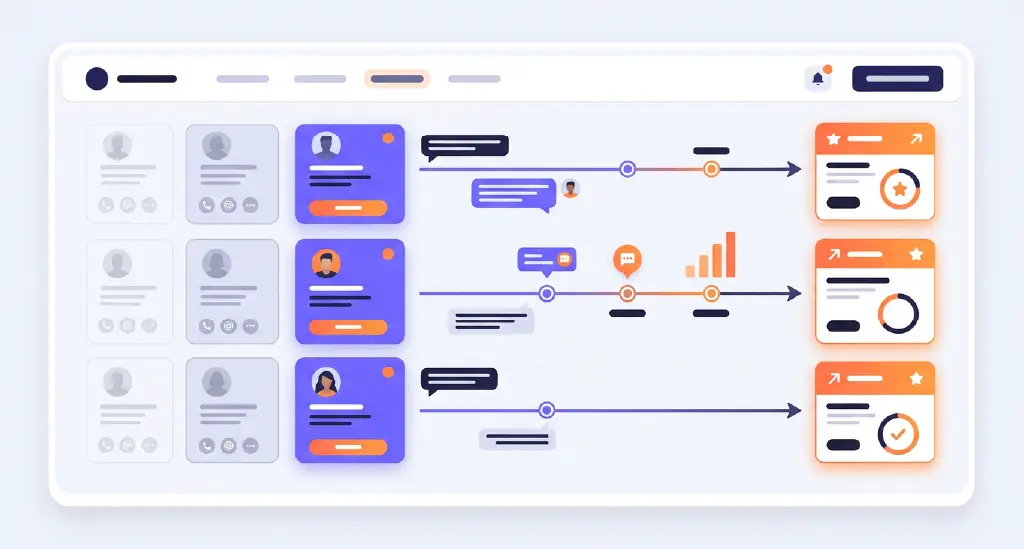
Platforms like Blazeo make this easier by bringing conversations from voice, SMS, web chat, email, and other channels into one place, while intelligent automation ensures timely follow-ups without losing the personal touch. Instead of letting valuable conversations fade away, businesses can reconnect with customers when it matters most, recover missed revenue, and build lasting relationships that extend well beyond the first interaction.

