 SmartHub
 Automation
 Appointment Scheduler
 Lead Management
 Dashboard & Reports
 Task Management
 Communications Hub
 Managed chat
 Voice Receptionist
 Appointment scheduling
 Retainer signing
 Home services
 Lawyers and firms
 Medical services
 College admissions
 Real estate agents
 Marketing agencies
 About
About Partner program
 Estimate Your ROI
 Case Studies
 Blog
Blog FAQs
FAQs Login
LoginThe Hidden Cost of Making Customers Repeat Themselves




Products
Industries
Company
Resources

It starts with a simple question.
A customer fills out a contact form requesting a quote. Minutes later, they receive a text asking for the same information. They reply. The following day, a sales representative calls and asks them to explain their requirements again. Later that afternoon, they open the website chat to ask a follow-up question, only to realize the support agent has no idea who they are or what they've already discussed.
By the end of the week, they've repeated the same story four times.
To the business, these are separate interactions handled by different teams using different systems.
To the customer, it's one conversation that never seems to move forward.
This disconnect is more damaging than many businesses realize. Customers don't just dislike repeating themselves because it's inconvenient. They interpret it as a sign that the company isn't organized, isn't paying attention, or simply doesn't value their time.
In an era where consumers expect personalized, connected experiences, fragmented communication has become one of the fastest ways to lose trust. Every repeated question creates unnecessary friction, slows decision-making, and increases the likelihood that a prospect will simply walk away.
The businesses that consistently win customers aren't always the ones with the lowest prices or the biggest marketing budgets. They're the ones that make every interaction feel connected. They remember previous conversations, preserve context, and ensure customers never have to start from square one.
That's exactly what effective customer communication management is designed to achieve.

Think about the last time you contacted a company for help.
Perhaps you explained your issue to a chatbot before being transferred to a live agent. The agent asked the same questions again before escalating your case to another department, where you found yourself repeating everything for a third time.
The frustration isn't simply about answering the same questions.
It's about feeling unheard.
Customers expect businesses to remember what they've already shared. When they don't, it sends an unintended message: your time isn't important enough for us to keep track of.
This frustration isn't limited to customer support. It happens throughout the entire customer journey. A prospective client requesting a consultation, a patient scheduling an appointment, or a homeowner seeking an estimate all expect the information they've already provided to travel with them.
Instead, many businesses unintentionally create disconnected experiences where every new interaction feels like the first.
That gap between customer expectations and business reality is growing wider every year.
Also read: The Conversation Gap: Why You Can Track Leads but Not What Actually Converts Them

Businesses often organize communication by platform.
There's the phone system.
The website chat.
Email.
SMS.
Social media messages.
Contact forms.
Each channel has its own workflow, software, and often its own team.
Customers don't think this way.
They aren't consciously switching between departments or systems. They're simply continuing a conversation.
A customer might begin researching your services on your website, ask a few questions over live chat during lunch, reply to a follow-up text later that evening, and answer a phone call the next morning.
To them, these interactions belong to the same journey.
When every channel operates independently, however, each conversation begins with another introduction, another explanation, and another opportunity for information to be lost.
Without reliable customer conversation history, businesses unintentionally create barriers instead of building relationships.
Many organizations assume asking customers to repeat themselves is a minor inconvenience.
It isn't.
Every repeated conversation introduces friction at the exact moment customers are trying to move forward.
Imagine someone requesting emergency HVAC repairs during a heatwave. They've already submitted details online, uploaded photos, and explained the issue through text messages.
When the technician calls and asks, "Can you tell me what's going on?" the customer doesn't simply repeat the problem.
They wonder why nobody shared the information.
That single moment creates doubt.
If the company couldn't communicate internally, will the repair be handled correctly? Will the appointment be accurate? Will pricing remain consistent?
Small breakdowns in communication often shape larger perceptions about competence and reliability.
Customers rarely distinguish between disconnected software and poor service.
To them, they're the same thing.
Also read: The Cost of Internal Chaos: When Good Leads Slip Through the Cracks
Businesses typically track response times, lead volume, conversion rates, and revenue.
What they don't often measure is the cost of fragmented communication.
Every repeated conversation consumes valuable employee time. Sales representatives spend minutes rediscovering information instead of advancing deals. Support agents investigate issues that were already documented elsewhere. Managers become involved because frustrated customers ask to speak with someone who actually knows what's happening.
These delays add up quickly.
More importantly, they affect customer behavior.
Some prospects stop responding altogether.
Others schedule with competitors.
Existing customers become less likely to recommend the business because the experience feels unnecessarily complicated.
Poor communication rarely appears as a line item in a financial report.
Instead, it quietly influences every important metric—from customer satisfaction to retention and revenue.
That's why strong customer communication management isn't simply about efficiency.
It's about protecting every opportunity before it's lost.
Ironically, communication problems tend to appear as businesses become more successful.
When a company is small, everyone knows every customer.
The owner answers the phone, schedules appointments, and follows up personally. Information travels naturally because everyone is involved in every conversation.
Growth changes that.
New employees are hired.
Departments become specialized.
Additional locations open.
More communication channels are introduced.
Technology stacks become increasingly complex.
Without a clear strategy for communication continuity, customer information becomes scattered across different tools and teams.
A salesperson might never see previous support conversations.
The customer service team may not know what marketing promised.
Appointment schedulers may lack access to important notes collected during earlier interactions.
Each department performs well individually.
Collectively, however, the customer experiences confusion.
The solution isn't hiring more people.
It's ensuring everyone has access to the same conversation.
Also read: Why Businesses Don't Have a Lead Problem - They Have a Qualification Problem
Imagine calling your doctor's office after scheduling an appointment online.
Instead of asking who you are and why you're calling, the receptionist says:
"Hi Sarah. I can see you booked an appointment yesterday regarding recurring migraines. You also mentioned mornings work best for you. How can I help today?"
That interaction immediately feels different.
You haven't repeated anything.
The conversation starts where the last one ended.

Context creates confidence.
Customers feel recognized instead of processed.
The same principle applies across every industry.
Whether someone is buying software, scheduling legal advice, requesting home repairs, or booking a consultation, they appreciate businesses that remember previous interactions.
Preserving context doesn't simply save time.
It communicates professionalism, attention to detail, and genuine care.
Those qualities influence buying decisions just as much as pricing or product features.
Customer expectations have changed dramatically.
Consumers are accustomed to digital experiences that remember preferences, previous purchases, saved payment methods, and browsing history.
Streaming platforms resume exactly where viewers stopped watching.
Shopping websites remember abandoned carts.
Navigation apps recall recent destinations.
Naturally, customers expect businesses to remember conversations too.
When they don't, the experience feels outdated.
Strong communication continuity ensures that conversations move naturally across every touchpoint.
Instead of isolated interactions, customers experience one continuous journey.
That continuity reduces frustration while giving employees the information they need to provide faster, more personalized support.
It also improves consistency.
Customers receive the same answers regardless of whether they're speaking through chat, text, phone, or email.
That consistency builds trust.
Trust creates confidence.
Confidence drives conversions.
Also read: Every Customer Conversation Is Data - Most Businesses Waste It
Many organizations respond to communication challenges by purchasing another platform.
Unfortunately, more software doesn't automatically create better communication.
If anything, it often creates more silos.
Technology should support conversations—not replace them.
The goal isn't simply storing customer information.
It's making relevant context instantly available whenever and wherever conversations happen.
That means connecting interactions across channels so employees can immediately understand previous discussions without asking customers to start over.
It also means reducing unnecessary handoffs.
Every transfer between departments creates another opportunity for information to disappear.
Businesses that focus on connected experiences rather than disconnected tools create smoother customer journeys from beginning to end.

Businesses wondering how to improve communication continuity should begin by mapping the customer's journey rather than their internal workflows.
Ask a simple question.
If a customer switches from live chat to a phone call tomorrow, will the employee answering immediately understand yesterday's conversation?
If the answer is no, there's room for improvement.
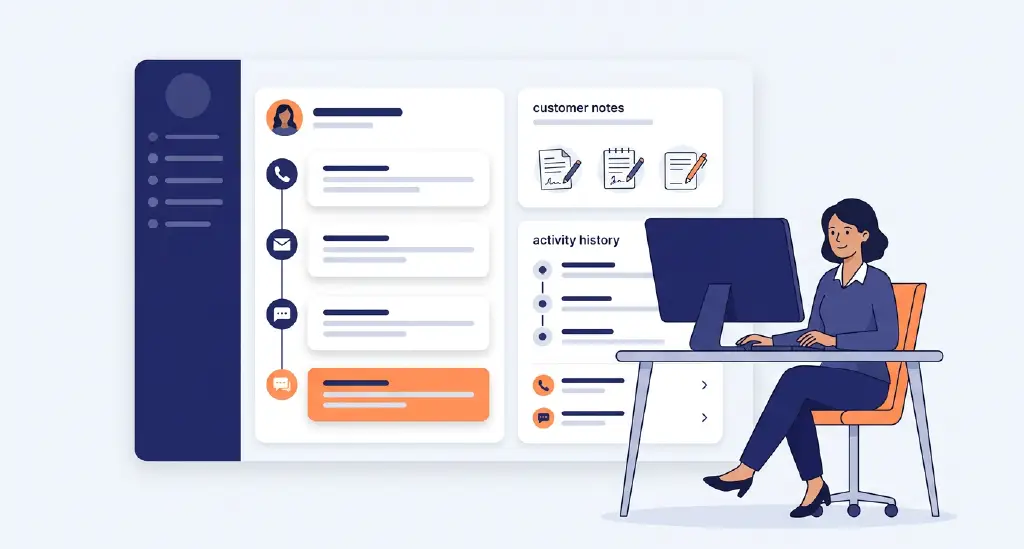
Building continuity starts with creating a single source of truth for customer interactions. Every conversation, regardless of where it begins, should contribute to one complete history rather than separate records.
It's equally important to eliminate unnecessary repetition between departments. Sales, marketing, customer service, and operations all benefit when everyone works from the same information.
Automation can also play a meaningful role. Intelligent routing, centralized conversation histories, and shared customer records reduce manual work while ensuring important context never gets lost.
Ultimately, customers shouldn't notice your internal systems.
They should simply experience conversations that flow naturally.
The businesses customers remember most aren't necessarily the ones with the fanciest websites or the biggest advertising budgets.
They're the ones that make every interaction feel effortless.
Customers appreciate businesses that remember previous conversations.
They value employees who understand their situation before asking questions.
They trust companies that make communication simple instead of repetitive.
Every connected interaction reinforces confidence.
Every fragmented interaction weakens it.
Over time, these moments shape customer loyalty far more than businesses realize.
Creating a seamless customer conversation across channels isn't about impressing customers with technology.
It's about respecting their time.
When customers no longer have to repeat themselves, conversations become more productive, decisions happen faster, and relationships grow stronger.

Customers don't expect perfection.
They expect progress.
Every interaction should build on the one before it, bringing them closer to a solution instead of sending them back to the beginning.
When businesses preserve customer conversation history, maintain communication continuity, and invest in modern customer communication management, they create experiences that feel organized, thoughtful, and personal.
The benefits extend far beyond happier customers. Teams become more efficient, handoffs become smoother, and opportunities that might otherwise be lost remain on track.
In today's competitive landscape, remembering conversations isn't simply good customer service.
It's good business.
If your business is ready to eliminate fragmented communication and deliver seamless experiences across calls, chats, texts, and every customer touchpoint, Blazeo helps centralize customer conversations, preserve valuable context, and ensure every interaction picks up exactly where the last one left off. Because the best customer experience is one where the conversation never has to start over.

