 SmartHub
 Automation
 Appointment Scheduler
 Lead Management
 Dashboard & Reports
 Task Management
 Communications Hub
 Managed chat
 Voice Receptionist
 Appointment scheduling
 Retainer signing
 Home services
 Lawyers and firms
 Medical services
 College admissions
 Real estate agents
 Marketing agencies
 About
 Partner program
 Estimate Your ROI
 Case Studies
 Blog
 FAQs
 Login
7 Customer Communication Mistakes That Could Cost Your Business Revenue




Products
Industries
Company
Resources

A customer calls your business during lunch, but nobody answers. Another sends a message about pricing and gets a response the next morning. Someone else books an appointment but never receives confirmation. Meanwhile, a promising lead who requested more information is still waiting for follow-up.
None of these situations necessarily looks like a major business failure. They are small, everyday communication gaps that can easily go unnoticed, especially when teams are busy managing customers, appointments, and internal responsibilities.
But consider what happens on the customer's side. The unanswered call becomes a reason to contact a competitor. The delayed pricing response creates uncertainty. The missing appointment confirmation makes someone question whether their booking went through. And the lead waiting for a follow-up gradually loses interest.
This is how customer communication mistakes quietly affect revenue. Not always through dramatic complaints or obvious customer dissatisfaction, but through opportunities that never progress far enough to become sales.
Businesses often invest heavily in attracting customers while paying less attention to what happens after someone makes contact. Marketing campaigns generate inquiries, websites encourage visitors to get in touch, and sales teams work to build relationships. Yet even a strong customer acquisition strategy can underperform when communication breaks down between the first inquiry and the final decision.
Understanding where these gaps occur is the first step toward correcting them. Here are seven common customer communication mistakes businesses make, why they matter financially, and how better processes and AI-powered communication tools can help prevent them.
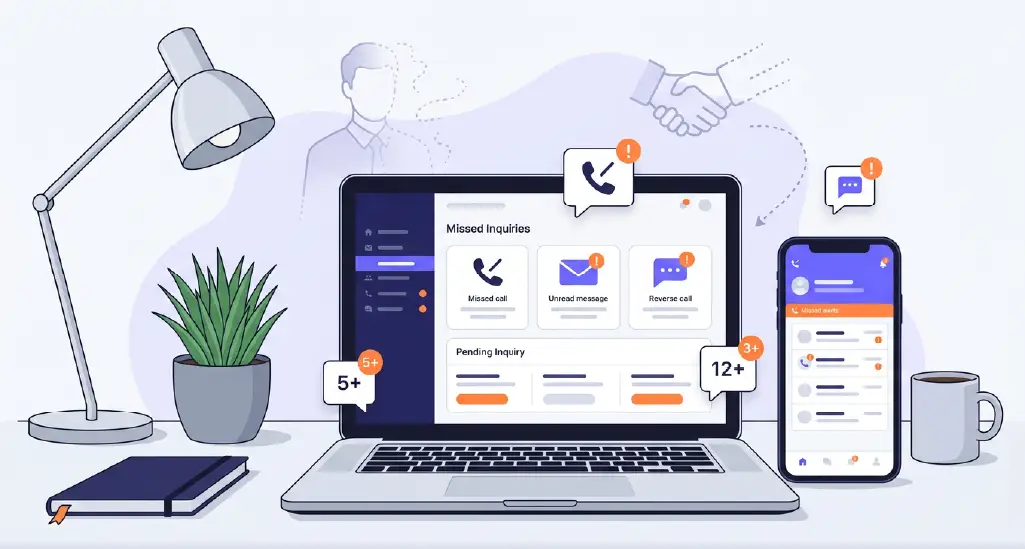
A potential customer rarely knows how busy your business is when they decide to get in touch. They may call between meetings, send a message after work, or submit an inquiry late at night. From their perspective, reaching out is the beginning of a conversation. From the business's perspective, however, that conversation may never actually begin.
Missed inquiries are among the most expensive customer service mistakes because they often leave no visible record of lost revenue. A business may track completed sales and successful appointments while overlooking the calls that went unanswered, the website messages that were never reviewed, or the inquiries that arrived outside working hours.
Consider a home services company receiving an emergency plumbing inquiry on a Sunday evening. The customer needs assistance quickly and contacts several providers. The first business that responds with useful information has an immediate advantage. By Monday morning, the original inquiry may already have become someone else's booking.
The financial impact extends beyond one transaction. That missed customer could have become a repeat client, referred other customers, or purchased additional services later. What appears to be one unanswered call may represent a much larger lost customer relationship.
The solution begins with understanding when and where inquiries are being missed. Businesses should examine call records, website forms, chat messages, and social media conversations to identify gaps in coverage. Patterns may emerge around lunch hours, weekends, staff changes, or particularly busy periods.
Extending human availability is one option, but it is not always financially practical. This is where AI customer communication tools can provide meaningful support.
For example, Blazeo offers AI-powered customer engagement solutions that can help businesses respond to inquiries when their teams are unavailable. Instead of allowing a conversation to end at a missed call, an AI-powered interaction can capture the customer's requirements, provide appropriate information, and help move the inquiry toward the next step.
The objective is not simply to answer more calls. It is to ensure that customers who make the effort to contact a business have a reasonable opportunity to continue the conversation.
A delayed response can be particularly damaging when a customer is actively comparing options.
Imagine someone requesting quotations from three different businesses. One responds within minutes, another replies two hours later, and the third follows up the next day. Even if all three offer comparable services, the first response creates an opportunity to answer questions, establish credibility, and influence the customer's decision before competitors enter the conversation.
Research has consistently highlighted the importance of response speed. A widely cited Harvard Business Review study found that companies contacting online leads within an hour were nearly seven times as likely to qualify them as companies waiting even one additional hour. The research examined lead qualification rather than completed purchases, but its implications for sales processes are significant.
Speed creates an opportunity to engage while the customer's interest is still fresh. Waiting too long allows that interest to weaken or shift elsewhere.
However, businesses should avoid confusing a fast acknowledgment with a meaningful response. An automated message saying, "We've received your inquiry," may reassure someone briefly, but it does little to help them if their actual question remains unanswered.
A practical starting point is measuring the time between a customer's first inquiry and the first useful response. This distinction matters because a system-generated acknowledgment can make response-time metrics look impressive even when customers are still waiting for assistance.
Businesses should establish response expectations based on the urgency and complexity of different inquiries. Someone asking about an emergency service may require immediate attention, while a detailed commercial proposal may reasonably take longer.
Automated routing, AI-assisted responses, and clear ownership rules can reduce unnecessary delays. AI can handle straightforward questions, gather preliminary information, and direct more complicated requests to the appropriate person.
The goal is not to make every interaction instantaneous at the expense of accuracy. It is to eliminate avoidable waiting when the business already has the information or resources needed to help.
Also read: The Hidden Cost of Making Customers Repeat Themselves
A customer calls to ask about a service and receives one price. Later, they speak with another representative who quotes a different amount. When they visit the website, they discover that the service description does not match either conversation.
Even if the differences are accidental, the customer now has a reason to question the business's reliability.
Inconsistent information can affect everything from pricing and appointment availability to refund policies, service eligibility, and delivery expectations. The problem often arises when teams rely on individual knowledge rather than a shared, regularly updated source of information.
For example, a healthcare practice might have reception staff explaining appointment preparation requirements differently. One employee tells a patient to bring specific documents, while another says they are unnecessary. The patient arrives unprepared, the appointment is delayed, and the practice must spend additional time resolving a problem that could have been prevented.
The consequences become more serious when inconsistencies involve financial commitments, contractual terms, or services that customers are depending on.
According to Salesforce's State of the Connected Customer research, 76% of customers expect consistent interactions across departments, while 54% reported feeling that sales, service, and marketing teams do not share information. These figures, from the report's fourth edition, illustrate a longstanding disconnect between customer expectations and internal business operations.
Consistency begins with establishing a reliable source of truth. Service descriptions, pricing policies, operating hours, promotional offers, and frequently asked questions should be documented in a central location that employees can access.
That information must also be maintained. An outdated knowledge base can create just as much confusion as having no documentation at all.
Businesses using AI-powered communication systems should ensure that automated responses draw from approved, current information. When an answer requires confirmation or falls outside the system's authorized knowledge, the interaction should be transferred to a human representative rather than answered through guesswork.
This distinction is especially important when implementing AI customer communication. Automation should improve consistency without giving systems permission to make commitments the business cannot honor.
Regular reviews of customer conversations can also reveal recurring inconsistencies. If customers repeatedly ask representatives to clarify information they received earlier, the problem may lie in the communication process rather than the customers' understanding.

Not every customer is ready to make a decision during the first conversation. Some need to compare prices, consult another person, review a proposal, or wait until a particular date before proceeding.
A business that interprets hesitation as disinterest may abandon a valuable opportunity. But a business that follows up too frequently can create a different problem: making the customer feel pressured rather than supported.
The challenge is knowing when to reconnect and what to say.
Consider a prospective customer requesting information about a home renovation project. They explain that they are still finalizing their budget and expect to decide in three weeks. The sales representative promises to follow up but forgets to record the conversation.
Three weeks pass without contact. The customer begins exploring other providers and eventually chooses one that checks in at the appropriate time with a relevant quotation.
Alternatively, imagine the same customer receiving daily reminders immediately after their first inquiry. Rather than building confidence, the repeated messages may discourage further engagement.
Both situations reflect poor follow-up timing, but they require different solutions.
An effective follow-up process should be based on the customer's expressed needs, stage in the buying journey, and agreed next steps.
Businesses can begin by documenting important details during the initial interaction. If someone requests a callback next Tuesday, that information should become a scheduled task rather than a note that depends on an employee's memory.
A customer relationship management system can help teams maintain visibility into open opportunities, previous conversations, and upcoming actions. Automated reminders can reduce the likelihood of promising leads being forgotten.
AI can also help identify inquiries that require attention, summarize conversations, and support timely outreach when connected to appropriate workflows.
However, automation should not turn every customer interaction into an aggressive sales sequence. A useful follow-up adds context or helps the customer move forward. It might answer an unresolved question, provide an updated estimate, or confirm whether the customer still needs assistance.
Businesses should also respect communication preferences and applicable consent requirements, particularly when sending promotional messages.
A thoughtful follow-up demonstrates that the business remembers the conversation. A poorly timed one suggests that the customer is simply another name in a database.
Also read: The Follow-Up Gap: What Happens Between “I’m Interested” and “I’m Ready”
A customer asks whether a particular service is available in their area. The business replies with a general description of its services.
Another customer wants to know whether an appointment can be rescheduled without an additional charge. They receive a link to the company's booking page.
Both customers technically received responses. Neither received the information they needed.
This is a particularly overlooked customer communication mistake because it can remain hidden behind otherwise positive operational metrics. A business may report fast response times and high message volumes while customers continue to ask the same questions repeatedly.
The problem becomes more visible when automation is involved. A chatbot may recognize keywords in a customer's message but fail to understand the actual intent. Instead of resolving the inquiry, it delivers a generic answer or redirects the customer to information they have already reviewed.
Customers then have to repeat themselves, contact another department, or wait for human assistance.
The distinction between answering and resolving is increasingly important. In its 2026 customer experience research, Verint found that 78% of surveyed US consumers prioritized the fastest resolution over using their preferred communication channel. The same research found that 69% would switch from human service to automation if it could fully resolve their issue.
These findings suggest that customers are not necessarily opposed to AI. They are concerned about whether the interaction produces a useful outcome.
Businesses should evaluate customer communication using measures that reflect actual outcomes.
For example, did the customer receive the requested information? Was the appointment successfully booked? Did the issue require repeated contact? Was a complicated inquiry transferred to someone capable of resolving it?
Reviewing repeat inquiries and unresolved conversations can help identify where existing responses fall short.
AI systems should be configured to recognize the difference between questions they can answer reliably and situations that require human judgment. Straightforward requests about operating hours, basic service information, or appointment availability may be suitable for automation when accurate data is available.
Questions involving exceptions, disputes, unusual circumstances, or sensitive decisions may require escalation.
Blazeo's AI-powered communication solutions can support businesses looking to improve how inquiries are captured, handled, and directed. The value of such tools depends on how effectively they connect customer questions with meaningful next steps.
Ultimately, the best response is not necessarily the fastest or the longest. It is the one that leaves the customer knowing what happens next.
Customers rarely organize their interactions according to a business's internal departments or software systems.
Someone might discover a company through social media, submit a website inquiry, receive an email, and then call to clarify a few details. To the customer, these interactions are part of one continuous conversation.
To the business, however, they may exist in four separate places.
The social media team may have no visibility into the website inquiry. The sales representative might not know which email was sent. The person answering the phone may have no record of the customer's previous questions.
As a result, the customer must explain their situation again.
This creates friction at a particularly sensitive point in the relationship. Customers who have already shared information expect the business to use it appropriately, rather than repeatedly asking for the same details.
Zendesk's 2026 CX Trends findings report that 74% of consumers find it frustrating to repeat their story to different agents.
Disconnected channels also create operational problems. Two employees may respond to the same inquiry without realizing it. A sales opportunity may be marked as inactive even though the customer is communicating through another channel. Important information may remain buried in an individual inbox instead of becoming part of the customer record.
The solution is not necessarily to reduce the number of channels customers can use. Different customers have different preferences, and the same person may prefer different channels depending on the situation.
Instead, businesses should focus on connecting the information that moves between those channels.
A centralized CRM or customer communication platform can help maintain a record of inquiries, interactions, follow-ups, and customer preferences.
When systems are properly integrated, employees can review relevant conversation history before responding. They can see whether a quotation has already been provided, whether an appointment was rescheduled, or whether another representative is handling the issue.
AI can further support this process by summarizing interactions, identifying customer intent, and making relevant context easier for employees to access.
For businesses managing high inquiry volumes, solutions such as Blazeo's customer engagement platform can be worth exploring as part of a broader effort to improve communication continuity.
The important consideration is whether the chosen tools work together. Adding another communication application without integrating it into existing workflows may simply create another disconnected channel.
A customer should be able to change how they contact a business without having to restart the conversation.
Many businesses focus their communication efforts on winning the customer. Once the appointment is booked, purchase is completed, or contract is signed, communication often becomes less deliberate.
Yet the period immediately following a commitment can be when customers need reassurance most.
Someone who books a consultation may wonder whether the appointment was confirmed. A customer purchasing a service may be uncertain about the next steps. A client signing an agreement may need clarification about timelines, responsibilities, or required documents.
When these details are not communicated clearly, customers may begin questioning a decision they have already made.
Consider a professional services firm that successfully converts an inquiry into a paid consultation. The customer receives a payment confirmation but no instructions about what to prepare, whom they will meet, or how the consultation will take place.
The customer calls the office to ask for clarification. Nobody answers immediately, so they send an email. Eventually, an employee responds, but the customer has already spent unnecessary time trying to understand a process that should have been explained proactively.
The sale was successful, but the experience following it introduced uncertainty.
This matters financially because revenue does not end with the first transaction. Repeat purchases, renewals, referrals, and long-term customer relationships depend partly on whether the business continues to communicate effectively.
Zendesk's customer service research indicates that approximately three in four consumers are willing to spend more with businesses that provide a good customer experience. While this does not isolate post-purchase communication as the cause, it reinforces the commercial value of maintaining service quality beyond the initial sale.
Businesses should identify the information customers need immediately after making a commitment and ensure that it is delivered consistently.
For appointment-based services, this may include confirmation messages, location details, preparation instructions, and reminders. For purchases, it could involve order updates, delivery expectations, or clear support options. For longer service engagements, customers may benefit from milestone updates and an identified point of contact.
Automated communication can help deliver routine updates without requiring employees to remember every message manually.
However, automated confirmations should be connected to accurate operational information. A reminder sent for an appointment that has already been canceled can create more confusion than sending no reminder at all.
Businesses should also make it easy for customers to ask follow-up questions after receiving automated messages. A confirmation that cannot be replied to, combined with no obvious support option, may leave the customer feeling disconnected.
Clear post-conversion communication does more than reduce administrative inquiries. It reinforces the customer's confidence that choosing the business was the right decision.

Recognizing these seven mistakes is useful, but businesses also need a way to determine which ones are occurring in their own operations.
A practical communication audit should begin with the customer journey, from the first inquiry to the completed purchase and any subsequent service interactions.
Rather than reviewing communication channels independently, businesses should examine how customers move between them. An unanswered call may be followed by a website inquiry. A quotation may lead to an email exchange, followed by several days of silence. A completed booking may generate a confirmation but no further instructions.
Looking at these interactions together can reveal problems that individual channel reports miss.
Also read: Every Inquiry Answered: How Omnichannel Communication Increases Conversion Rates
A business receiving hundreds of inquiries each month may appear to have a healthy pipeline. However, inquiry volume alone says little about how effectively those opportunities are being handled.
More useful measures include the percentage of inquiries receiving a meaningful response, the time required to resolve customer questions, the number of follow-ups completed as promised, and the proportion of qualified inquiries that become appointments or sales.
Businesses should also investigate where prospects stop engaging. If a large number of customers disappear after requesting quotations, the issue may involve follow-up timing, unclear information, or an unnecessarily complicated next step.
Revenue analysis can make these problems easier to prioritize. For example, if a company receives 500 qualified inquiries per month, converts 20% of them, and earns an average of $300 per sale, those inquiries generate $30,000 in revenue. Improving conversion to 24% would produce another 20 sales, representing $6,000 in additional monthly revenue, assuming the inquiry volume and average sale value remain unchanged.
This is an illustrative calculation rather than a promised result. It demonstrates why relatively small improvements in communication performance can matter financially.
Technology becomes most valuable when it addresses a clearly identified operational problem.
Blazeo's SmartHub provides centralized lead management, communication histories, automated workflows, and reporting capabilities. These features can help businesses identify where conversations require attention and reduce their dependence on manual reminders.
Similarly, Blazeo's Voice AI capabilities can support initial inquiries, lead qualification, and routing, helping businesses maintain coverage when employees are unavailable.
Boost Conversions with Blazeo
The strongest business communication strategy combines these capabilities with clear human responsibilities. Employees still need to review exceptions, correct inaccurate information, handle sensitive conversations, and ensure that automation is producing the intended results.
Businesses should review their communication performance regularly rather than treating the implementation of new software as the end of the improvement process.
Customer communication mistakes rarely occur because businesses deliberately ignore their customers. More often, they emerge from processes that have not kept pace with growing inquiry volumes, expanding communication channels, and increasing customer expectations.
A missed call, an inconsistent answer, or a forgotten follow-up may seem insignificant in isolation. Together, these problems can weaken customer confidence, reduce conversion opportunities, and make it harder to retain the relationships a business has worked to build.
The solution is not simply to communicate more frequently. It is to make communication more reliable, relevant, and connected at every stage of the customer journey.
By identifying recurring gaps, establishing clear ownership, centralizing customer information, and using AI where it adds genuine value, businesses can create experiences that help customers move forward with confidence.
Blazeo helps businesses turn customer conversations into meaningful opportunities through AI-powered engagement, lead management, automated follow-ups, and connected communication workflows.
Whether your business is struggling with missed inquiries, delayed responses, or disconnected customer interactions, Blazeo can help you build a more dependable communication process.

