 SmartHub
 Automation
 Appointment Scheduler
 Lead Management
 Dashboard & Reports
 Task Management
 Communications Hub
 Managed chat
 Voice Receptionist
 Appointment scheduling
 Retainer signing
 Home services
 Lawyers and firms
 Medical services
 College admissions
 Real estate agents
 Marketing agencies
 About
 Partner program
 Estimate Your ROI
 Case Studies
 Blog
 FAQs
 Login
Your Best Lead Might Be the One Who Didn’t Book the First Time




Products
Industries
Company
Resources

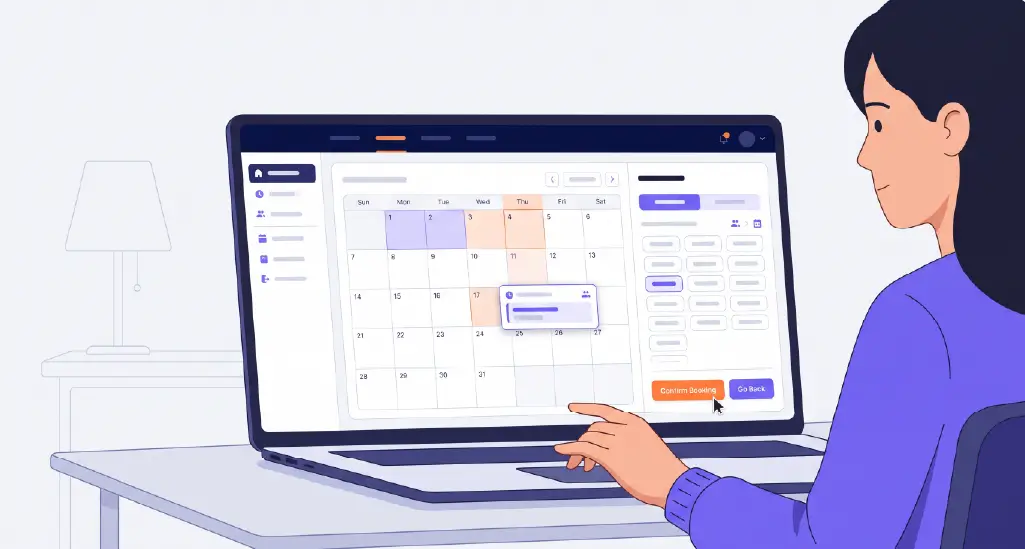
A prospect visits your website, explores your services, and starts booking an appointment. They choose a date, enter a few details, and then disappear before confirming.
No appointment appears on the calendar. No sale is recorded. And somewhere in the system, another lead gets classified as unconverted.
But what actually happened?
Perhaps the available appointment times didn't work. Maybe the prospect had a question they couldn't find an answer to. They could have been comparing providers, checking their budget, or simply interrupted halfway through the process.
None of these possibilities necessarily means they've lost interest.
Businesses often invest heavily in attracting new leads while overlooking the people who have already shown enough interest to begin a conversation. These prospects may be closer to deciding than someone encountering the business for the first time. Yet without a meaningful lead re-engagement strategy, their initial interest can quietly disappear.
The opportunity isn't simply to follow up more often. It's to understand why someone didn't move forward and make their next step easier.
Sales pipelines tend to make conversion look straightforward. A prospect enters, engages, books, and eventually becomes a customer. Anyone who doesn't progress is left behind.
Real buying decisions rarely follow such a predictable sequence.
Consider someone looking for a home renovation consultation. They may have researched contractors, reviewed portfolios, and requested an appointment, only to realize they need to discuss the budget with their partner first.
Or imagine a prospective patient exploring a dental treatment. They're interested enough to inquire but want to understand the procedure, recovery time, or estimated cost before committing.
In both situations, the intent is genuine. The timing or information needed to act simply hasn't aligned.
This distinction matters because the reason someone hasn't booked should influence what happens next.
A prospect who couldn't find a convenient appointment needs a different response from someone who has questions about pricing. Someone who explicitly asks to reconnect next month shouldn't receive the same messages as someone who abandoned a booking form five minutes ago.
Effective lead nurturing begins with recognizing these differences rather than treating every unconverted prospect as a single category.
The question businesses should be asking isn't only, "Why didn't this lead convert?"
It's also, "What would help this person make a decision?"
Also read: The Sales Funnel Doesn't End at "Lead Captured”
An abandoned booking is often interpreted as a failure of interest. In practice, it may reveal something about the booking experience itself.
A prospect might reach the scheduling page and discover that the next available appointment is three weeks away. Another might be asked to complete a lengthy form before seeing available times. Someone else may hesitate when they encounter an unexpected consultation fee.
The abandonment is visible. The reason behind it usually isn't.

This is where businesses need to look beyond the final conversion rate and examine the steps leading up to it.
For example, a service business that receives 200 booking inquiries but confirms only 80 appointments might initially conclude that 120 prospects weren't serious. Yet if many people exit at the same scheduling step, the problem could be limited availability, unclear instructions, or unnecessary friction.
The business doesn't need to assume that all 120 appointments are recoverable. It does need to investigate whether some prospects were prevented from completing an action they already intended to take.
That investigation can reveal opportunities to improve scheduling, clarify service information, or introduce a timely follow-up.
A simple message acknowledging an incomplete booking and offering help can be more useful than another promotional email.
And if the prospect responds that none of the available times worked, the business has learned something actionable.
Recovering abandoned appointment bookings starts with understanding the interruption, not automatically sending another reminder.
Research from the Baymard Institute reinforces the importance of distinguishing hesitation from friction. Its 2026 e-commerce research found that 42% of surveyed US online shoppers had abandoned a cart because they were browsing or weren't ready to purchase. Among other reported reasons were unexpected costs, trust concerns, and complicated checkout processes.
Although these findings relate to online shopping rather than appointment scheduling, they highlight an important distinction: an abandoned transaction doesn't necessarily indicate a lack of interest. Sometimes, the customer simply isn't ready, or something in the process prevents them from moving forward.

Most businesses already have some form of sales follow-up strategy. A lead comes in, an email is sent, and perhaps another reminder follows a few days later.
The problem is that many follow-up sequences have little relationship to the original conversation.
A prospect who asked about financing receives a generic invitation to book. Someone who couldn't find a weekend appointment receives a discount they never requested. A person who specifically said they would be ready in six weeks continues receiving messages every few days.
These communications may technically qualify as follow-up, but they do little to resolve the reasons the prospect hesitated.
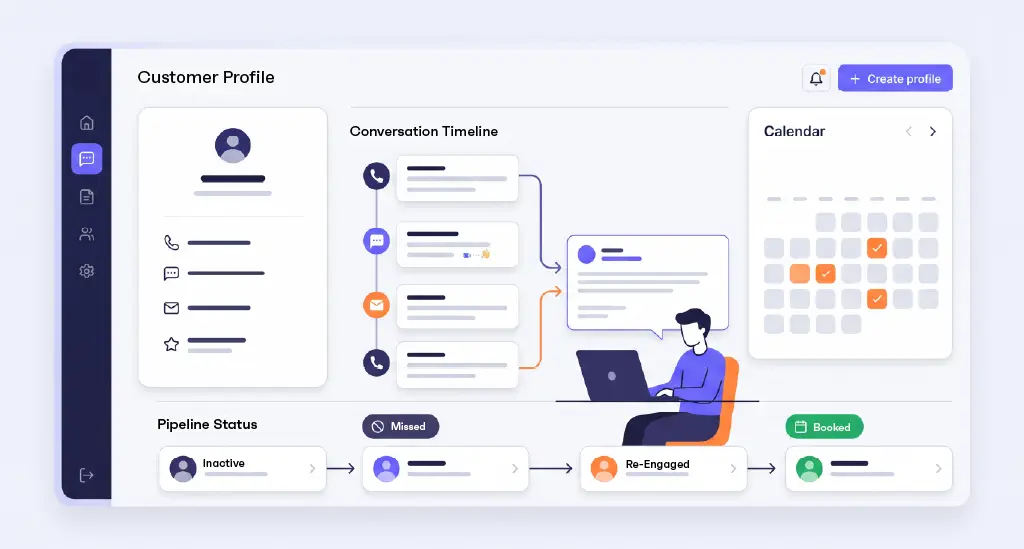
Meaningful re-engagement requires continuity.
Imagine a prospective customer contacting an HVAC company about replacing an aging air-conditioning system. They request an estimate but decide not to schedule an inspection because they're waiting for their next paycheck.
An immediate message offering another appointment does little to address their situation. A follow-up closer to their preferred timeframe, however, could be genuinely useful, particularly if it includes available inspection dates or answers to questions about payment options.
The difference is relevance.
This also explains why the information captured during the first interaction matters so much. If the business records only a name and phone number, the next employee has little context. If it records the service requested, questions asked, obstacles identified, and preferred follow-up timing, the conversation can continue naturally.
Solutions such as Blazeo's managed chat service can help businesses collect qualifying information, answer initial questions, and arrange follow-up requests. That context gives teams a stronger starting point when a prospect isn't ready to book immediately.
The aim isn't to make every message sound personalized by inserting someone's first name. It's to ensure the business remembers what the person actually needed.
Also read: Why Customers Stop Replying (And How Businesses Can Win Them Back)
Speed is important when a prospect actively requests assistance. Someone asking whether a technician can visit today shouldn't wait until tomorrow for an answer.
But immediate responsiveness and repeated sales pressure are different things.
A lead who needs an urgent appointment may appreciate a prompt callback. A homeowner researching a kitchen renovation planned for next spring may prefer information they can revisit over the coming months.
Both deserve attention, but their timelines are different.
A practical lead re-engagement process should reflect the prospect's expressed readiness. Someone who abandons a booking after selecting a date may warrant a timely, helpful check-in. Someone who says they're waiting for insurance approval may be better served by a later follow-up, ideally at a time they've agreed to.
Consider a dental practice where a patient inquires about cosmetic treatment but wants to understand the financial commitment before scheduling.
Sending repeated appointment reminders won't necessarily change their decision. Providing an explanation of consultation costs, treatment stages, and available payment arrangements may help them assess whether they're ready.
The business should also know when to stop. If the person declines further contact, requests no reminders, or clearly indicates that the service is no longer relevant, the follow-up process must respect that decision.
Good lead nurturing keeps an opportunity accessible without making the prospect feel pursued.
Sometimes the biggest obstacle to conversion isn't the appointment itself. It's a question that never received a satisfactory answer.
A legal prospect might want to know whether the firm handles their type of case. A homeowner might need confirmation that a contractor serves their neighborhood. A prospective patient may want to understand what happens during the first consultation.
If those questions remain unresolved, the prospect has little reason to commit.
This is especially important for businesses offering complex, expensive, or unfamiliar services. The initial inquiry may be part of the customer's research rather than the final stage of their decision.
An effective response should therefore focus on removing uncertainty before requesting commitment.
For instance, a home services company might discover that prospects frequently ask whether estimates are free. If that information is missing from its website and booking flow, the company could be losing appointments before its team ever speaks to those customers.
Improving the information available at the point of inquiry may prevent some abandonments altogether.
For questions requiring a conversation, Blazeo's AI answering service combines automated phone engagement with human-agent support to answer common inquiries, qualify callers, and arrange appointments or transfers when appropriate.
The value isn't simply that someone answers. It's that the customer can get closer to making an informed decision without restarting the process elsewhere.
Also read: AI Missed-Call Automation: Recover Lost Business Revenue
A structured process doesn't require every prospect to enter a complicated campaign. It requires enough information to determine what should happen next.
Start with the outcome of the initial interaction.
Was the appointment abandoned midway through scheduling? Did the customer request more information? Was there no suitable availability? Did the prospect ask to reconnect later, or did they stop responding after receiving a quote?
Each outcome suggests a different next action.
For an incomplete booking, the business might offer assistance with scheduling. For a pricing question, it might provide an estimate or arrange a discussion with someone authorized to explain the costs. For a timing issue, it could record the preferred month and avoid unnecessary contact until then.
Where the reason is unknown, the first message should avoid making assumptions. A brief, optional check-in that offers assistance is more appropriate than claiming the prospect forgot to finish booking.
The system also needs to distinguish between an active opportunity and one that should no longer be pursued.
Suppose a prospect initially requests an appointment, then books through a phone call rather than the website. If the booking system and follow-up process don't share that information, the customer may continue receiving abandoned-booking reminders despite already having an appointment.
That's more than an inconvenience. It suggests the business isn't paying attention.
A well-designed workflow should update the lead's status when an appointment is confirmed, a customer declines, or a representative resolves the inquiry. It should prevent duplicate messages and give staff visibility into previous conversations.
Blazeo's SmartHub Appointment Scheduler supports booking through chat and voice and includes automated follow-up for missed appointments. It's one example of how scheduling and subsequent customer contact can be connected rather than handled as isolated activities.
The distinction between an abandoned booking and a missed appointment remains important. The first involves someone who never confirmed; the second involves someone who scheduled but didn't attend. Both may offer recovery opportunities, but they require different messages.
As lead volumes grow, manually remembering every follow-up becomes difficult. Sales representatives may be handling new inquiries, scheduled consultations, existing customers, and internal responsibilities simultaneously.
Automation can reduce that burden by identifying leads requiring attention and initiating appropriate next steps.
However, automating a poorly designed process simply makes irrelevant communication happen more consistently.
Consider a prospective customer who asks about a specialized service and receives an answer that doesn't address their concern. If an automated sequence immediately begins pushing appointment links, the system is effectively ignoring the conversation.
A more useful approach would identify the unresolved question and direct it to someone qualified to respond.
Automation works best when it handles predictable actions while allowing human judgment where needed. Appointment reminders, agreed follow-up dates, scheduling links, and status updates are generally easier to standardize. Complex objections, sensitive concerns, pricing negotiations, and unusual circumstances may require direct involvement from a team member.
The handoff should preserve context. A representative shouldn't have to ask the prospect to explain everything again when the information is already available.
This is particularly relevant to businesses combining AI-enabled engagement with live support. The technology should help maintain continuity, not create another layer between the customer and the assistance they need.
A successful system makes the next interaction feel like a continuation of the first.
Also read: What Smart Businesses Automate First — And What Still Needs a Human Touch
Businesses frequently measure how many leads they generate and how many appointments they book. Fewer examine how many previously unconverted prospects eventually return.
That missing perspective can distort sales performance.
Imagine a business generates 500 qualified inquiries in a month, with 150 resulting in confirmed appointments. Its immediate booking rate is 30%.

If a structured re-engagement process subsequently converts another 25 of those original inquiries into appointments, the total booking rate for that cohort increases to 35%.
That's a five-percentage-point improvement without acquiring another lead.
This is a hypothetical example, not an industry benchmark. But it illustrates why businesses should measure conversion beyond the first interaction.
Recovery rates are only part of the picture. Teams should also examine how long prospects take to return, which objections are most common, which follow-ups produce meaningful responses, and whether recovered appointments eventually become paying customers.
The distinction between bookings and revenue is especially important. Recovering ten appointments that never result in a sale isn't necessarily more valuable than recovering three that become long-term customers.
Businesses also need to account for the cost of re-engagement, including staff time, technology, and communication expenses.
Over time, these insights can improve more than follow-up performance. If prospects consistently hesitate because appointments aren't available after working hours, the business may need to reconsider its scheduling capacity. If pricing questions repeatedly prevent bookings, clearer information earlier in the customer journey could improve conversion.
The strongest sales follow-up strategy doesn't merely recover individual opportunities. It helps identify the operational issues that caused those opportunities to stall.
Businesses understandably want more inquiries, more website visitors, and more appointments. But generating additional demand shouldn't mean overlooking the interest they've already earned.
Someone who didn't book the first time may still have a genuine need. They may be waiting for the right moment, looking for reassurance, or trying to resolve a practical obstacle.
The opportunity is to recognize those circumstances and respond appropriately.
That requires more than automated reminders. It requires useful information, reliable scheduling, clear ownership of follow-up, and enough context to continue a conversation without starting over.
Not every unconverted lead will become a customer, nor should every prospect be pursued indefinitely. But businesses that understand why people hesitate are better positioned to recover worthwhile opportunities and improve the experience for everyone who comes next.
Blazeo helps businesses capture inquiries, qualify prospects, coordinate appointments, and keep customer conversations moving through AI-enabled and human-supported engagement. Explore Blazeo's solutions to see how a more connected approach to lead engagement can help turn missed opportunities into meaningful conversations—and more conversations into customers.

