 SmartHub
 Automation
 Appointment Scheduler
 Lead Management
 Dashboard & Reports
 Task Management
 Communications Hub
 Live chat
 AI chatbot
 Voice AI
 Voice call centers
 Appointment scheduling
 Retainer signing
 Home services
 Lawyers and firms
 Medical services
 College admissions
 Real estate agents
 Marketing agencies
 About
About Partner program
 Estimate Your ROI
 Case Studies
 Blog
Blog FAQs
FAQs Login
LoginThe Pipeline Illusion: Why More Leads Don’t Always Mean More Revenue




Products
Industries
Company
Resources
As of March 2024 we have renamed Apexchat to Blazeo. We are excited to share the next part of our journey with our customers and partners.
The name ApexChat implies that we are primarily a chat company, which is no longer true. Now we have many offerings, such as call center services, AI, Appointment setting, SMS Enablement, Market Automation, and Sales acceleration (Q2 2024), that go beyond chat. The new name will not only allow us to convey the breadth of our offering but will also better convey our company’s mission and values.
Blazeo, which is derived from the word Blaze, evokes a sense of passion, speed, and energy. A “Blaze” is captivating, illuminates, and represents explosive growth. Blazeo encapsulates our mission to ignite such growth for our customers and partners by delivering innovation with passion, speed, and energy.

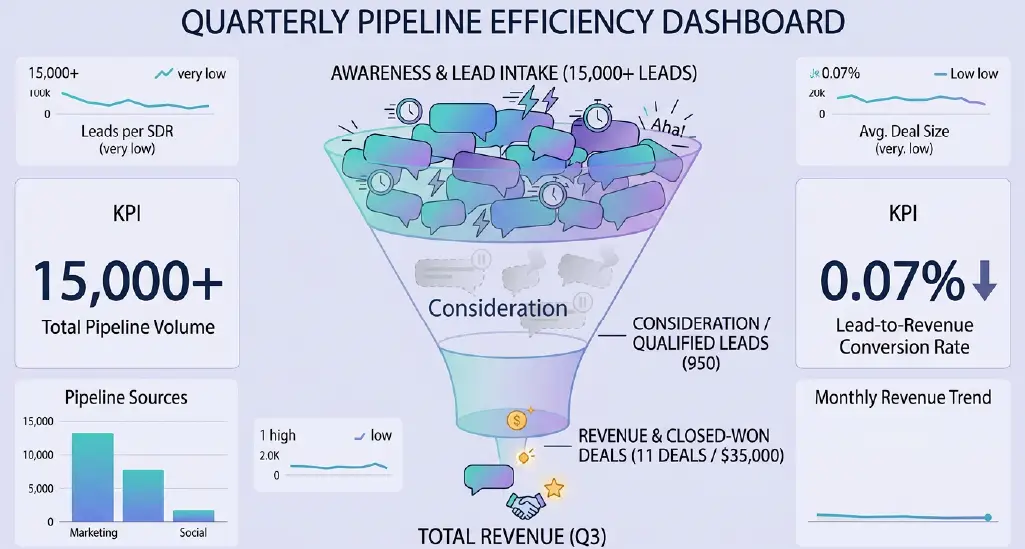
Why more leads don’t increase revenue is a question many companies struggle to answer. The truth is simple: more leads don’t guarantee growth because most pipelines break down after capture—during qualification, routing, and follow-up.
For years, marketing success has been measured by a simple number: leads.
More leads meant better campaigns. Bigger pipelines meant stronger growth. If the CRM dashboard showed a rising lead count, the organization assumed progress was happening.
Yet many companies experience a strange contradiction.
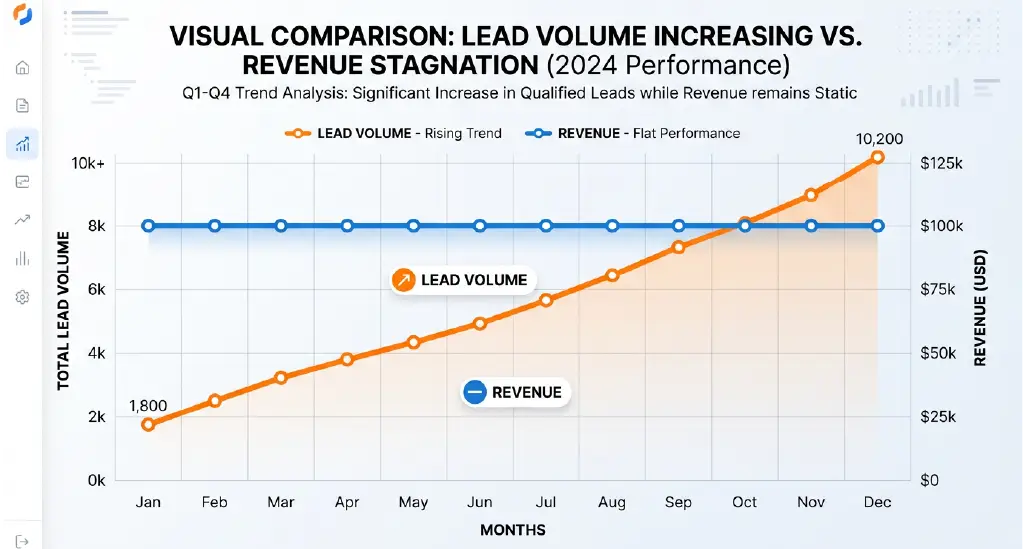
Lead generation increases, marketing budgets expand, inbound traffic improves, and marketing teams celebrate record pipeline numbers. But when the quarter ends, revenue barely moves.
Sales leaders complain that the leads “aren’t serious.”
Marketing insists the pipeline is “larger than ever.”
Executives look at both teams and wonder where the disconnect lives.
This tension reveals something uncomfortable about modern revenue systems. Pipeline size is not the same thing as pipeline health. A growing flow of leads can easily hide deeper problems in qualification, routing, follow-up, and conversation structure.
In other words, the pipeline itself can become an illusion.
The real question isn’t how many leads a company generates. The real question is whether those leads move forward once they arrive.
More leads don’t increase revenue because most pipelines are built for volume, not conversion. Without proper qualification, many leads enter the system without real buying intent. Poor routing delays conversations, and inconsistent follow-up causes interest to fade. As a result, pipelines appear full but fail to produce meaningful outcomes. Companies that focus on conversation quality instead of lead quantity see higher conversion rates and stronger revenue growth.
There is a psychological reason companies love pipeline metrics.
A large pipeline feels like momentum. Dashboards full of new leads give teams the sense that growth is inevitable. As long as the funnel continues filling at the top, leadership assumes revenue will eventually follow.
This assumption worked reasonably well when most sales processes were linear and predictable. Prospects filled out forms, sales teams responded, and deals progressed through defined stages.
But modern buying behavior is far less predictable.
Also read: Why Faster Responses Don’t Always Mean Better Conversions
A potential customer might read five blog posts, attend a webinar, chat with a bot, compare competitors, consult internal stakeholders, and disappear for weeks before reappearing with new questions. The journey is rarely linear, and many leads that appear in the pipeline never truly enter the buying process.
Still, CRM dashboards treat them as equal.
A curious visitor who downloads an ebook often appears in the same pipeline as a buyer actively evaluating vendors. Marketing reports count both as new opportunities, even though their intent levels are worlds apart.
This creates a misleading sense of progress.
The pipeline grows, but much of that growth is made up of fragile interest rather than real purchase intent. When sales teams begin reaching out, they discover that many leads were never ready to talk in the first place.
By the time the problem becomes visible, the illusion has already shaped expectations.
Imagine a SaaS company running aggressive demand generation campaigns.
Paid ads drive thousands of visitors each month. Content marketing produces steady inbound traffic. Gated resources collect email addresses at scale.
On paper, the numbers look fantastic.
Marketing proudly reports a 40 percent increase in lead generation. The CRM shows a pipeline worth millions of dollars in potential deals. Executives expect a surge in revenue.
But the sales team sees something very different.
Many leads never respond to outreach. Others schedule demos but cancel them. Some prospects arrive with vague curiosity but little understanding of the product. Conversations stall before they even begin.
Despite the expanding pipeline, the conversion rate from lead to opportunity quietly declines.
This is the moment when organizations realize the problem is not volume. The problem is progression.
The pipeline is full of names, but very few of them are moving forward.

One of the most common reasons pipeline growth fails to translate into revenue is poor qualification.
Marketing campaigns often optimize for capturing interest rather than identifying buying readiness. This makes sense from a campaign perspective. A wider net generates more leads and improves top-of-funnel metrics.
However, without thoughtful qualification, those leads enter the pipeline with wildly different levels of intent.
Some prospects are actively searching for solutions and comparing vendors. Others are simply researching a problem or gathering information for future planning. A third group may have stumbled onto content with no purchasing authority at all.
When all three groups enter the CRM as “new leads,” the pipeline becomes distorted.
Sales teams waste valuable time trying to determine who is serious and who is simply browsing. Conversations that should focus on solving problems instead begin with basic discovery that should have happened earlier in the process.
Over time, the pipeline becomes crowded with prospects who were never qualified properly in the first place.
What looks like a full pipeline is often just a collection of loosely connected contacts waiting to be filtered.
Also read: The Conversation Gap: Why You Can Track Leads but Not What Actually Converts Them
Image Idea: A diagram showing a lead entering a system and being routed incorrectly vs correctly, highlighting delays and missed opportunities.
Even when leads are legitimate, many companies struggle with how those leads are distributed internally.
Routing might sound like a minor operational detail, but it has enormous consequences for conversion.
Consider what happens when a high-intent prospect fills out a form requesting a demo. If the request sits in a queue for hours or gets assigned to the wrong sales representative, the momentum of the interaction disappears.
The buyer who was ready to talk suddenly feels ignored.
Meanwhile, the sales representative eventually receives the lead with little context about the prospect’s interests or concerns. The conversation begins awkwardly, often repeating questions the buyer already answered earlier.
These small frictions accumulate quickly.
By the time the conversation finally becomes productive, the prospect’s urgency has faded or they have begun exploring competitors.
The pipeline still counts this lead as active, but the opportunity has already weakened.
If qualification and routing create the foundation of a healthy pipeline, follow-up determines whether that pipeline actually produces revenue.
Many organizations underestimate how fragile early-stage interest really is.
A prospect who downloads a resource or starts a chat conversation is expressing curiosity, not commitment. Without timely and relevant follow-up, that curiosity fades quickly.
Yet follow-up is often inconsistent.
Some leads receive immediate responses, while others wait days for a reply. Some conversations provide helpful next steps, while others end with vague promises to reconnect later. In many cases, the buyer simply disappears because the conversation never evolved into something meaningful.
The CRM still records the lead as part of the pipeline, but the opportunity is effectively lost.
From a reporting perspective, the pipeline remains large. From a revenue perspective, it has already begun collapsing.
The common thread connecting qualification, routing, and follow-up is conversation.
Leads do not become revenue through forms, dashboards, or CRM stages. They become revenue through conversations that clarify needs, answer questions, and guide buyers toward confident decisions.
When those conversations are poorly structured, even the most impressive pipeline will struggle to convert.
Consider two companies generating the same number of leads each month.
The first company treats lead interactions as isolated events. A form submission triggers an email. A chatbot provides generic responses. Sales outreach happens when someone remembers to follow up.
Each touchpoint exists, but they rarely connect into a coherent journey.
The second company approaches lead engagement differently. Conversations begin immediately when interest appears. Early questions help determine the buyer’s intent and context. Prospects are guided toward relevant information, helpful resources, or the right sales representative depending on their readiness.
Both companies generate the same volume of leads.
Only one of them turns that volume into revenue.
Also read: From Intake to Revenue: How Conversational AI Impacts the Entire Sales Pipeline
A mid-market software company once celebrated a major marketing victory.
Through aggressive advertising and content syndication, the marketing team doubled inbound lead generation within six months. Leadership praised the campaign as a breakthrough for growth.
But the following quarter told a different story.
Despite the surge in leads, revenue increased by only three percent. Sales representatives complained that most inbound prospects were “just browsing.” Demo attendance rates declined, and deal cycles become longer.
The marketing team initially believed the problem was sales execution.
But a deeper analysis revealed something else.

Many leads entered the system through generic content downloads with little context about their intent. Sales representatives reached out with templated emails that failed to address the prospect’s actual interests. When prospects replied, conversations restarted from scratch because the previous interactions were never captured properly.
The pipeline was full, but the conversations were disconnected.
Once the company redesigned how early conversations worked, everything changed.
New leads began with short qualification exchanges that clarified their goals. Prospects were routed to the appropriate sales representatives immediately, with detailed conversation context attached. Follow-up messages referenced the prospect’s specific questions instead of generic outreach templates.
Within two quarters, pipeline volume remained the same.
Revenue, however, increased by nearly thirty percent.
The difference was not more leads. The difference was better conversations.
One reason the pipeline illusion persists is that traditional marketing analytics focus heavily on acquisition rather than progression.
Teams measure impressions, clicks, conversions, and form submissions. These metrics reveal how effectively campaigns generate interest, but they rarely explain what happens after a lead enters the system.
This creates a blind spot.
Marketing believes it is delivering qualified opportunities because lead volume is strong. Sales believes marketing leads are weak because many prospects stall during conversations. Both perspectives are partially correct.
Without visibility into how conversations evolve, neither team sees the full picture.
The missing layer is conversational insight.
Understanding how prospects ask questions, express concerns, and respond to follow-ups reveals where the pipeline truly breaks down. Sometimes the issue is messaging that attracts the wrong audience. Other times the issue is delayed responses or unclear next steps.
Until these conversational patterns are visible, pipeline metrics remain misleading.
If more leads do not guarantee more revenue, the logical response is to rethink how leads are handled once they appear.
This does not mean abandoning lead generation. Demand creation remains essential for growth. But organizations must treat pipeline development as a structured conversation system rather than a passive funnel.
Every lead interaction should answer three critical questions.
Is the prospect genuinely exploring a solution, or simply gathering information?
What specific challenge brought them into the conversation?
What next step would move them closer to a confident decision?
When these questions are addressed early, the pipeline becomes clearer and healthier. Leads that lack intent can be nurtured without overwhelming the sales team. High-intent prospects receive immediate attention with the context needed for meaningful conversations.
The result is a pipeline that reflects real buying journeys rather than inflated metrics.
Also read: Why Your 90% Bot Resolution Rate Is Killing High-Value Leads

In recent years, conversational AI has begun playing an important role in solving the pipeline illusion.
Unlike traditional lead capture tools that simply collect information, conversational systems engage prospects immediately when interest appears. Early conversations clarify intent, identify relevant challenges, and guide prospects toward the appropriate next step.
This approach dramatically improves pipeline quality.
Instead of flooding the CRM with loosely qualified contacts, organizations begin building pipelines composed of conversations that already contain valuable context. Sales teams start interactions with clear understanding rather than guesswork.
The difference may seem subtle, but its impact on revenue is profound.
When conversation becomes the organizing layer of lead engagement, the pipeline stops being a static list of names and becomes a living system of evolving buyer relationships.
Ultimately, the pipeline illusion exists because organizations focus on the wrong signal.
Lead volume measures activity.
Revenue measures outcomes.
Between those two points lies a complex web of conversations, decisions, and trust-building interactions that determine whether a prospect moves forward.
Companies that treat this middle layer seriously begin to see a different pattern in their data.
They may not generate the largest pipelines in their industry. But the leads they capture move through the journey with clarity, relevance, and momentum.
In the long run, that difference matters far more than raw numbers.
More leads don’t increase revenue because many are unqualified or not ready to buy. Without proper qualification and follow-up, they never convert.
The pipeline illusion is when a business sees growing lead numbers but little revenue growth, creating a false sense of progress.
Focus on better qualification, faster routing, and structured conversations that guide prospects toward decisions.
Lead quality matters more. A smaller number of high-intent leads will generate more revenue than a large volume of low-intent ones.
Common reasons include poor follow-up, lack of personalization, weak qualification, and delayed response times.
Conversational AI engages leads instantly, qualifies intent, and routes prospects correctly, improving conversion and pipeline health.
Growing a pipeline is easy compared to growing revenue.
Marketing campaigns can generate thousands of new contacts with the right mix of content, advertising, and automation. But if those contacts enter a system that lacks structured conversations, proper qualification, and thoughtful follow-up, the pipeline quickly becomes crowded with stalled opportunities.
The solution is not simply more leads.
The solution is designing conversations that help buyers move forward.
When organizations treat conversation structure as a strategic asset rather than an operational afterthought, the pipeline begins to reflect real buying intent instead of inflated activity.
This is where modern conversational platforms make a meaningful difference. Tools like Blazeo help companies transform fragmented lead interactions into structured, intelligent conversations that qualify prospects, route opportunities instantly, and guide buyers toward clear next steps.
Instead of chasing ever-larger pipelines, businesses can focus on what truly drives growth: meaningful conversations that turn interest into revenue.

