SmartHub
 Automation
 Appointment Scheduler
 Lead Management
 Dashboard & Reports
 Task Management
 Communications Hub
 Managed chat
 Voice Receptionist
 Appointment scheduling
 Retainer signing
 Home services
 Lawyers and firms
 Medical services
 College admissions
 Real estate agents
 Marketing agencies
 About
About Partner program
 Estimate Your ROI
 Case Studies
 Blog
Blog FAQs
FAQs Login
LoginWhy Most Sales Conversations Feel Generic — And How to Fix It at Scale




Products
Industries
Company
Resources

You’ve probably received a message that begins with your name, references your company, maybe even mentions something you posted last week—and still feels… off.
It reads like someone tried to be personal, but missed something essential.
Sales personalization at scale means using behavioral data, intent signals, and context to adapt messaging in real time instead of relying on static templates.
That’s the paradox modern sales teams are stuck in. We have more tools than ever promising sales personalization, yet conversations feel increasingly generic. Prospects can sense it immediately. Not because the data is wrong, but because the intent behind it feels mechanical.
Somewhere between automation and efficiency, we’ve mistaken “personalized” for “specific.”
And that’s where most sales conversations quietly lose their impact.

A few years ago, adding a first name was enough. Then it became company references. Then LinkedIn scraping. Now, entire outreach sequences are built on dynamic tokens and AI-generated snippets.
On paper, this is progress.
But in practice, it often feels like performance.
Consider this: a SaaS founder receives a message that says, “Saw your recent post on scaling teams—great insights!” It’s technically accurate. But it doesn’t engage. It doesn’t move the conversation forward. It doesn’t show understanding.
Because real personalization isn’t about inserting context. It’s about responding to it.
When personalization is treated as a checklist rather than a conversation, it becomes predictable. And predictable messages get ignored.
This is one of the core reasons why sales messages feel generic, even when they’re “personalized.”
The issue isn’t that sales teams lack data. It’s that they lack layered context.
Most outreach relies on surface-level signals: job title, industry, recent activity. But buyers don’t make decisions based on isolated facts. They make decisions based on evolving situations.
A VP of Marketing isn’t just a title. They might be under pressure to hit quarterly targets, struggling with lead quality, or dealing with internal misalignment between sales and marketing.
A message that says, “I see you’re a VP of Marketing at X company” acknowledges identity.
A message that says, “It looks like your team is scaling demand, but conversion isn’t keeping pace—are you seeing that too?” acknowledges reality.
That shift—from identity to situation—is where personalization begins to feel real.
And it’s exactly what most systems miss.
Let’s step into a real scenario.
A prospect downloads a whitepaper about improving conversion rates. Within minutes, they receive an email:
“Hi Sarah, thanks for downloading our guide. Let us know if you’d like to book a demo.”
Nothing is wrong with this message. But nothing is compelling either.
Now imagine a different approach:
“Hi Sarah, I noticed you downloaded our guide on conversion optimization. Most teams we speak to at this stage are either trying to fix lead quality or struggling with response timing. Which one is closer to what you’re dealing with right now?”
The second message doesn’t just acknowledge the action. It interprets it. It anticipates the context behind it.
That’s the difference between activity-based messaging and context-aware engagement.
Generic conversations fail not because they’re incorrect, but because they stop at acknowledgment. They don’t guide.
And without guidance, interest rarely turns into action.
Also read: The Anatomy of a Winning Sales Conversation: What Top-Performing Teams Do Differently
Sales teams often face a false trade-off: scale or personalization.
At scale, conversations become templated. At a one-to-one level, they become meaningful—but impossible to sustain across hundreds or thousands of leads.
So teams compromise. They automate personalization.
But here’s the uncomfortable truth: scaling messages is not the same as scaling understanding.
You can automate outreach, but you cannot automate relevance without rethinking how conversations are structured.
The real shift happens when personalization moves from being message-based to system-based.
Instead of asking, “How do we personalize this message?” the question becomes, “How do we design conversations that adapt in real time?”

Most sales communication today is linear. A sequence is created, and every prospect moves through it regardless of their responses, hesitations, or intent.
But real conversations are not linear. They branch. They evolve.
An adaptive conversation doesn’t assume. It listens, interprets, and adjusts.
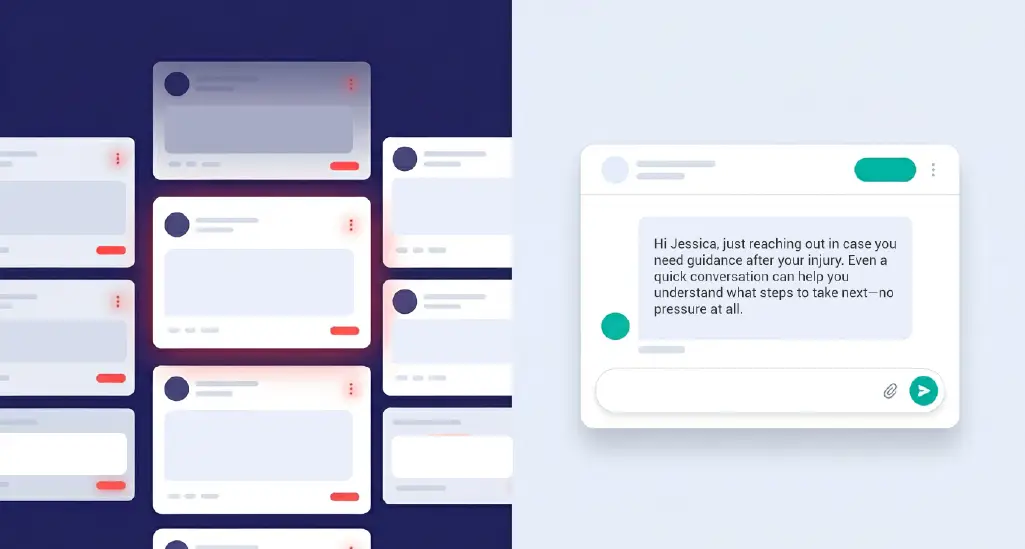
Imagine a prospect who clicks on pricing but doesn’t convert. Instead of sending a generic follow-up, the system recognizes this behavior and responds with something like:
“Most people who spend time on pricing are trying to understand ROI before committing. Would it help if we walked through how teams similar to yours justify the investment?”
This isn’t personalization in the traditional sense. It’s contextual responsiveness.
It doesn’t just know who the prospect is. It understands where they are in their decision process.
And that’s what makes the interaction feel human.
Also read: The Conversation Gap: Why You Can Track Leads but Not What Actually Converts Them
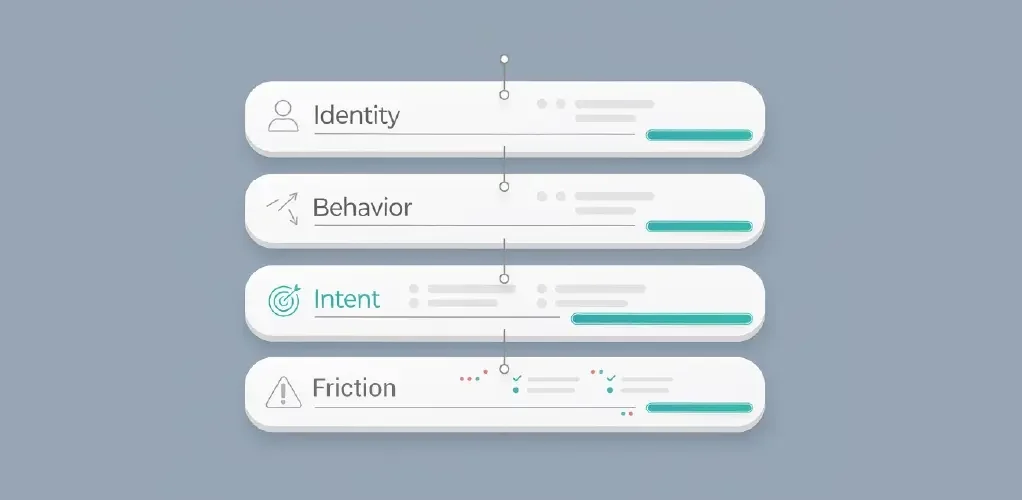
To fix generic conversations at scale, you need to think in layers.
The first layer is identity. Who is this person?
The second layer is behavior. What have they done?
The third layer is intent. What does their behavior suggest they’re trying to achieve?
The fourth layer is friction. What might be holding them back?
Most systems stop at the first two layers. High-performing teams go deeper.
They connect signals across touchpoints. They interpret patterns. They design responses that reflect not just data, but meaning.
For example, a returning visitor who repeatedly checks integration pages is not just “interested.” They are likely evaluating compatibility. A conversation that addresses integration challenges proactively will feel far more relevant than one that repeats product features.
This is how a personalized sales approach evolves from surface-level customization to meaningful engagement.
Key takeaway:
Generic sales outreach fails because it stops at surface-level personalization.
High-performing teams use context layering and adaptive conversations to stay relevant.
A mid-sized e-commerce brand was struggling with low demo conversion rates despite high inbound interest. Their outreach was technically personalized, referencing company size, industry, and recent activity.
But conversations weren’t progressing.
The turning point came when they shifted from static personalization to context layering.
Instead of sending identical follow-ups, they began segmenting conversations based on behavioral signals. Visitors who explored shipping integrations received messages addressing operational complexity. Those who spent time on analytics features received messages focused on performance visibility.
Within weeks, response rates improved. More importantly, conversations became longer, more engaged, and more decisive.
The difference wasn’t better data. It was a better interpretation.
Buyers today are exposed to hundreds of sales messages. They’ve developed an instinct for spotting generic outreach.
They don’t analyze it consciously. They feel it.
A generic message feels like it could have been sent to anyone.
A relevant message feels like it could only have been sent to them.
That distinction is subtle, but powerful.
It’s not about sounding personal. It’s about being situationally accurate.
And that requires a deeper understanding of the buyer journey than most tools currently offer out of the box.
Personalization alone doesn’t convert. Direction does.
A conversation that feels relevant but doesn’t guide the buyer forward still stalls.
The most effective sales conversations do three things simultaneously: they acknowledge context, reduce uncertainty, and create a clear next step.
For example, instead of asking, “Would you like to book a demo?” a more effective approach might be:
“Based on what you’ve explored so far, it might help to see how this works in a real workflow. Would a 10-minute walkthrough be useful?”
This reframes the next step as a continuation of the buyer’s journey, not a generic ask.
And that’s where personalization begins to drive outcomes, not just engagement.
Also read: Human-in-the-Loop AI Customer Engagement Strategy
The solution isn’t to write better templates. It’s to redesign how conversations are generated.
This means moving away from static sequences and toward systems that can:
Understand multi-touch behavior across channels.
Interpret intent in real time.
Adapt messaging based on evolving context.
Maintain continuity across interactions.
At scale, this requires a shift in mindset.
You’re no longer crafting messages. You’re designing conversational systems.
And those systems need to behave less like scripts and more like skilled salespeople—observant, responsive, and context-aware.
Many teams invest heavily in personalization tools but overlook the structure behind them.
They optimize the message, but not the moment.
They focus on what to say, but not when or why it should be said.
As a result, even well-crafted messages land flat because they arrive without context.
Fixing this requires stepping back and asking a different question:
“What does the buyer need to hear right now to move forward?”
Not in general. Not based on persona. But based on their current situation.
That’s the level at which real personalization operates.
As AI continues to evolve, the gap between generic and meaningful conversations will only become more visible.
The winners won’t be the teams with the most data. They’ll be the ones who can translate that data into understanding.
Personalization will no longer be defined by how much you know about the buyer, but by how well you respond to what they’re going through.
And that requires systems designed for adaptability, not just automation.

Sales messages feel generic because they rely on surface-level personalization like names or company data, instead of deeper context like intent and challenges.
Sales personalization at scale uses data, behavior, and intent signals to deliver relevant messaging across many prospects without losing relevance.
You improve sales personalization by using context layering—combining identity, behavior, intent, and friction to guide conversations.
Adaptive sales conversations adjust messaging in real time based on buyer actions, rather than following fixed sequences.
Context matters because it helps align messaging with what the buyer is actually experiencing, which increases engagement and conversion.
Most sales conversations don’t fail because they lack effort. They fail because they lack alignment with the buyer’s reality.
Fixing this isn’t about adding more personalization tokens. It’s about building conversations that evolve with the buyer.
That’s where platforms like Blazeo come in.
By combining real-time behavioral insights with adaptive messaging, Blazeo enables teams to move beyond static personalization and create conversations that actually respond. Instead of sending messages into the void, you’re engaging in dialogues that build confidence, reduce hesitation, and guide decisions forward.
Because at the end of the day, sales isn’t about sending better messages.
It’s about making people feel understood.
And that’s what truly converts.