SmartHub
 Automation
 Appointment Scheduler
 Lead Management
 Dashboard & Reports
 Task Management
 Communications Hub
 Managed chat
 Voice Receptionist
 Appointment scheduling
 Retainer signing
 Home services
 Lawyers and firms
 Medical services
 College admissions
 Real estate agents
 Marketing agencies
 About
About Partner program
 Estimate Your ROI
 Case Studies
 Blog
Blog FAQs
FAQs Login
LoginMarketing to Sales Handoff: Where Leads Drop Off




Products
Industries
Company
Resources

Most teams overlook a moment that matters more than they realize.
It’s not the campaign launch, the first click, or even the form fill.
Instead, it’s the quiet, almost invisible point when a lead moves from marketing to sales.
On paper, it looks like progress. A lead has shown intent. They’ve engaged. They’ve raised their hand.
But in reality, this is where momentum often dies.
Not because the lead wasn’t qualified. Not because the product wasn’t relevant. But because something subtle—and critical—gets lost in transition.
Context.
And when context disappears, so does trust.
Picture this.
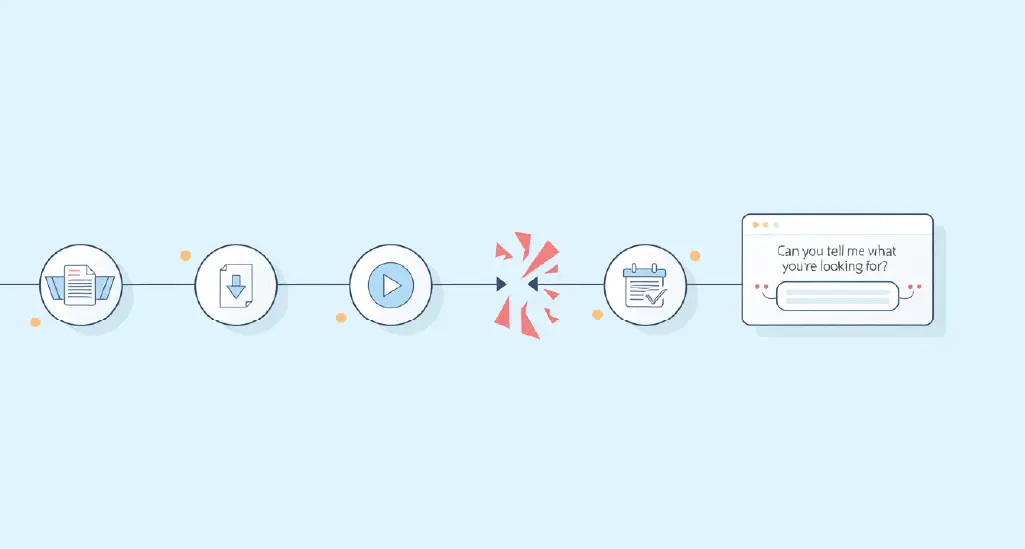
A potential buyer spends two weeks researching your solution. They read your blog posts, download your guide, attend a webinar, and finally request a demo.
By the time they submit that form, they already have a narrative in their head. They know their problem. They have expectations about how you can help.
Then the sales call happens.
“Hi, can you tell me a bit about what you’re looking for?”
It sounds harmless. Polite, even.
But for the buyer, it’s disorienting.
They’ve already shared that information through their clicks, downloads, and the time they invested.
And now, they have to start from zero.
This is the handoff problem. And it’s more common than most teams are willing to admit.
Marketing teams often measure success by volume and qualification.
Leads are scored, segmented, and passed along once they meet certain thresholds. On dashboards, it looks like alignment is working.
But qualification is not the same as readiness.
A lead can be “marketing qualified” and still be emotionally uncertain. They can show intent without clarity. They can engage without commitment.
What’s missing is nuance.
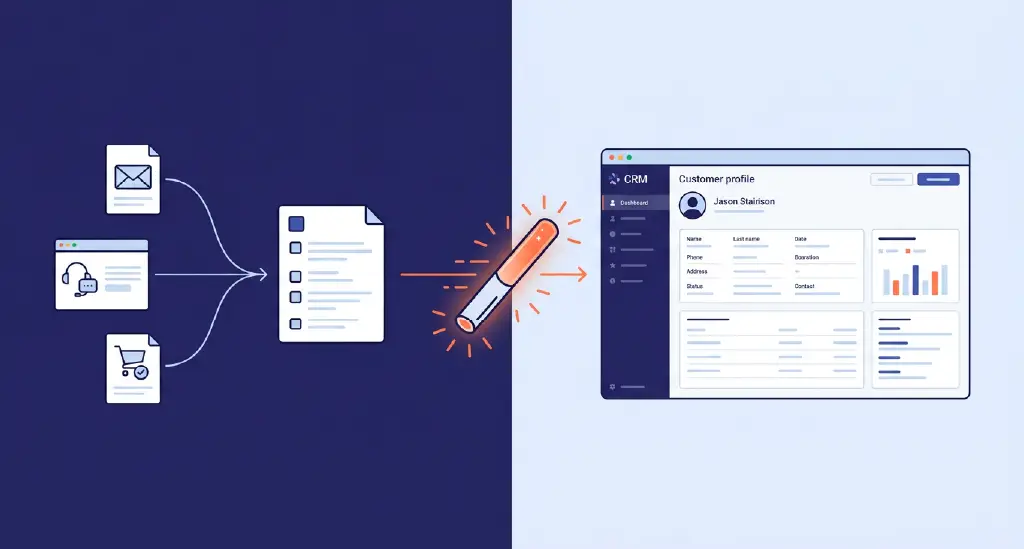
When leads are handed off as static data points instead of evolving narratives, sales teams inherit fragments, not stories.
And fragments don’t convert.
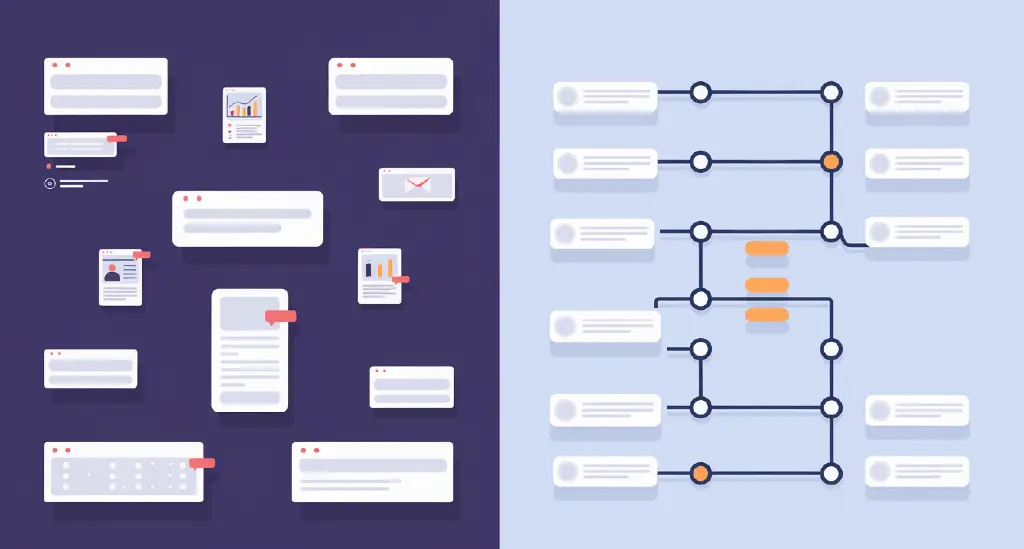
The marketing to sales handoff is often treated as a logistical step.
A lead reaches a score. It gets routed. A notification is triggered.
But the real breakdown isn’t operational. It’s experiential.
It shows up in three quiet ways.
The first is loss of context. Sales teams rarely see the full journey—what content was consumed, what questions were implied, what patterns of behavior emerged.
The second is mistimed outreach. A lead who was highly engaged yesterday might receive a call days later, when urgency has faded and attention has shifted.
The third is generic messaging. Without context, conversations default to scripts. And scripts, no matter how polished, rarely feel personal.
When these three collide, the experience feels disconnected.
And disconnection is where drop-offs begin.
Also read: The Decision Gap: Why Interested Buyers Still Don’t Convert
From the outside, it’s tempting to assume leads “weren’t serious.”
But that’s rarely the full story.
More often, leads disengage because the experience doesn’t match their expectations.
Instead of continuity, they encounter repetition.
Rather than relevance, they receive generalized messaging.
In place of momentum, they experience delay.
This mismatch creates friction. And friction, even in small doses, is enough to stall decision-making.
Buyers don’t always articulate this. They simply go quiet.
And silence gets misinterpreted as lack of interest, when in reality, it’s a signal of lost connection.
Every time a lead has to re-explain their needs, something subtle shifts.
It’s not just an inconvenience. It’s a signal.
It tells the buyer that your internal systems aren’t aligned. That their time isn’t fully respected. That their journey hasn’t been understood.
Trust erodes in these small moments.
And once trust weakens, everything else becomes harder. Objections surface more quickly. Skepticism increases. Decisions take longer.
In high-consideration purchases, this cost is even greater.
Because when stakes are high, buyers don’t just evaluate your product. They evaluate your process.
Also read: AI Search Trust & Citation Authority: Why Accuracy Isn’t Enough

A SaaS company runs a highly targeted webinar on reducing churn.
Attendance is strong. Engagement is high. Several attendees stay until the end and request demos.
Marketing celebrates. Sales gets the leads.
But the follow-up email reads:
“Hi, I’d love to learn more about your business and see how we can help.”
It makes no reference to the webinar. There’s no acknowledgment of the topic discussed. The conversation doesn’t continue from where it left off.
For the buyer, it feels like a reset.
The momentum built during the webinar fades. The emotional investment dissipates.
What could have been a warm, context-rich conversation becomes a cold start.
And many of those leads never respond.
Most teams don’t lack data.
They have dashboards, CRM entries, engagement metrics, and lead scores.
But data alone doesn’t create understanding.
Understanding comes from connecting the dots.
Look at why this lead downloaded three specific resources in sequence.
Notice how often they returned to the pricing pages.
Examine what caused them to drop off after a particular interaction.
These patterns tell a story.
And when sales teams enter conversations with that story in mind, everything changes.
The conversation becomes less about discovery and more about alignment.
Less about asking, more about confirming.
Less about selling, more about guiding.
The fundamental problem is how the handoff is perceived.
Most organizations treat it as a transfer of ownership.
But for the buyer, it should feel like a continuation of experience.
There should be no visible boundary between marketing and sales.
No moment where the narrative resets.
Instead, the conversation should pick up exactly where it left off.
If a lead engaged with content about scaling operations, the first sales interaction should acknowledge that.
If they showed interest in a specific feature, the conversation should build on that curiosity.
Continuity is what creates momentum.
And momentum is what drives conversion.
Also read: The Anatomy of a Winning Sales Conversation: What Top-Performing Teams Do Differently
Speed of response has been discussed endlessly.
But timing is not just about being fast. It’s about being relevant.
A lead who just interacted with your content is in a different mental state than one who engaged days ago.
In that moment, their problem is active. Their curiosity is high. Their openness to conversation is strongest.
Delays don’t just slow things down. They change the context entirely.
By the time sales reach out, the emotional urgency may have passed.
And now, the conversation has to work harder to recreate something that once existed naturally.
Fixing the marketing to sales handoff isn’t about adding more tools.
It’s about changing how conversations are designed.
Instead of treating each interaction as isolated, teams need to think in sequences.
Consider what the lead just experienced.
Identify the questions forming in their mind.
Understand the assumptions they’re carrying forward.
When sales enters with these answers, the conversation feels intentional.
It feels like someone has been paying attention.
And that feeling is powerful.
Because in a world of automated outreach and templated messaging, being understood stands out.
A B2B company noticed a consistent drop-off after demo requests.
Leads were coming in strong, but conversions were weak.
Instead of increasing volume, they examined the handoff.
They realized sales reps were approaching every demo as a fresh conversation, regardless of prior engagement.
So they changed one thing.
Before each call, reps reviewed the lead’s journey and opened the conversation with context.
“I saw you attended our session on operational efficiency and downloaded the scaling guide. I’d love to understand how those challenges are showing up in your business.”
The difference was immediate.
Conversations felt more relevant. Buyers opened up faster. Trust built earlier.
And conversion rates improved—not because the product changed, but because the conversation did.
Sales and marketing alignment is often reduced to meetings, shared KPIs, or occasional check-ins.
But true alignment lives in systems.
It shows up in how information flows. How context is captured. How insights are surfaced at the right moment.
It’s not about syncing calendars. It’s about syncing understanding.
When both teams operate with a shared view of the buyer journey, the handoff stops being a risk point.
It becomes a strength.
Most teams invest heavily in attracting leads.
Fewer invest in how those leads are received.
But the truth is, the handoff moment is where perception shifts.
It’s where buyers decide whether your brand understands them or not.
Whether engaging further feels worth it.
Whether moving forward feels safe.
And those decisions are rarely based on logic alone.
They’re based on experience.

Why do leads drop after marketing to sales handoff?
Leads drop because context gets lost. Sales often lacks visibility into what the buyer already did, which forces the conversation to restart and breaks momentum.
What is the biggest mistake in marketing to sales handoff?
Treating the handoff as a transfer instead of a continuation. This creates disconnected conversations and lowers trust.
How can you improve marketing to sales handoff?
Use real-time engagement data, respond quickly, and personalize outreach based on the buyer’s journey.
How fast should sales follow up after a lead converts?
Ideally within minutes to a few hours. Delays reduce intent and make conversations harder to re-engage.
What data should sales receive during handoff?
Content consumed, pages visited, engagement timing, and key intent signals—not just lead scores.
If there’s one thing to take away, it’s this:
Leads don’t drop because they weren’t interested.
They drop because the conversation broke.
Fixing the marketing to sales handoff isn’t about pushing harder. It’s about connecting better.
It’s about ensuring that every interaction builds on the last, instead of replacing it.
This is where platforms like Blazeo make a meaningful difference. By layering context, tracking intent in real time, and enabling adaptive conversations, Blazeo ensures that no lead ever feels like they’re starting over.
Because when conversations are remembered, buyers move forward.
And that’s where conversions truly begin.