 SmartHub
 Automation
 Appointment Scheduler
 Lead Management
 Dashboard & Reports
 Task Management
 Communications Hub
 Managed chat
 Voice Receptionist
 Appointment scheduling
 Retainer signing
 Home services
 Lawyers and firms
 Medical services
 College admissions
 Real estate agents
 Marketing agencies
 About
About Partner program
 Estimate Your ROI
 Case Studies
 Blog
Blog FAQs
FAQs Login
LoginIs Live Chat for Law Firms Worth It? Here's What Data Says




Products
Industries
Company
Resources

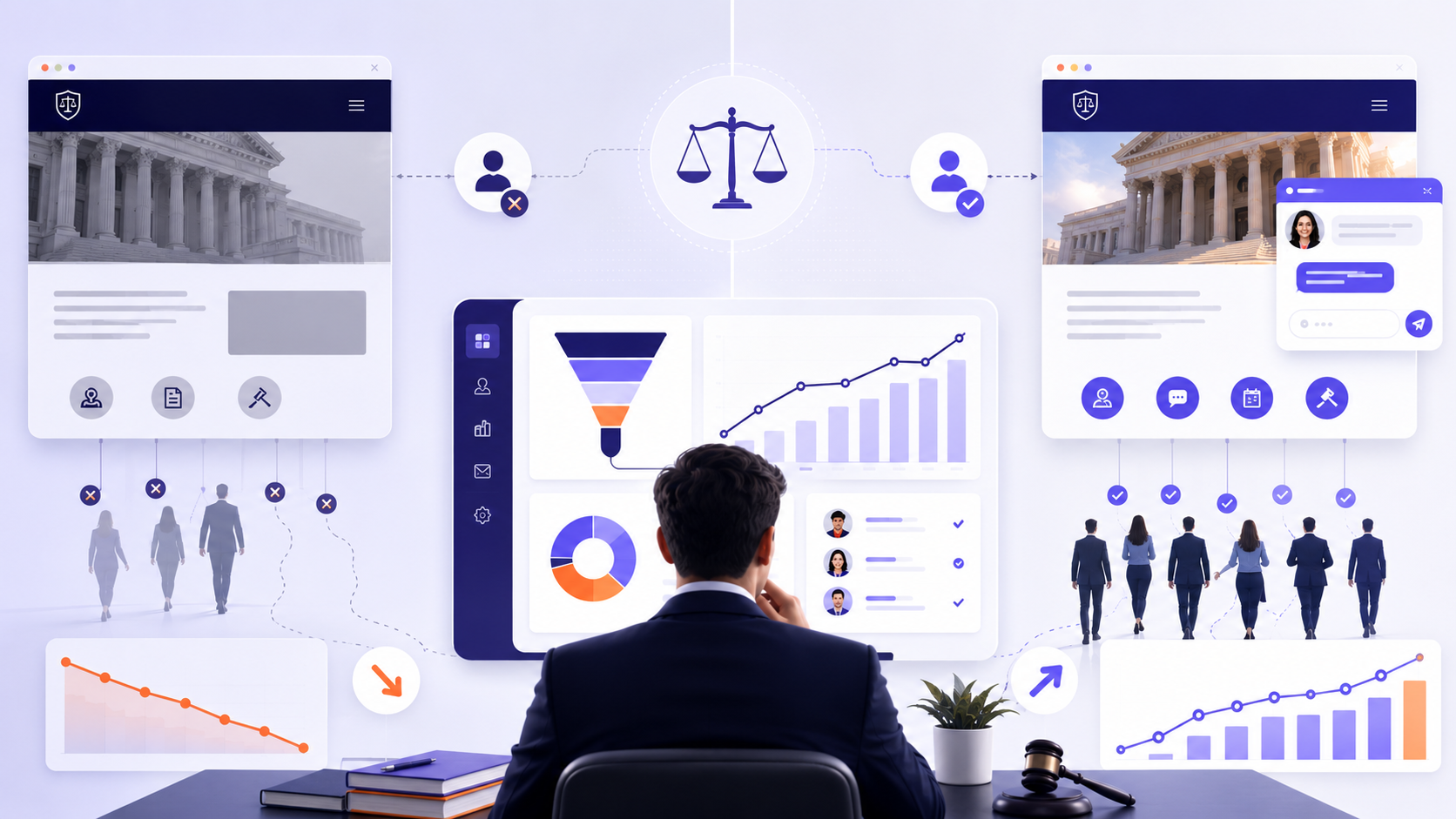
Most law firms spend heavily to bring prospects to their website and then lose them before a single conversation happens. Nearly 39% of those leads disappear for one reason alone: no one responded fast enough. Live chat for law firms is the tool that closes that gap, and the firms using it are seeing results that make the investment case difficult to argue against.
Prospects searching for legal help do not wait; they move to the next firm on the list within minutes. Most firms still rely on phone calls and email, but only 40% actually reply to emails consistently. The real cost of slow response is not just a missed call; it is a missed case, a missed retainer, and revenue that goes straight to a competitor. The data behind this shift is hard to ignore, and this blog breaks it down clearly.

Only 6% of law firms currently use live chat on their websites. That number is striking when you consider how many firms spend heavily on SEO, paid ads, and content to drive traffic. They bring visitors in and then leave them with nothing but a phone number and a contact form.
The reality behind that contact form is not encouraging. Around 42% of law firms take three or more days to respond to a new inquiry. By that point, the prospect has already spoken to two or three other firms and signed with whoever picked up first. The window to convert a legal lead is genuinely that narrow, and most firms are not even close to operating within it.
The phone line is not a reliable safety net either. Only 73% of law firm client intake calls actually get answered during business hours. A full 27% of prospects calling a law firm during the day reach no one at all. Email performs even worse; only 40% of firms reply to email inquiries consistently, leaving the majority of digital outreach completely unaddressed.
The result of this is a structural lead loss problem. Around 39% of leads are lost not because the firm lacked the right expertise or competitive pricing, but simply because no one responded. That is an intake failure, and it is happening at scale across the legal industry right now.

The case for live chat for law firms is not built on theory; it is built on outcome data from firms that made the switch and measured what happened. The numbers are consistent enough to answer the "worth it?" question directly.
Law firms that add live chat to their websites see an average conversion increase of 35%. That means more of the traffic they are already paying to attract actually turns into a consultation or a signed client. No additional ad spend required, just a better response system for the visitors already arriving.
The ROI picture is equally clear. Most firms that implement live chat services report a 2 to 3 times return on their investment within the first year. The key drivers behind that figure are higher lead capture rates, better lead qualification, and more consultations booked without adding intake staff. One firm using the Ngage live chat platform reported that its leads nearly tripled after going live, a result that reflects what happens when a firm stops letting visitors leave without engaging.
Broader consumer data supports this at every level. Around 79% of businesses across industries report that live chat directly boosts their conversion rates. And 61% of potential clients say they are more likely to engage with a firm whose website offers live chat compared to one that does not. The speed and accessibility of chat simply match how people want to communicate when they are under pressure and searching for legal help fast. When 67% of legal clients choose the first firm that responds to them, a tool that enables instant response is not optional; it is the deciding factor.

Slow response times are not just a customer service problem for law firms; they are a direct revenue leak. Live chat for attorneys addresses this at the root level by putting an immediate response in front of every prospect the moment they arrive, at any hour.
Speed is not just a nice-to-have in legal intake; it is the single biggest variable separating firms that convert leads from firms that lose them. Research analyzing over 1.25 million sales interactions found that responding to a lead within five minutes makes a firm 100 times more likely to connect with that prospect compared to waiting just 30 minutes. That is not a marginal improvement; it is the difference between winning a case and never speaking to that prospect again.
Attorney response time makes a sub-five-minute response achievable at any hour because the prospect never has to wait for a callback or check their inbox for a reply. The conversation starts the moment they initiate it, which is exactly when their intent is highest, and their patience is shortest.
The after-hours dimension of this problem is where most firms bleed leads without realizing it. A prospect who fills out a contact form at 9 PM on a Tuesday is not going to sit by the phone until your office opens at 9 AM. They will search again, find another firm, start a chat or call, and move forward with whoever helped them first. Live chat with 24/7 coverage closes that gap completely.
There is also a competitive dynamic that most firms underestimate. Without live chat, a visitor who does not get an immediate response does not just wait; they open three more tabs and contact three more firms. But a visitor who gets an instant response via live chat feels heard, feels served, and is far less likely to keep shopping. That first engagement anchors them to your firm before the competition even has a chance to respond.

Understanding how live chat services for law firms work mechanically removes the guesswork from the decision. Most firm owners assume it requires dedicated staff or a complex setup, but the reality is simpler, more flexible, and far more manageable than that assumption suggests.
Many firm owners hear "live chat" and picture either a robot sending scripted replies or a staff member chained to a keyboard around the clock. Neither is accurate. There are three distinct models available, and understanding the difference is what allows a firm to choose the right fit for their size, budget, and client volume.
Human-operated live chat involves trained agents, either in-house or outsourced, who respond to visitors in real time during staffed hours. AI chatbots handle conversations automatically using preset logic or machine learning, making them available 24/7 without any human involvement. The hybrid model blends both bots to handle routine queries and after-hours traffic, while human agents take over for anything complex or sensitive. Most firms that see strong results use the hybrid approach because it combines constant availability with the personal touch that legal prospects respond to.
What actually happens inside a live chat session is straightforward. An agent greets the visitor, asks a few general questions about their situation, collects their name and contact details, and reassures them that the firm will follow up. A summary of the conversation then goes directly to the firm, allowing the intake team to assess the lead before making contact. If the prospect meets the firm's criteria and it is during office hours, many platforms allow a live transfer directly to an attorney or a scheduled callback to eliminate any delay.
One thing every law firm must get right before going live is the legal disclaimer. Chat agents, whether human or AI, must never provide legal advice during a conversation. A clear disclaimer at the top of the chat window sets that expectation immediately and protects the firm from any compliance concern. This is not a technicality; it is a professional boundary that also builds trust with cautious prospects who appreciate transparency.
Branding the chat widget matters more than most firms expect. A generic unbranded chat window signals a third-party tool and can undermine the credibility the firm has built through its website. Using firm colors, an attorney photo, and a custom greeting makes the chat feel like a natural extension of the firm rather than a bolt-on feature. That small detail increases the likelihood that a visitor will actually start a conversation.
The table below shows how the three models compare across the factors that matter most to law firm client intake:
|
Live Chat (Human) |
Chatbot (AI) |
Hybrid Model |
|
|
Availability |
Business hours |
24/7 |
24/7 |
| Best For |
Complex queries |
Routine questions |
Both |
| Response Feel |
Personal |
Automated |
Balanced |
| Cost |
Higher |
Lower |
Mid-range |
| Lead Qualification |
High accuracy |
Moderate |
High accuracy |
| Legal Advice Risk |
Manageable |
Low |
Low |
For most law firms, the hybrid model delivers the strongest intake results because it keeps the firm present at all hours without requiring a full-time chat team.

Law firm lead generation does not end at the first chat conversation, which is actually just the beginning of what a well-implemented live chat system delivers. The benefits that come after the initial contact are what make the investment compound over time rather than delivering a one-time lift.
One underappreciated benefit is call filtering. When live chat handles routine questions, fees, practice areas, office hours, and case eligibility, those queries stop eating into your intake team's phone time. The calls your office receives become warmer and more serious because the basic questions are already answered. That means your intake staff spends their time on prospects who are genuinely ready to book a consultation rather than explaining what types of cases the firm handles.
At Blazeo, we see this filtering effect consistently across firms that integrate live chat into their intake stack. The inbound call queue gets shorter, and the quality of each call goes up, which is exactly the outcome that improves law firm lead generation without requiring additional marketing spend.

Choosing the wrong live chat platform is as costly as having no live chat at all. The legal intake environment has specific requirements that general-purpose tools simply do not account for, and firms that overlook this end up with a tool that looks active but converts poorly.
Not every live chat platform delivers the same results for a law firm. The features that matter in a general customer service context are not always the same ones that drive legal intake performance. Before choosing a platform, firm owners need to evaluate a specific set of criteria that directly affects how well the tool captures and converts legal prospects.
The most common mistake firms make is choosing a platform based on price alone or picking a general-purpose tool that was not built with legal intake in mind. A platform that works well for an e-commerce store will not necessarily handle case-type qualification, legal disclaimers, or attorney transfer protocols the way a law-focused solution does. The checklist below covers what to look for when evaluating live chat services for law firms specifically:
Mobile performance deserves special attention because the majority of legal prospects are searching on their phones, often in stressful situations where they want fast answers without switching to a desktop. A chat widget that loads slowly, covers the screen awkwardly, or breaks on a mobile browser loses that prospect immediately. Any platform being considered for attorney response time improvement must be tested on mobile before going live.
The data points firmly toward yes. Firms using live chat report a 35% average increase in conversions and a 2 to 3 times return on investment within the first year. When some providers charge only per qualified lead, the cost risk is minimal compared to the intake gains.
Live chat puts an immediate response in front of every website visitor the moment they arrive. Instead of filling out a form and waiting days for a callback, prospects get real-time engagement that moves them toward a consultation while their intent is still high.
Live chat involves a human agent responding in real time, which works best for complex or sensitive inquiries. A chatbot handles conversations automatically using preset logic, making it available around the clock. Most high-performing firms use a hybrid of both models.
Responding within five minutes makes a firm 100 times more likely to connect with a prospect compared to waiting 30 minutes. Most firms take hours or days to respond, which means the lead has already signed with a faster competitor long before contact is made.
AI chatbots and hybrid systems operate around the clock, which means prospects who visit your website at night or on weekends still get an immediate response. After-hours coverage is one of the strongest arguments for live chat because that is when uncontested lead loss happens most.
Prioritize 24/7 coverage, CRM integration, mobile performance, legal-trained agents, callback functionality, and transparent pricing. A platform built specifically for legal intake will handle case qualification and legal disclaimers far more reliably than a general-purpose chat tool.
Beyond capturing the first inquiry, live chat filters routine questions out of the phone queue, retains prospect data for personalized follow-up, supports multilingual engagement, and provides analytics that show which practice areas drive the most interest and conversions.
Small firms benefit from live chat as much as large ones, often more so, because a solo attorney cannot realistically answer every inquiry instantly. A live chat service or hybrid bot handles that gap without requiring additional staff, keeping intake consistent regardless of the attorney's availability.
Every lead your firm attracts through SEO, ads, or referrals has a short window before it becomes someone else's client. Live chat for law firms keeps that window open by delivering an immediate response at every hour, on every device, for every visitor who lands on your site. The data shows a consistent pattern of faster response, better intake, and stronger conversion.
As AI-assisted chat continues to evolve, these tools are only getting smarter at qualifying leads, personalizing conversations, and routing the right prospects to the right attorneys without any manual effort. The firms investing in live chat now are building an intake advantage that compounds month over month. If your website is sending visitors away without a conversation, the cost of waiting is higher than the cost of starting today.
