 SmartHub
 Automation
 Appointment Scheduler
 Lead Management
 Dashboard & Reports
 Task Management
 Communications Hub
 Live chat
 AI chatbot
 Voice AI
 Voice call centers
 Appointment scheduling
 Retainer signing
 Home services
 Lawyers and firms
 Medical services
 College admissions
 Real estate agents
 Marketing agencies
 About
About Partner program
 Estimate Your ROI
 Case Studies
 Blog
Blog FAQs
FAQs Login
LoginGenerative Engine Optimization for SaaS: GEO in 2026





Products
Industries
Company
Resources
As of March 2024 we have renamed Apexchat to Blazeo. We are excited to share the next part of our journey with our customers and partners.
The name ApexChat implies that we are primarily a chat company, which is no longer true. Now we have many offerings, such as call center services, AI, Appointment setting, SMS Enablement, Market Automation, and Sales acceleration (Q2 2024), that go beyond chat. The new name will not only allow us to convey the breadth of our offering but will also better convey our company’s mission and values.
Blazeo, which is derived from the word Blaze, evokes a sense of passion, speed, and energy. A “Blaze” is captivating, illuminates, and represents explosive growth. Blazeo encapsulates our mission to ignite such growth for our customers and partners by delivering innovation with passion, speed, and energy.


In 2026, the most uncomfortable moment in SaaS marketing isn’t watching a competitor outrank you on a keyword you’ve owned for years. It’s watching your carefully optimized page disappear behind an AI-generated answer that’s technically “about” your category… while quietly citing someone else.
A founder asks Google a question during a budget meeting. An ops lead opens Bing and clicks the Copilot icon because scrolling feels like work. A product manager copy-pastes a prompt into an LLM and expects a short, confident recommendation with sources attached. In each case, the user doesn’t start by choosing a list of ten blue links. They start inside an answer.
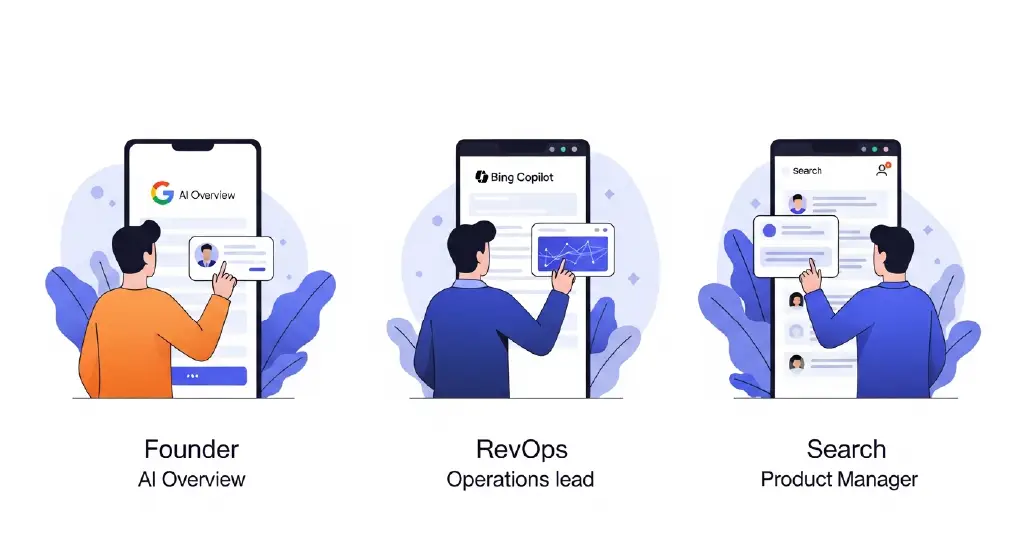
Google’s rollout of AI Overviews made this shift mainstream: the interface increasingly synthesizes information and presents it upfront, with links as supporting material rather than the main event. Microsoft’s Copilot Search in Bing follows a similar direction, framing discovery around a summarized response with cited sources.
That changes the game for SaaS content. Traditional SEO still matters, but it’s no longer the whole job. The new job is to become the source an AI engine selects, trusts, and cites when it generates an answer.
That’s what people mean by Generative Engine Optimization (GEO), sometimes discussed as AI search optimization, SEO for AI search, or even “geo SEO” (confusing name collision, but the intent is clear). GEO is the practice of shaping your content and digital presence so generative systems can confidently use it when producing answers. The term was formalized by researchers in a 2023 paper that framed GEO as its own paradigm, distinct from conventional SEO.
This piece is a practical field guide for SaaS teams: what “ranking” looks like in LLM-mediated search, what to change on your site, what to publish next, how to measure it, and how to justify the work with a simple ROI calculator that doesn’t feel like a finance lecture.

Traditional SEO asked: “How do we get our page to position #1?”
GEO asks something more subtle: “When the AI assembles an answer, how do we become one of the sources it pulls from, and how do we get mentioned accurately?”
That word “accurately” matters more than ever. As AI Overviews and other generative summaries expanded, public scrutiny increased—especially when summaries were misleading in sensitive areas like health. Even outside healthcare, the takeaway for SaaS marketers is straightforward: the bar for trust, clarity, and source quality is going up, not down. If an engine is going to summarize your claims in front of millions of people, it needs to believe your page is dependable enough to quote.
So the outputs you should care about in 2026 aren’t only rankings and traffic. They include citation frequency, brand mention accuracy, and whether the model repeats your positioning the way you’d say it out loud.
SaaS buyers are “prompt-shaped” now. They don’t research categories from scratch; they ask for shortlists.

“Best CRM for construction marketing with call tracking.”
“Alternatives to X with better integrations.”
“How to reduce lead response time without hiring.”
These are comparison-heavy, workflow-heavy, and ROI-heavy queries—the exact kind of query generative search loves, because it can compress messy research into a confident summary.
That’s the exposure: fewer clicks when the answer is complete in the SERP.
But it’s also your advantage: SaaS companies can produce the most groundable content on the web because you have product telemetry, support patterns, implementation stories, screenshots, onboarding steps, and real outcomes. Generic publishers can’t match that. If GEO is about becoming the best source to cite, SaaS teams have more raw material than almost anyone.
The problem is that most SaaS blogs still write like it’s 2019: keyword-first, opinion-light, thin on proof, and afraid of specifics.
Generative engines are not impressed by volume. They are impressed by usefulness they can safely reuse.
Here’s what I mean by “citable,” in a way you can apply this week.
A page earns citations in AI search when it behaves like a reliable reference. That reliability comes from a few characteristics that show up again and again in how AI answer systems select sources: clear definitions, direct answers, structured information, consistency, and signals that the author knows what they’re talking about. You’ll see many industry guides converge on this even if vendors don’t fully disclose their internal weighting.

In practice, your highest-performing GEO pages tend to have a specific shape.
Effective pages open by answering the exact question in plain language, without unnecessary throat-clearing. Key terms are defined clearly and early, removing ambiguity for the reader. Real expertise shows up through the inclusion of constraints and edge cases, not just ideal scenarios. A strong structure also distinguishes what is universally true from what depends on context. Instead of focusing only on “what,” these pages explain the “why” and the “when” behind each point. Finally, credibility is reinforced with proof—whether that comes from a customer story, a measurable result, a screenshot walkthrough, a benchmark, or a transparent methodology.
That last part is where most SaaS content fails: it wants authority without the inconvenience of evidence.
If you want to compete in LLM search ranking environments, you need pages that an LLM can safely lift from without inheriting ambiguity.
Think of it like this: traditional SEO rewarded relevance and authority at the domain/page level. AI search optimization rewards extractability: how easily the model can pull a passage from your site and use it as a building block in an answer.

When you read your own article, ask a blunt question: “If I were an AI system trying to cite one paragraph, which paragraph would I choose?” If the honest answer is “none,” you’ve found the work.
Also read: Voice AI CRM for Customer Intelligence: The Future of CRM | Blazeo

The biggest GEO unlock for SaaS content is to stop chasing broad informational topics and start mapping the decisions buyers make.
A buyer doesn’t truly want “What is generative engine optimization?” They want to know whether they should invest in it, how to do it without tanking existing SEO, and how to explain the spend.
A RevOps lead doesn’t want “lead response time best practices.” They want to decide between hiring, outsourcing, or automation, and they want to predict the revenue impact.
A product marketer doesn’t want “B2B landing page tips.” They want to decide what message to lead with, what proof to include, and how to defend the positioning against competitors.
Generative answers are often built around these decision frames because they compress the path from question to action. That’s why “decision pages” tend to become citation magnets: the engine can quote them while building a recommendation.
This is also how you avoid content that feels copied. Copied content is usually “topic coverage.” Original content is usually “decision support,” because it forces you to take a stance, choose a model, and include details.
Let’s walk through what a SaaS team actually does, in order, when they commit to SEO for AI search in 2026.
First, they choose a small set of “AI-visible intents” that matter commercially. These are not keywords in the classic sense. They are prompts and question patterns that predict pipeline: “best X for Y,” “X vs Y,” “how to do Z,” “tools like X,” “does X integrate with Y,” “how much does X cost,” “how long does X take to implement,” and “is X secure or compliant.”
Also read: Top 4 AI Tools Every Marketer Should Know
Then they audit what the answer engines currently say—not once, but repeatedly, because outputs drift. They watch for three things: whether their brand appears, whether it’s described correctly, and which sources are cited.
That source list becomes the new competitor set. Sometimes it’s the usual suspects. Sometimes it’s a random niche blog that wrote one insanely useful page three years ago.
From there, they build assets that are designed to be referenced.
That might be a comparison page that actually compares, with clear criteria. It could be an implementation guide that names the steps and the time required. It might be a pricing explainer that states what’s included and what changes cost, or a glossary that defines the category the way buyers actually talk about it—not the way marketers wish they did.
In many cases, the most effective GEO assets are troubleshooting guides that support teams are already writing in tickets.
If you’ve noticed how different that is from the average SaaS content calendar, that’s the point. GEO pulls you toward content that a human would bookmark—and a model would cite.
Finally, they support those pages with credibility signals across the web, because LLMs don’t learn trust from your website alone. Industry platforms, community discussions, high-quality mentions, and consistent brand facts all reinforce whether you are a “safe” source to cite.
This is why ideas like “LLM seeding” have become popular: building presence in the places models already treat as reference material.
Also read: Top 4 AI Tools Every Marketer Should Know
Generative Engine Optimization is the practice of structuring content so AI systems like Google AI Overviews, Bing Copilot, and large language models can confidently cite it when generating answers. For SaaS companies, GEO focuses on accuracy, clarity, and decision support—not just rankings.
Traditional SEO optimizes pages to rank in search results. Generative Engine Optimization optimizes content to be used as a source inside AI-generated answers. Instead of competing for clicks alone, GEO competes for citations and brand mentions within AI summaries.
In 2026, many SaaS buyers begin their research inside AI answers rather than search results. If your brand is not cited, you may lose visibility before a click ever happens. GEO ensures your company is present at the moment decisions start forming.
Content that performs best for Generative Engine Optimization includes:
Direct definitions
Comparison pages with real criteria
Implementation guides with timelines
Pricing and cost explanations
Decision frameworks backed by evidence
This type of content is easier for AI systems to quote accurately.
Instead of focusing only on organic traffic, GEO success is measured through:
AI citation frequency
Accuracy of brand descriptions in AI answers
Inclusion in “best tools” or comparison summaries
Growth in AI-influenced leads and assisted conversions
GEO can directly impact revenue when AI visibility leads to qualified demand. When AI-generated answers mention your product accurately, buyers often search your brand, visit directly, or convert faster—especially when sales and lead response systems are optimized.
GEO conversations inevitably hit the same wall: “This sounds important, but how do we justify it when traffic is getting harder to attribute?”
Here’s a simple ROI calculator you can embed into your strategy doc or even into the blog as an interactive section later. You don’t need perfect numbers. You need transparent assumptions.

The trick is to stop trying to model GEO as “more organic sessions.” Model it as “more qualified conversations from AI-mediated discovery,” then translate that into revenue.
Here’s a simple ROI calculator you can embed into your strategy doc or even into the blog as an interactive section later. You don’t need perfect numbers. You need transparent assumptions.
Start with the input that most SaaS teams already have: your current monthly inbound leads from organic search and other non-paid discovery sources. Call that L.
Estimate what share of your category’s discovery is now influenced by AI answers (AI Overviews, Copilot Search, LLM browsing experiences, and answer engines). You can keep this conservative. Call that A.
Estimate what share of those AI-influenced queries you could realistically capture as citations or mentions over the next two quarters if you publish and improve a focused set of citable pages. Call that C.
Now translate visibility into pipeline. If an AI answer mentions you accurately, a portion of users will click through, search your brand, or go direct. Let your incremental lead lift from AI visibility be:
ΔL = L × A × C
From there, apply your funnel math. If your lead-to-opportunity rate is O, your opportunity-to-win rate is W, and your average first-year contract value is ACV, your estimated incremental annualized revenue becomes:
Incremental Revenue = (ΔL × O × W) × ACV × 12
Now cost it. If your monthly content and optimization spend for GEO is Cost, your annual spend is Cost × 12, and your ROI is:
ROI = (Incremental Revenue − Cost × 12) / (Cost × 12)
To make it real, imagine a mid-market SaaS with 800 inbound leads per month across organic and “dark search,” a conservative AI influence estimate of 20%, and a realistic capture of 10% of those AI-influenced intents once the team ships the right pages and earns a few trustworthy mentions.
That’s ΔL = 800 × 0.2 × 0.1 = 16 leads per month.
If 25% become opportunities, 20% of those close, and ACV is $12,000, that equals 0.8 wins per month, or about 9.6 wins per year, or roughly $115,200 in first-year revenue.
If you spend $3,000 per month on content plus optimization, that’s $36,000 per year. The ROI under these conservative assumptions is a little over 2× in year one, without factoring in compounding effects like brand lift, assisted conversions, or faster sales cycles. In most SaaS categories, those second-order effects are where GEO becomes a multiplier rather than a line item.
Magic isn’t math. It’s that the model forces everyone to agree on the assumptions—which turns “future of SEO in 2026” from a vibe into a plan.
Because generative search can satisfy intent without a click, you need to track visibility differently.
You still track classic SEO: crawl health, indexation, rankings, conversions. But GEO adds new KPIs: citation presence in AI answers, accuracy of brand descriptions, frequency of inclusion in “best tools” summaries, and how often your category terms co-occur with your brand in answer outputs.
The good news is that engines like Bing’s Copilot Search emphasize citations and source transparency, which makes it easier to observe patterns and iterate. The harder part is operational: you need a routine, not a one-time audit.
The teams winning at generative engine optimization treat it like product marketing meets technical SEO: they publish, watch how the answer engines repeat (or distort) their narrative, then tighten the content so the next iteration is easier to quote correctly.
Also read: The Future of AI-Powered CRM Systems: Transforming Customer Relationship Management
The content that wins in generative search doesn’t feel engineered. It feels useful. As AI systems increasingly summarize the web instead of sending users through it, they favor sources that reduce uncertainty and speak with clarity. That’s why GEO isn’t a new set of hacks layered on top of SEO—it’s a return to writing content that actually helps people make decisions.
In 2026, success in SEO for AI search won’t be measured by how many keywords you rank for, but by whether AI systems trust you enough to cite you. Being included in an AI-generated answer means your brand shows up before the click, before the comparison spreadsheet, and often before a buyer ever visits a website. That kind of visibility reshapes the top of the funnel—but only if you’re ready to act on it.
Because AI-driven discovery changes when and how intent surfaces. A buyer who encounters your brand inside an AI answer is already partway to a decision. If the next step is friction—missed calls, slow follow-ups, or unqualified handoffs—that visibility quietly evaporates.
This is where GEO connects to revenue. Platforms like Blazeo help SaaS teams convert AI-generated demand into real conversations by responding instantly, qualifying intelligently, and routing high-intent leads the moment they appear. When your content earns the right to be cited, Blazeo ensures you don’t lose the opportunity that citation creates.
If you’re preparing for the future of SEO in 2026, start with one simple move: rebuild a single high-intent page so an AI could confidently reference it—and make sure your systems are ready to capture and convert the demand that follows. In a world where answers come first, the winners won’t just be the most visible. They’ll be the fastest to respond.

