 SmartHub
 Automation
 Appointment Scheduler
 Lead Management
 Dashboard & Reports
 Task Management
 Communications Hub
 Live chat
 AI chatbot
 Voice AI
 Voice call centers
 Appointment scheduling
 Retainer signing
 Home services
 Lawyers and firms
 Medical services
 College admissions
 Real estate agents
 Marketing agencies
 About
About Partner program
 Estimate Your ROI
 Case Studies
 Blog
Blog FAQs
FAQs Login
LoginAI Scheduling & Calendar Automation for Service Businesses





Products
Industries
Company
Resources
As of March 2024 we have renamed Apexchat to Blazeo. We are excited to share the next part of our journey with our customers and partners.
The name ApexChat implies that we are primarily a chat company, which is no longer true. Now we have many offerings, such as call center services, AI, Appointment setting, SMS Enablement, Market Automation, and Sales acceleration (Q2 2024), that go beyond chat. The new name will not only allow us to convey the breadth of our offering but will also better convey our company’s mission and values.
Blazeo, which is derived from the word Blaze, evokes a sense of passion, speed, and energy. A “Blaze” is captivating, illuminates, and represents explosive growth. Blazeo encapsulates our mission to ignite such growth for our customers and partners by delivering innovation with passion, speed, and energy.

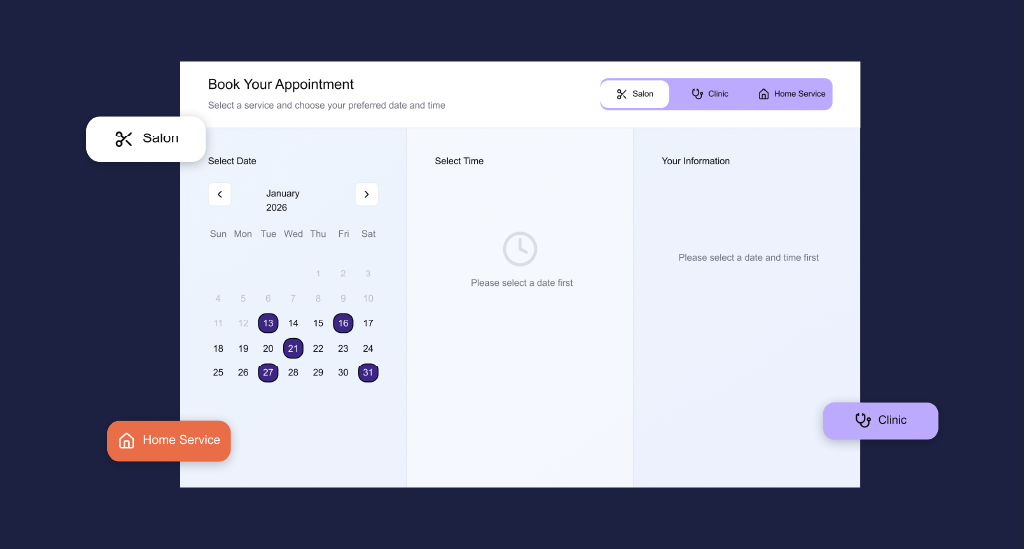
Service brands live and die by appointments. A med spa’s day fills up or grinds to a halt by the number on a schedule. A home services company measures success by how many calls convert into onsite visits. Wellness clinics thrive when their calendars are predictable. Salons stand or fall on the rhythm of bookings, cancellations, and client flow.
But for most service businesses, scheduling remains one of the least optimized parts of their operations. It is the place where human effort collides with human unpredictability. Clients call or message at any hour, staff schedules change, bookings overlap, cancellations happen, and someone has to reconcile all of it. In every business we’ve seen, this manual dance eats time, introduces errors, and creates friction that ultimately costs revenue.
Imagine a world where appointments don’t require endless back-and-forth messages, where double-booking is impossible, where your calendar works 24/7 even when your doors are closed. That world exists today through AI scheduling and calendar automation. And for service brands, it’s nothing short of transformative.
In this article, we’ll walk through how AI scheduling automation works, why it matters, what it eliminates for service businesses, and how to think about its ROI in concrete terms — not in buzzwords — with real examples you encounter every day.
AI scheduling and calendar automation is the use of artificial intelligence to automatically manage, book, reschedule, and optimize appointments based on real-time availability, business rules, and customer intent. For service businesses, it replaces manual back-and-forth scheduling with an intelligent system that operates 24/7, prevents double-booking, respects staff and resource constraints, and converts booking interest into confirmed appointments without human intervention.
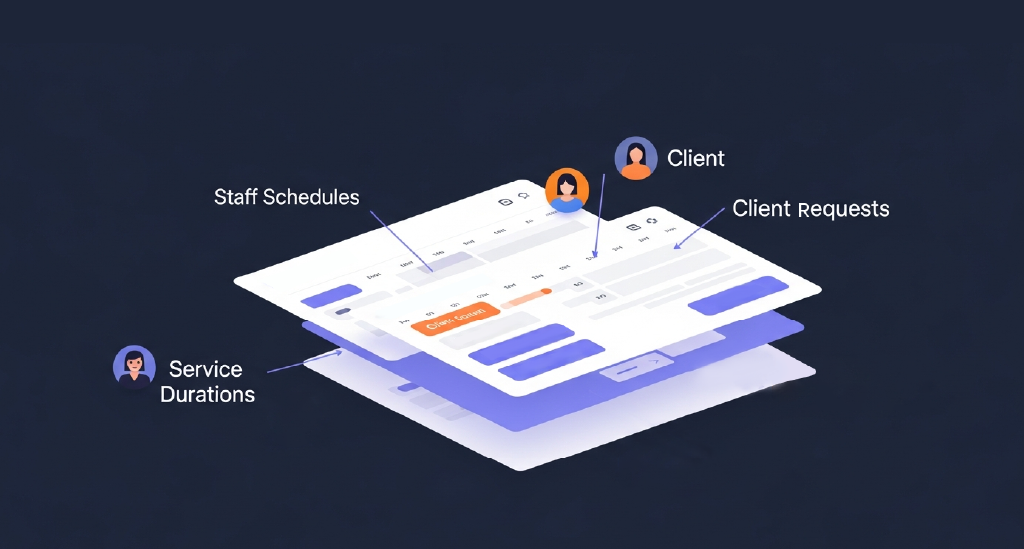
At first glance, scheduling looks simple: find a time that works, book it, and show up. But in practice, it’s anything but simple.
Clients rarely show up at the perfect moment for booking. They respond after hours. They want to change times. They ask questions like “Do you have something at 4 pm next Wednesday?” and then follow up with “Or how about 2 pm on Friday?” Every change ripples across staff availability, room availability, equipment needs, and follow-ups.
Now imagine this happening in a med spa where services vary in duration by treatment type, staff specialization matters, and follow-up care impacts future scheduling. In a wellness clinic where different practitioners have unique availability. In home services where travel times matter.
Each of these adds complexity to a calendar that most businesses are still trying to manage in spreadsheets, phone notes, and group chats. This fragmentation costs hours, leads to human error, frustrates clients, and ultimately — sometimes invisibly — shrinks revenue.
Scheduling isn’t just about times and dates. It’s about matching intent with availability, and doing it in a way that respects both the business and the customer. AI scheduling automation does exactly that.
When you hear “AI scheduling automation,” don’t think of a static calendar tool. Think of an intelligent assistant that understands context, availability, time zones, priorities, and client preferences — and then orchestrates all of it without human intervention.

For a salon, this means recognizing that certain stylists are not available during lunch breaks or may have different treatment durations. For a home services brand, it means accounting for travel time between jobs so you never double-book a technician who’s still on the road. For a med spa, it means automatically offering the correct follow-up window after a particular procedure.
It also means the system doesn’t sleep. It engages with clients at any hour, responds to rescheduling requests intelligently, and ensures that every appointment it books fits into business rules you’ve already set.
Instead of forcing clients to wait for an email reply the next morning, AI scheduling provides instant choices that reflect what’s actually possible. The result is a calendar that works around the clock, solving the inefficiencies that once required people — and people’s time is costly.
Also read: AI Appointment Frameworks: Fully Automated vs. Human-Led

Consider a mid-sized salon in a busy urban neighborhood. Before adopting automation, the salon had one team member dedicated to scheduling. When that person was busy answering calls, clients were placed on hold or asked to message for availability. Many times, clients didn’t wait. They booked elsewhere.
One evening in mid-September, a client named Sara tried to book a balayage appointment after dinner. She left a message asking for times between 5 pm and 7 pm over the next three days. The scheduler, already off for the day, replied the next morning with limited options. By then, Sara had booked down the street.
After implementing AI scheduling automation, that same client could interact with the system the moment she showed intent — browsing the services page, lingering over balayage pricing, and then hitting the “book now” button. The AI assistant suggested optimal time slots based on stylist availability and duration, and the appointment was confirmed in seconds.
What changed? No more delays. No missed opportunities. The salon gained not only the appointment but the chain reaction of referrals from Sara’s circle because the experience felt effortless.
This is a real example of how AI scheduling does more than replace humans. It rescues opportunities that traditional scheduling systems consistently lose.
One of the most profound shifts AI scheduling brings is round-the-clock responsiveness.
Most businesses assume their booking process only needs to operate during business hours. But buyer intention doesn’t follow a nine-to-five schedule. People shop for services in the evening, on weekends, during lunch breaks, and whenever they have a moment.
When scheduling depends on human availability, every off-hour interaction becomes a risk. A visitor who fills out a form at 9 pm might not convert the next morning. The memory of the intent fades, the motivation dissolves, and metrics paint a familiar story of bounce and abandonment.
AI scheduling eliminates this timing gap by ensuring every inquiry is met instantly, even at 2 am. Patients, clients, and customers receive options in real time, choose what works for them, and get booked — without waiting for a staff member to respond. For service brands, this means more bookings, more reliability, and a competitive edge against businesses that still rely on manual response cycles.
Double-booking is more than an embarrassment. It’s a workflow disruption, a source of client frustration, and a drain on staff morale. When two appointments clash for the same time slot — especially in businesses where resources or specialists are limited — someone loses. Either clients get rescheduled, compensated, or worse, turned away.
AI calendar automation eliminates this problem by understanding more than slots. It understands the rules. It knows which treatments cannot be stacked. It respects staff breaks and resource constraints. It knows that a massage therapist can’t see two clients at once, and that a home services tech needs travel buffers.
This intelligence isn’t just a technical benefit. It becomes a trust signal. Clients see that you respect their time as much as your own. That alone improves client satisfaction and retention.
We’ve all been there. A client wants a “late afternoon appointment next week,” but doesn’t specify days. The scheduler asks for more detail. The client replies with preferences. The scheduler gives options. The client changes their mind. Hours of messaging ensue.
AI scheduling automation collapses this back-and-forth into a single exchange because it anticipates the needs and intents behind the messages. Instead of asking "What time works for you?" it offers working options that already align with availability. Instead of clarifying questions, it understands context and provides the best fit.
In essence, the system becomes the mediator that understands both sides — the business and the client — so neither has to negotiate manually.
In home services, scheduling isn’t just about time. It’s about logistics.
Consider a plumbing company with several technicians serving a region. Before automation, dispatchers would manually assign jobs, hoping nobody overlapped, hoping travel times were respected, hoping nobody was burned out by the end of the day.
With AI automation, the system calculates not just appointment times, but travel efficiency, technician specialization, priority jobs, and buffer zones. It might choose a slightly earlier time for a job based on where a technician already is. It might rearrange appointments automatically if a service request comes in that fits a nearby time and place.
This is schedule optimization, not just slot filling — and it dramatically improves productivity.
Also read: CRM for Home Services: Convert Urgent Leads Fast
As AI scheduling runs, it collects real-world patterns. It learns which slots fill fastest. It notices no-show trends. It sees which services are most often rescheduled. This historical context allows the system to become smarter over time.
For example, if a wellness clinic finds that clients booking Monday morning slots often cancel, the system might offer preferred alternative windows proactively. If a salon notices that certain stylists get more traffic on weekends, the AI can adjust availability suggestions accordingly.
This dynamic adaptation turns scheduling from a static set of rules into a living optimization engine.
The value of automated booking systems isn’t theoretical. It shows up in revenue.
When appointments are hard to book, clients go elsewhere. When scheduling requires waiting for replies, many abandon the process altogether. When calendars aren’t optimized, resources are wasted.
AI scheduling captures these opportunities before they slip away. It converts intention into commitment.
This is where the ROI calculator becomes more than a financial tool — it becomes a business clarity tool. By modeling how many website visitors engage with services, how many express booking intent, and how many of those sessions convert when an automated calendar responds instantly, brands can quantify lost opportunity today and recovered opportunity tomorrow.

For instance, even improving conversion from browsing to booking by a small percentage — say, from 10% to 13% — can translate to tens of thousands in incremental revenue once multiplied across hundreds or thousands of monthly visitors. That’s the real math of scheduling automation.
A concern we often hear is: “Will automation make my brand feel impersonal?”
The answer is no. It makes your brand more responsive, which feels personal. Clients don’t crave human scheduling agents; they crave effortless experiences. When someone can book in seconds, receive confirmations, and get reminders without friction, it feels thoughtful.
And where human touch still matters — like handling unique client needs, complex cases, or high-touch consultations — the AI hands the conversation off with full context so your team never starts from zero.
What is AI scheduling and calendar automation?
AI scheduling and calendar automation uses intelligent software to automatically book, manage, and optimize appointments based on availability, rules, and real-time data—without manual effort.
How does AI scheduling help service businesses?
It helps service businesses capture more appointments, eliminate double-booking, respond to clients 24/7, and reduce time spent on back-and-forth scheduling messages.
Can AI scheduling prevent double-booking?
Yes. AI scheduling systems understand staff availability, service duration, resource constraints, and buffer times, making double-booking virtually impossible.
Does AI scheduling replace human staff?
No. It removes repetitive scheduling tasks so staff can focus on higher-value work like client care, consultations, and relationship building.
Is AI scheduling useful for small service businesses?
Absolutely. Small salons, clinics, and home service providers benefit significantly because AI scheduling captures bookings even when staff are unavailable.
How quickly can AI scheduling increase bookings?
Many service businesses see improvements within weeks, especially from after-hours bookings and reduced abandoned appointment requests.
AI scheduling and calendar automation isn’t about replacing calendars. It’s about liberating them from human limitations. It turns passive time grids into active assistants that understand context, respect rules, and operate without pause.
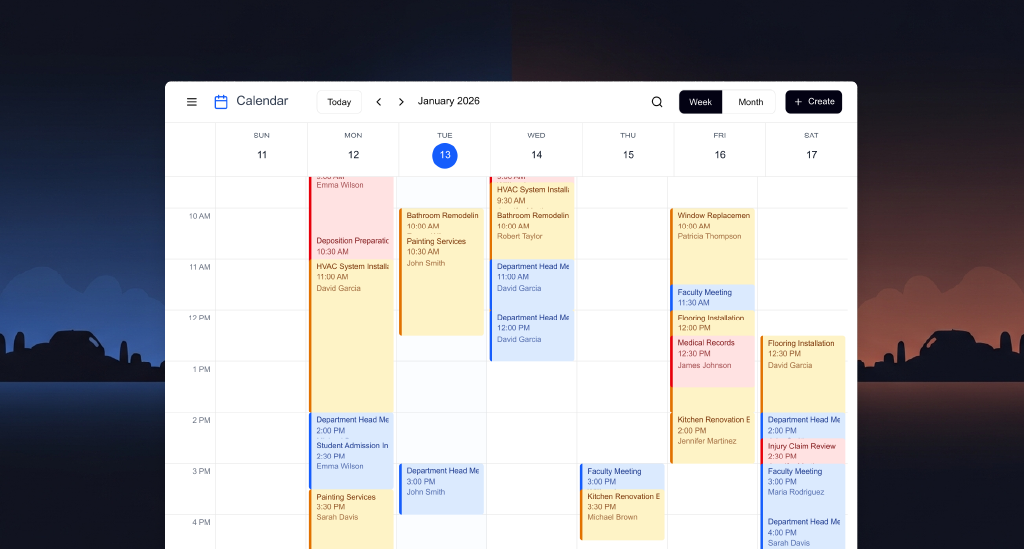
For service brands that depend on appointments, this isn’t a marginal improvement. It’s a strategic advantage.
Fewer double-books, fewer abandoned booking attempts, fewer manual messages, and more revenue realized from traffic you already generate.
That’s not automation for automation’s sake. That’s intelligence where it matters most.
Also read: Voice AI CRM for Customer Intelligence: The Future of CRM | Blazeo
Smarter scheduling doesn’t require more staff or longer hours. It requires systems that respond instantly, stay accurate, and remove friction from booking. Blazeo helps service brands automate scheduling, prevent conflicts, and keep calendars working around the clock—without manual intervention.
If you want to understand what that shift could mean for your business, Blazeo’s ROI Calculator lets you model the impact using your existing appointment volume, response times, and booking conversion rates. Because when scheduling works intelligently, the gains show up quickly—and consistently.
