 SmartHub
 Automation
 Appointment Scheduler
 Lead Management
 Dashboard & Reports
 Task Management
 Communications Hub
 Live chat
 AI chatbot
 Voice AI
 Voice call centers
 Appointment scheduling
 Retainer signing
 Home services
 Lawyers and firms
 Medical services
 College admissions
 Real estate agents
 Marketing agencies
 About
About Partner program
 Estimate Your ROI
 Case Studies
 Blog
Blog FAQs
FAQs Login
LoginAI Lead Recovery for Website Visitors That Drives Revenue




Products
Industries
Company
Resources
As of March 2024 we have renamed Apexchat to Blazeo. We are excited to share the next part of our journey with our customers and partners.
The name ApexChat implies that we are primarily a chat company, which is no longer true. Now we have many offerings, such as call center services, AI, Appointment setting, SMS Enablement, Market Automation, and Sales acceleration (Q2 2024), that go beyond chat. The new name will not only allow us to convey the breadth of our offering but will also better convey our company’s mission and values.
Blazeo, which is derived from the word Blaze, evokes a sense of passion, speed, and energy. A “Blaze” is captivating, illuminates, and represents explosive growth. Blazeo encapsulates our mission to ignite such growth for our customers and partners by delivering innovation with passion, speed, and energy.

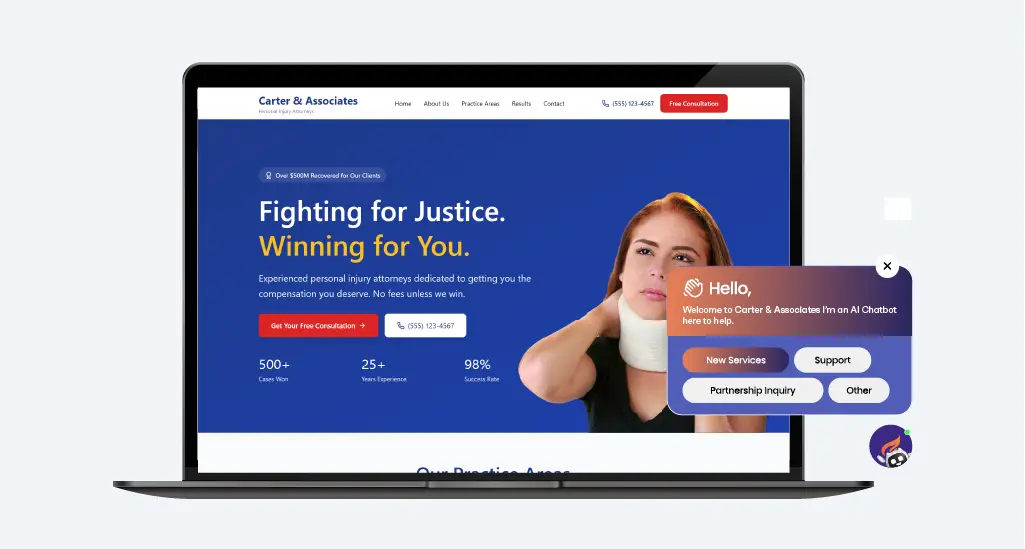
They leave because something interrupted them. A question went unanswered. A page took too long to load. They weren’t ready to commit. Or they simply didn’t find what they needed fast enough.
From the business side, those visitors vanish into analytics dashboards as bounces, exits, or abandoned sessions. From the buyer’s side, they were moments of intent that never got acknowledged.
This is the quiet cost of modern web funnels. Traffic is expensive. Attention is fragile. And the moment someone decides to leave is usually the moment you lose the most information about why.
AI lead recovery exists to solve this exact problem. Not by trapping visitors or forcing pop-ups, but by intercepting intent at the point of abandonment and turning disappearing sessions into conversations, callbacks, or bookings while the window is still open.
This is not retargeting. It’s not exit pop-ups dressed up as intelligence. It’s a fundamentally different approach to how websites respond to hesitation.
Every website has leaks. Even high-performing ones.
Visitors scroll, pause, hover over pricing, hesitate on forms, and then leave. Traditional analytics can tell you where this happens, but not why. Heatmaps show movement, not meaning. Funnels show drop-offs, not intent.
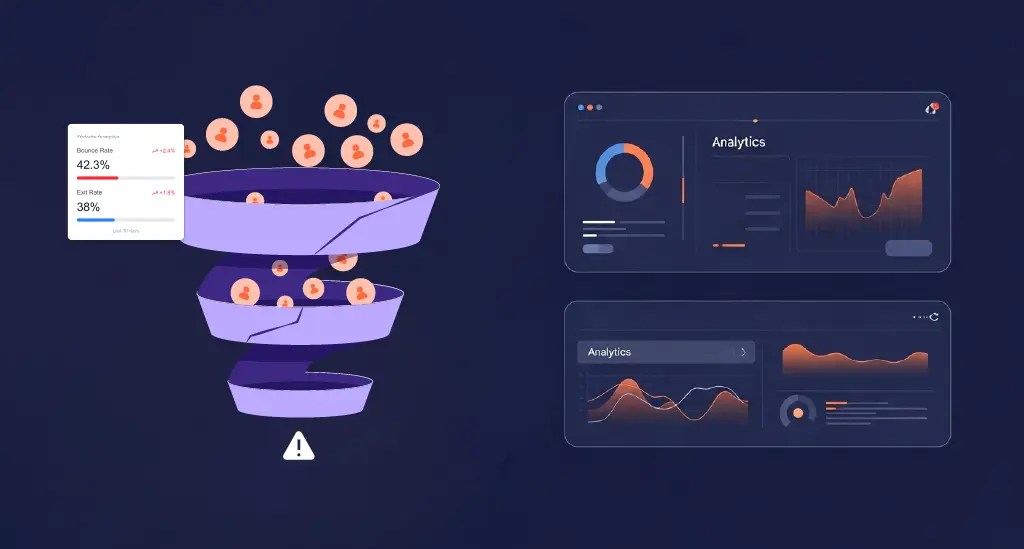
What’s missing here is context. Maybe a question never got answered. Or a concern went unaddressed. Sometimes, the reassurance they needed simply never showed up.
Most recovery efforts happen too late. Email follow-ups depend on a form submission that never happened. Retargeting ads assume intent without understanding it. Sales teams never even know the opportunity existed.
AI lead recovery shifts the timeline forward. Instead of reacting after abandonment, it intervenes during hesitation.
AI lead recovery is the ability to recognize when a visitor is about to disengage and respond with relevance rather than interruption.
It works by analyzing behavioral signals in real time. Time spent on key pages. Repeated scrolling. Cursor movement toward exit. Form hesitation. Page switching patterns that suggest uncertainty rather than disinterest.
When these signals converge, AI intercepts the moment with a conversational entry point. Not a generic “Need help?” but a context-aware prompt that reflects what the visitor is actually experiencing.
This is where most implementations fail. They treat interception as interruption. True AI lead recovery treats it as assistance.
If someone is lingering on pricing, the AI doesn’t ask for an email. It clarifies value. If someone abandons a booking flow, it offers to schedule a callback instead of pushing another form. If someone leaves after reading a service page, it asks what they were hoping to find.
The goal is not to keep everyone. It’s to recover the right ones.

Most businesses already understand missed-call recovery. When someone calls and no one answers, systems trigger callbacks, voicemails, or follow-ups because that moment mattered.
Website abandonment is the same problem, just quieter.
A visitor who leaves a pricing page is no different from a caller who hangs up after hearing a busy tone. The intent existed. The system failed to respond in time.
AI lead recovery extends missed-call logic to web funnels. It treats abandonment as a signal, not a failure. And it reacts immediately, not hours later.
This is why automated callbacks and instant booking prompts work so well when triggered by AI. They don’t feel like marketing. They feel responsive.
Also read: AI Missed-Call Automation: Recover Lost Business Revenue
The biggest misconception about AI intercept chat is that it’s intrusive.
In reality, poorly designed chat is intrusive. Intelligent interception feels natural.
Consider a visitor on a home services website who spends two minutes reading about emergency repairs, opens the contact form, and then pauses. A static site does nothing. An AI-powered site recognizes hesitation and offers an option: speak to someone now or schedule a callback in under a minute.

The visitor doesn’t have to commit to a form. They don’t have to search for a phone number. The decision friction disappears.
In SaaS, the same principle applies. A founder exploring pricing late at night may not want to book a demo. But they might accept an AI-offered callback the next morning or ask one clarifying question before leaving.
These moments are where lead-recapture systems earn their value.
When a visitor engages with an intercept chat, the AI doesn’t push them down a funnel. It listens. It adapts its responses based on language, tone, and context.
Someone who says “I’m just browsing” is treated differently from someone who says “I need this live by next week.” The system adjusts automatically, without tagging, rules, or manual workflows.
This is where bounce-recovery automation stops being reactive and becomes diagnostic. Each recovered conversation feeds insight back into the system, improving future interception and qualification.
Over time, patterns emerge. Common objections. Pricing confusion. Missing information. Technical blockers. These insights don’t just recover leads. They improve the website itself.
Visitors don’t want to be captured. They want to be helped.
This is why conversational AI outperforms forms and pop-ups. It allows people to express uncertainty without commitment. It gives them control over how the interaction unfolds.
A visitor can ask one question and leave. Or they can continue into a booking flow. Or they can request a callback without typing anything beyond a confirmation.
This flexibility is what makes automated visitor engagement effective. It respects intent rather than forcing conversion.
Also read: The Hybrid Model: Where Voice AI and Humans Work Together
AI lead recovery isn’t about inflating numbers. It’s about salvaging real intent that would otherwise disappear.
When a recovered conversation shows buying signals, AI can escalate instantly. Calls can be triggered. Calendars can open. Sales teams can be notified with full context.
When intent is early-stage, the AI nurtures rather than pushes. It answers questions, shares resources, and exits gracefully.
This creates cleaner pipelines. Sales teams stop chasing ghosts. Marketing teams see which recovery moments actually drive revenue.
Most businesses focus ROI discussions on acquisition. Few examine how much value is lost after the click.
Every abandoned visitor represents sunk cost. Ads were paid for. Content was created. Traffic was earned. The only missing piece was the response.
AI lead recovery doesn’t increase spend. It increases yield.

Even modest recovery rates can have outsized impact. Recovering a small percentage of abandoning visitors can outperform entire acquisition campaigns because the intent already exists.
This is where ROI calculators become useful, not as promotional tools but as clarity instruments. When teams model how many visitors reach high-intent pages and how many leave without engagement, the opportunity gap becomes obvious.
Improving recovery doesn’t require more traffic. It requires better timing.

Exit-intent pop-ups, email capture overlays, and static chatbots all try to recover visitors. The problem is, they fail for the same reason traditional lead scoring fails. There’s no real context. Most of these tools fire off based on simple triggers, not actual understanding. Instead of helping, they end up interrupting. In the end, they guess at intent rather than uncover it.
AI lead recovery works because it combines behavior, conversation, and timing into a single system. It doesn’t just detect abandonment. It responds intelligently to it.
Platforms like Blazeo are built around this philosophy. Recovery isn’t a separate tool. It’s an extension of how conversations work across the funnel, from first click to final conversion.
This is why competitors struggle to replicate results. It’s easier to deploy pop-ups than to build conversational intelligence.
Recovered leads convert better because they feel understood, not chased.
When someone chooses to re-engage after deciding to leave, it’s because the interaction respects their moment. That trust carries forward.
Sales conversations start warmer. Objections surface earlier. Expectations align faster.
AI doesn’t replace human follow-up. It makes it better.
Websites were never designed to listen. They were designed to display.
AI lead recovery changes that. It turns static pages into responsive environments that react to hesitation, curiosity, and intent in real time.
As buyer behavior becomes more fragmented and attention windows shrink, the ability to intercept at the right moment will separate high-performing funnels from leaky ones.
The question is no longer whether visitors abandon. They always will.
The question is whether your site knows how to respond when they do.
Also read: AI-Driven Legal Intake Funnels: 7 Must-Know Benefits
AI lead recovery for website visitors is the use of artificial intelligence to detect when a visitor is about to leave a website and engage them in real time with helpful, context-aware conversations that recover lost intent.
Unlike exit pop-ups, AI lead recovery responds to behavioral signals and hesitation patterns. It initiates relevant conversations instead of interruptive messages, making engagement feel helpful rather than forced.
Yes. AI lead recovery often works best without forms by offering live chat, instant callbacks, or booking options that reduce friction and let visitors engage on their own terms.
Yes. By intercepting visitors at the moment of hesitation, AI lead recovery captures high-intent opportunities that would otherwise disappear, improving conversion efficiency without increasing traffic spend.
Absolutely. B2B companies, SaaS platforms, and service-based businesses benefit significantly because recovered conversations often reveal strong buying signals early in the decision process.
Once intent is identified, AI can route the conversation to sales, trigger callbacks, schedule meetings, or nurture the visitor with helpful information—ensuring follow-up happens with full context.
Recovering abandoned visitors doesn’t require more traffic or more spending. It requires recognizing intent at the moment it appears and responding with relevance instead of silence.
Blazeo helps businesses intercept hesitation across their websites using AI-driven conversations that recover lost leads, trigger callbacks or bookings, and route high-intent visitors before they disappear. To understand what that responsiveness could mean for your funnel, Blazeo’s ROI Calculator lets you model the impact using your own traffic, conversion rates, and response times.
Because once recovery happens in real time, abandonment stops being a blind spot—and starts becoming an opportunity.
