 SmartHub
 Automation
 Appointment Scheduler
 Lead Management
 Dashboard & Reports
 Task Management
 Communications Hub
 Managed chat
 Voice Receptionist
 Appointment scheduling
 Retainer signing
 Home services
 Lawyers and firms
 Medical services
 College admissions
 Real estate agents
 Marketing agencies
 About
 Partner program
 Estimate Your ROI
 Case Studies
 Blog
 FAQs
 Login
What Does a Personal Injury Intake Specialist Do? A Guide for Law Firms




Products
Industries
Company
Resources

A driver sits on a highway shoulder with a sore neck and a cracked phone. They call the first law firm they find, hear voicemail, and tap the next name on the list.
A personal injury intake specialist is the person who stops that from happening. In a 2026 SSRN study by Strammiello and Stein, 40.9% of 1,000 personal injury firms called after hours did not answer.
This guide covers three things: what the role does, where intake leaks cases, and how to choose the right setup for your firm.
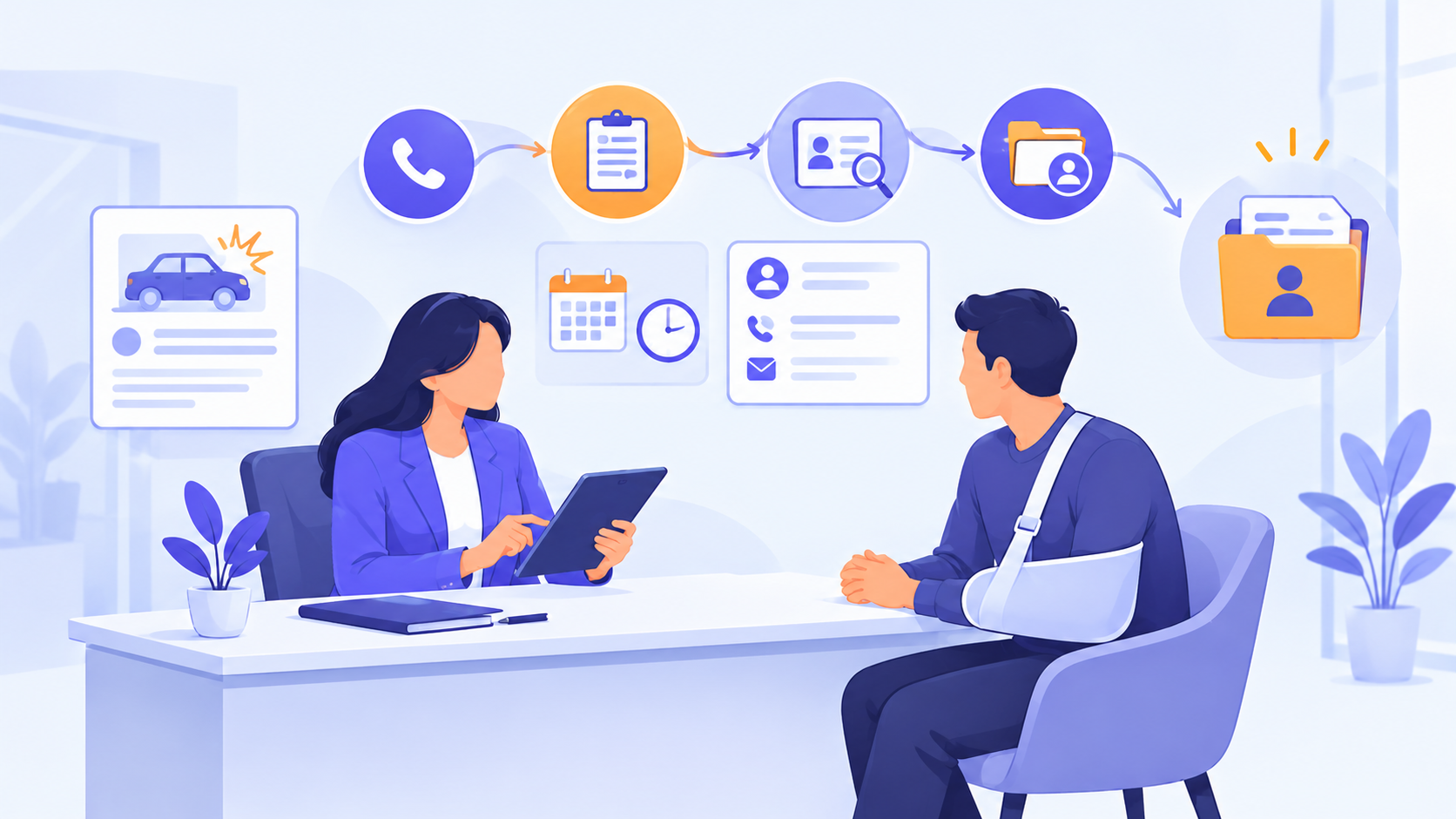
A personal injury intake specialist is the first person a prospective client reaches at your firm. They gather facts, screen the case for fit, check conflicts and pass the matter to an attorney. They don't give legal advice.
The role matters because injured callers are stressed and often compare several firms in one sitting. They tend to go with whoever answers first.
Titles vary, from intake coordinator to intake representative, but firm job posts describe the same work: phone interviews, objection handling and signing qualified clients.

The intake process is the path from first contact to a signed retainer or a polite decline. Most firms follow five steps:
| Role | Main job | Legal advice allowed |
| Receptionist | Answers and routes calls | No |
| Intake specialist | Qualifies and signs prospects | No |
| Paralegal | Works the case file | No, attorney supervises |
In short, a receptionist routes, an intake specialist qualifies, and a paralegal works the file.
The first call often decides who gets the case, so each minute has a job. Knowing the timeline keeps the caller calm and the facts clean. Treat the timing below as a typical pattern, not a rule.
Start with a greeting, the caller's name and a call back number, then ask if anyone needs emergency help first. They may be in a parking lot, still shaking. Many states require consent to record calls, so announce recording up front and say the call doesn't yet create a lawyer-client relationship. Ask for language preference early, since bilingual coverage matters in many states.
The personal injury intake form captures the incident date and place, injuries, treatment so far, fault clues, insurance and any police report. The incident date matters most, because deadlines vary by state and an attorney needs time to check them. The best forms are short and follow the flow of the conversation.
Compare the facts with your case criteria: case type, injury level, location, prior counsel and any deadline flag. Run the conflict check before deeper detail is shared. A polite decline with a referral still protects your reputation, and the caller remembers how it felt.
Book the attorney consult, send the fee agreement if the case meets your criteria, and log notes and lead source in your case system. Capture consent for follow-up texts here too, and aim for a same day attorney review.
Every call should end with a next step and a name.
Intake staff can gather facts, screen cases and explain the process, but only a lawyer gives legal advice. ABA Formal Opinion 506 (June 2023) says trained nonlawyers may check conflicts, collect facts, explain fees and send the fee agreement, if the prospect can still talk to the lawyer.
AI raises the stakes. ABA Formal Opinion 512 (July 2024) ties generative AI use to competence, confidentiality and supervision.
The Oregon State Bar's Formal Opinion 2026-208 (February 2026) allows chatbots and AI agents in intake with qualifications, including supervision, clear disclaimers and protection of prospect confidences.
Rule 1.18 adds another reason to move fast. Facts a prospect shares can bar your firm from the other side, so enter them in the conflicts system right away.
| Staff can do | Hand to an attorney |
| Check conflicts | Predict case value |
| Collect incident facts | Say whether the claim will win |
| Explain how fees work | Advise on settlement |
| Send the fee agreement | Answer legal questions |
This isn't legal advice, and each state bar adopts its own version of the rules, so check yours.
Most law firm intake problems are not lead problems. Marketing already paid for the call, and the leak happens after it rings.
In the 2026 Strammiello and Stein study, 40.9% of 1,000 personal injury firms didn't answer after hours. Hennessey Digital's 2025 lead form study found a 13 minute median response time to online leads, and 26% of firms never replied.
Callers who reach voicemail often dial a rival, so one unanswered call can waste the ad spend that produced it.
| Bottleneck | Symptom | Quick test |
| Missed calls and after hours gaps | Voicemail at night | Call your main line after hours |
| Slow web form and chat replies | Leads wait hours for a reply | Submit a test form and time it |
| One call back attempt only | Callers never reached again | Count attempts per lead |
| Long or paper intake forms | Callers drop mid-call | Time one full intake call |
| Manual double entry between tools | Notes missing or mismatched | Compare one lead in both systems |
| Unclear qualification rules | Staff guess on case fit | Have two staff screen one case |
| Retainer delays with no follow up | Fee agreements sit unsigned | Count open fee agreements this week |
A checklist keeps every specialist asking the same questions in the same order. It's the best checklist for PI case intake and review because it covers both the call and the attorney review.
During the call
Before attorney review
Give one point per item and review any call that scores under 12. If your system supports lead tracking, log each score there so patterns show up fast.
A firm can hire a personal injury intake specialist, bring in outside personal injury intake support, add AI or blend them. Each fits a different volume and budget.
| Model | Coverage | Cost pattern | Best for |
| In-house hire | Mostly business hours | Payroll plus training | Steady daytime volume |
| Legal call center | Often 24/7 | Per call or monthly | Overflow and nights |
| AI plus human | 24/7 | Mid, scales with volume | Mixed volume |
An in-house hire gives you deep firm knowledge, a tight culture and direct supervision. The trade-offs are payroll, training, sick days and thin coverage on nights and weekends. This model fits firms whose calls mostly arrive during business hours.
Four questions help you compare vendors: ask about legal training, bilingual coverage, script control and reporting. Then ask the one that matters most: how do they hand a live caller to your attorney?
An AI intake specialist for injury law fits best at the edges, like after hours answers, first questions and instant replies through after hours AI call answering. A person should handle sensitive callers and the sign up, and the red lines above still apply.
In a hybrid setup, AI catches every contact, trained agents qualify, and attorneys review. That's one way to automate the personal injury case intake process without losing the human touch.
Blazeo pairs trained intake agents, including live chat intake and U.S. based voice agents, with retainer signing from chat and workflow tools. You can see the full approach in its law firm intake solutions.
Can a Personal Injury Intake Specialist Give Legal Advice?
No. An intake specialist gathers facts and explains the process, but legal advice stays with a lawyer. ABA Formal Opinion 506 adds that the prospect must be able to reach the attorney.
What Should a Personal Injury Intake Form Include?
A good form includes contact details, incident date and place, injuries, treatment, insurance, prior counsel and consent to be contacted. Keep it short, so callers finish it.
What Is the Best AI Intake Specialist for Injury Law?
The best ai intake specialist for injury law discloses it's AI, runs conflict checks, hands off to a human, secures data and reports results. Blazeo is one option that pairs AI with trained agents.
How Fast Should a Firm Respond to a New Injury Lead?
As fast as possible, and aim for minutes. Hennessey Digital's 2025 study put the median law firm response to online leads at 13 minutes, so that's the number to beat.
The role gathers facts and screens cases, the red lines keep your firm on the right side of the rules, and speed wins the caller before a rival does.
Before you hire anyone, pull one week of calls and count the unanswered ones, the slow replies and the leads that never signed.
If the numbers surprise you, see how Blazeo handles law firm intake solutions, or request a demo to talk it through. A week of honest numbers is a good place to start.

