 SmartHub
 Automation
 Appointment Scheduler
 Lead Management
 Dashboard & Reports
 Task Management
 Communications Hub
 Managed chat
 Voice Receptionist
 Appointment scheduling
 Retainer signing
 Home services
 Lawyers and firms
 Medical services
 College admissions
 Real estate agents
 Marketing agencies
 About
 Partner program
 Estimate Your ROI
 Case Studies
 Blog
 FAQs
 Login
AI Chatbot vs Managed Live Support: What Should Your Business Actually Use?




Products
Industries
Company
Resources

A chatbot can answer a customer's question in two seconds and still lose you the sale. It usually happens when the question needed a person and the bot kept guessing instead of handing the chat over.
In the chatbot vs live chat debate, bots suit simple, repeat questions, while managed live support suits sales, trust and complex issues. Most US businesses do best with a hybrid that sends each conversation to the right place from the first message.
Here you'll find a clear comparison, a simple way to route chats, cost logic that holds up, a provider checklist and a five-minute audit you can run today.
Managed live support is a service where trained human agents run your website chat for you, usually with set hours, scripts, reporting and handoff rules. The provider handles hiring, training and scheduling, so your own team doesn't have to staff the chat window.
Managed live support is a service where a provider's trained agents answer your customers' chats in real time, following your scripts and handoff rules.
A bot follows the script it was given, while a person reads the situation and responds to it.
Fully managed live chat usually covers five things:
Live chat management of this kind takes the staffing burden off your team entirely.
Many managed setups now use a bot for greetings and common questions, then pass the chat to a person when it matters. That blend is the hybrid model behind Blazeo's managed live chat and it works best when the handoff is quick.
Businesses that staff chat in-house often learn the most in the first month. Evenings go unanswered and the one trained person is out sick on the busiest day.
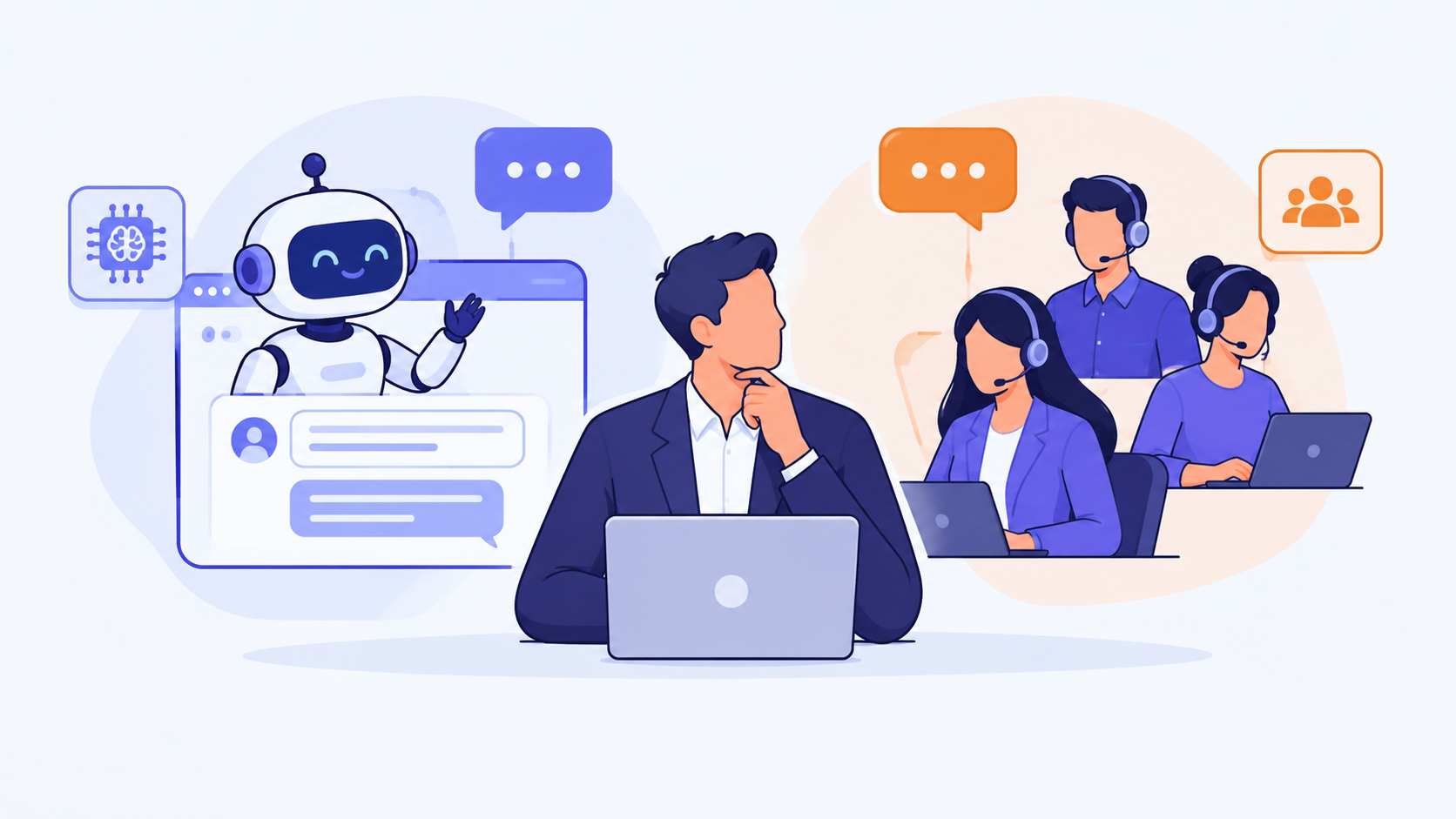
A chatbot answers fast, at any hour and at low cost, but it struggles with nuance and emotion. Managed live support brings human judgment, empathy and sales skill at a higher cost. Neither wins everywhere, so the better pick depends on the type of conversation.
| Factor | AI Chatbot | Managed Live Support | Hybrid (AI plus human) |
| Availability | 24/7 | Set hours or rota | 24/7, staffed hours |
| First response time | Instant | Seconds | Instant, then a person |
| Edge cases | Weak | Strong | Strong after handoff |
| Empathy and trust | Low | High | High when needed |
| Sales and booking | Basic | Strong | Strong |
| Cost pattern | Low monthly fee | Higher monthly fee | Mid, varies |
| Best for | Simple repeat questions | Sales and complex issues | Mixed volume |
Bots reply instantly at any hour, while staffed teams reply in seconds during set hours and cover nights with a rota. For US businesses, that rota should span Eastern through Pacific time, since evening traffic often peaks after the office closes.
AI chatbots vs human agents differ most on accuracy. A bot can give a wrong or even invented answer and it can end a chat without solving anything, which is deflection, not resolution. Trained agents notice tone, context and risk.
AI chatbot vs human customer support looks cheap on a monthly bill, but trust shifts the math. A 2024 Gartner survey of 5,728 customers found 64% would prefer companies didn't use AI in customer service, with difficulty reaching a person as the top concern. On health, money and legal topics, that gap matters most.
The Escalation Ladder sorts every chat into three lanes. Green lane chats go to the bot, amber lane chats start with the bot and finish with a person and red lane chats go to a human from the first message.
Live chat vs chatbot for business isn't one big choice. Each lane has a natural owner and live managed chat support covers the two where people matter most.
Green lane chats are low-risk questions with one clear answer and no emotion, like store hours, order status, service area, basic pricing ranges or directions. A bot handles these well and customers rarely need more.
Amber lane chats start with the bot and finish with a person. Think booking an appointment, qualifying a lead, rescheduling or answering product fit questions. The bot collects the details and an agent confirms and closes. This lane is the hybrid sweet spot.
Red lane chats go to a human from the first message, because the risk, emotion or deal value is high. Examples include complaints, cancellations, billing disputes, urgent home service calls and legal or health questions. For law firms, home services, clinics and real estate, many new-lead chats land here.
Chatbots cost less per month, but managed live support often costs less per resolved chat and per booked lead when conversations are complex. Compare cost per resolved chat, not the monthly fee, before you decide which route fits.
Providers of fully managed live chat usually price in one of three ways:
Prices vary widely, so ask for written quotes and check the date on any figure you see.
A bot-only setup carries costs that never show on the invoice: setup and training time, content upkeep, leads lost to failed handoffs and staff hours spent cleaning up bad chats. In the AI chatbot vs human customer support comparison, those hours often close the gap.
Cost per resolved chat = total monthly cost ÷ chats fully resolved
Example only: a $300 bot that fully resolves 100 chats costs $3 per resolved chat, while a $1,200 staffed plan that resolves 600 chats costs $2. Run the same check with your own numbers.

The right managed live support provider answers six things clearly: who the agents are, how they're trained, when they cover, how handoff works, what reporting you get and how contracts end. Vague answers on any of these are a warning sign.
Managed live chat providers should state their coverage in US time zones, their holiday rules and how they staff peak hours. Ask whether agents are dedicated to your account or shared across many clients.
Training decides whether agents sound like your business. Ask how they learn your services and tone and how often scripts are reviewed, since live chat management is an ongoing job, not a one-time setup.
Ask how bot-to-human transfer works and whether transcripts, resolution rate and lead data arrive every month. A hybrid AI plus human model makes that handoff part of the design. Finish by asking how the contract ends.
The TCPA covers follow-up texts, HIPAA covers health data and the CCPA applies to California visitors. Chat recording and consent rules vary by state, so confirm details with counsel.
If you'd like to see a hybrid model in action, Blazeo's managed live chat is a good place to look.
The 5-Minute Chat Audit shows whether your current chat loses leads. Test five real questions at three times of day, then score each reply for speed, accuracy and handoff.
Most owners have never tested their own chat the way a customer would and the results can be humbling. Here's the process:
If two or more chats end lost, your setup needs human coverage. It's a plain signal and it's worth acting on.
Chatbots and managed live support meet different needs and the four answers below cover what buyers ask most. Each one leads with the short answer, then adds a detail you can act on.
Yes per month, but not always per outcome. A bot's low fee can hide failed chats and lost leads, so compare cost per resolved chat, as the cost section above shows.
For simple, repeat questions, yes. For complaints, sales and anything risky, no. Most businesses land on a hybrid, where the bot handles routine chats and a person takes over when trust or money is involved.
Live chat is the tool and managed live support is the trained team behind it. The tool shows a chat window, while the service supplies the agents, schedules, scripts and reporting so someone actually answers.
Use this rule: if volume is low and questions are simple, start with a bot. If your business runs on leads or service calls, add staffed chat. Small teams often need both.
Bots take the simple chats and people take the ones that carry money, trust or emotion. A hybrid covers both, so managed live support works best as part of a plan, not an all-or-nothing pick.
Before you choose in the live chat vs chatbot for business debate, run the 5-Minute Chat Audit on your own site. Five test chats will show you where your current setup loses people.
When you're ready to compare options, Blazeo's managed live chat shows how a hybrid model works in practice.

