 SmartHub
 Automation
 Appointment Scheduler
 Lead Management
 Dashboard & Reports
 Task Management
 Communications Hub
 Managed chat
 Voice Receptionist
 Appointment scheduling
 Retainer signing
 Home services
 Lawyers and firms
 Medical services
 College admissions
 Real estate agents
 Marketing agencies
 About
About Partner program
 Estimate Your ROI
 Case Studies
 Blog
Blog FAQs
FAQs Login
LoginAI Follow-Ups in 2026: Smarter Than Your Average Sales Sequence




Products
Industries
Company
Resources

There was a time when follow-ups felt almost personal by default.
A sales rep would send a thoughtful email after a meeting, maybe place a quick call a few days later, and continue the conversation naturally based on what the prospect actually said. The process was slower, yes, but it still felt human.
Then automation arrived.
At first, it looked like the perfect solution. Businesses could suddenly schedule entire sequences in advance. Emails went out automatically. Reminder systems reduced manual effort. Sales teams could reach hundreds, sometimes thousands, of prospects simultaneously.
But somewhere along the way, efficiency began replacing relevance.
Prospects started receiving the same recycled sequences regardless of industry, buying intent, or timing. Follow-ups became predictable. Formulaic. Easy to ignore.
“Just checking in.”
“Wanted to bump this to the top of your inbox.”
“Circling back.”
By 2026, most buyers can spot a generic sequence instantly. They know when an email was written for everyone instead of them. And because inboxes are now flooded with automated outreach, average follow-up systems are becoming less effective every year.
That is exactly why the rise of the AI follow up is changing sales engagement altogether.
The businesses winning today are no longer sending static drip campaigns. They are building intelligent, adaptive follow-up systems that respond dynamically to behavior, timing, intent, and conversation context.
And the difference in customer experience is becoming impossible to ignore.
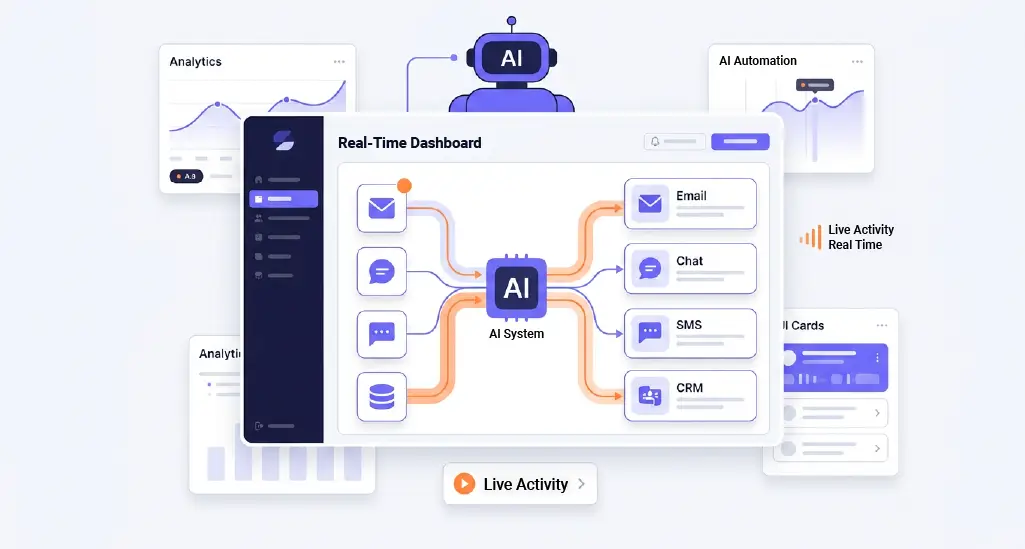
AI follow-up systems for sales are intelligent automation tools that personalize customer communication based on behavior, engagement signals, timing, and buying intent. Unlike traditional drip campaigns that follow fixed schedules, AI-powered follow-ups adapt dynamically across email, chat, SMS, and CRM platforms to create more relevant customer interactions.
The original purpose of automated follow-ups was simple: consistency.
Businesses wanted a way to ensure leads were not forgotten. Drip campaigns solved that problem efficiently. Once someone entered a CRM, they could automatically receive scheduled emails over several days or weeks.
In theory, it sounded ideal.
In practice, it created a new problem.
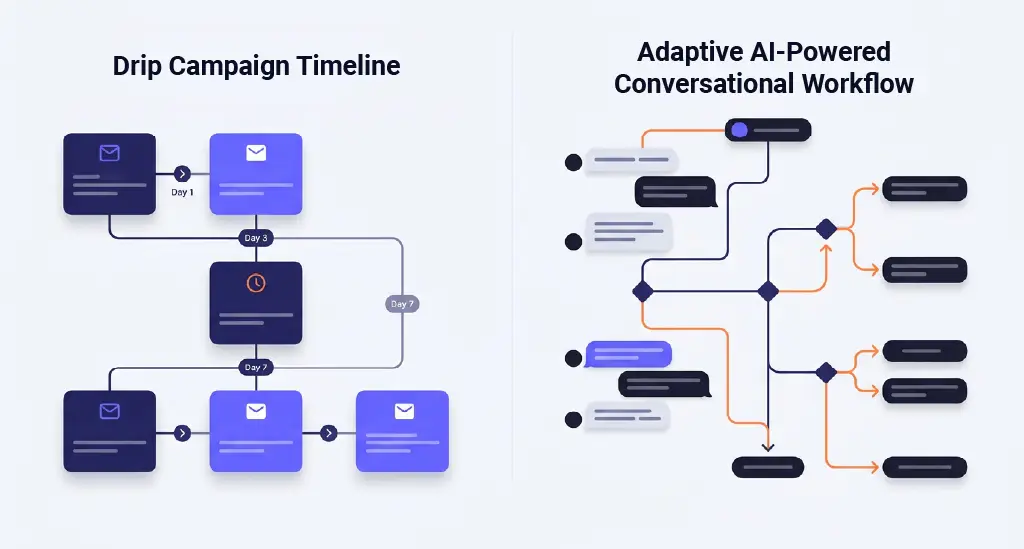
Most traditional sequences operate on fixed timelines rather than actual customer behavior. A prospect who opens every email receives the same sequence as someone who ignored all previous communication. A lead who asked detailed pricing questions may still get generic educational content days later because the workflow never adapted to intent.
This disconnect is why so many follow-up systems now feel outdated.
Customers do not move through buying journeys in straight lines anymore.
They research independently.
Pause conversations unexpectedly.
Switch devices.
Return weeks later.
Engage across multiple channels simultaneously.
Static workflows cannot keep up with that complexity.
And as buyers become more selective with their attention, generic outreach becomes easier to dismiss.
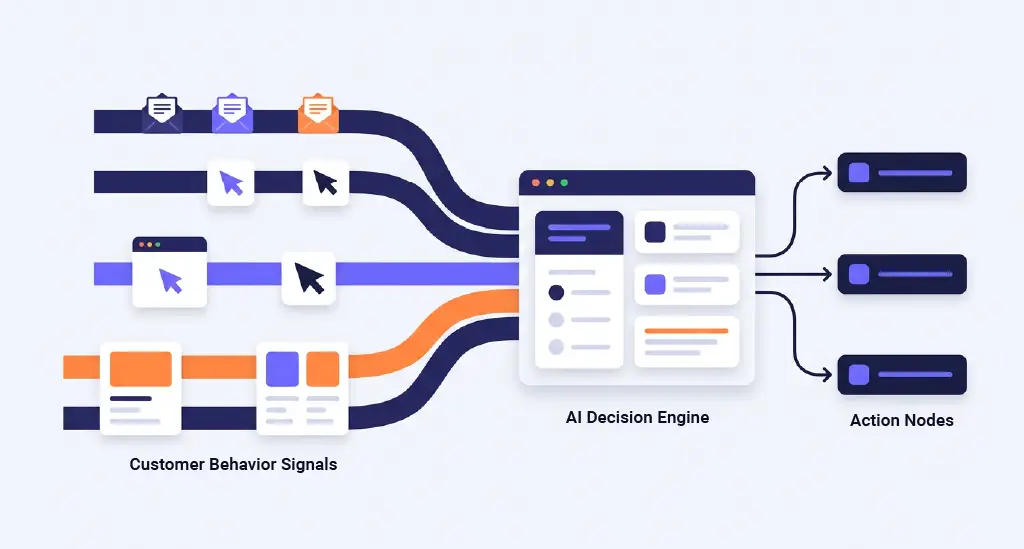
The biggest difference between traditional automation and modern AI-powered follow-ups is responsiveness.
Old systems followed schedules.
AI systems follow signals.
That distinction changes everything.
A modern smart follow up system does not simply send prewritten messages every three days. Instead, it evaluates behavioral patterns continuously.
Did the lead revisit the pricing page late at night?
Did they click a product comparison link?
Did they open previous emails but ignore the CTA?
Did they stop engaging after receiving technical documentation?
These signals matter because they reveal intent far more accurately than fixed timelines ever could.
An AI-driven system can adjust messaging based on those behaviors automatically. Instead of sending another generic “checking in” email, it can trigger contextually relevant communication aligned with the prospect’s current stage in the journey.
That makes the interaction feel less like automation and more like an actual conversation.
Also read: Is Live Chat a Real Person? AI Chat vs Live Chat Agents Compared
Key benefits include:
Modern customers expect personalization now, even when they know automation exists.
That expectation is shaping the future of sales communication.
People no longer judge businesses solely on product quality or pricing. They judge responsiveness, timing, relevance, and overall experience. Follow-ups are part of that experience.
A prospect researching CRM software in 2026 is likely evaluating several vendors simultaneously. If one company sends repetitive, generic emails while another delivers context-aware communication tailored to their actions, the difference becomes immediately noticeable.
The second company feels attentive.
More organized.
More modern.
More trustworthy.
And trust matters enormously during the follow-up stage because this is often where prospects decide whether a company truly understands their needs.
AI helps businesses maintain that relevance at scale.
Not by sounding robotic faster, but by creating smarter continuity between conversations.
Ironically, the best automation often feels the least automated.
That is because intelligent systems focus less on blasting messages and more on understanding timing and context.
Consider a SaaS company offering project management software.
A lead signs up for a demo but never books a meeting. In a traditional sequence, they might receive five templated emails over two weeks urging them to “schedule a call.”
An AI-powered system behaves differently.
It notices the prospect spent time reviewing integration documentation and team collaboration features. Instead of pushing another demo reminder, the follow-up shifts naturally toward solving implementation concerns.
The messaging evolves based on interest signals.
That subtle shift matters because buyers respond better when communication reflects where they actually are psychologically.
This is one reason the best AI follow up tools for leads are increasingly centered around behavioral intelligence rather than simple scheduling automation.
The future of follow-ups is not about sending more messages.
It is about sending better-timed, more relevant ones.
Also read: Marketing to Sales Handoff: Where Leads Drop Off
Most lost leads are not lost because businesses lacked a product-market fit.
They are lost because momentum disappeared.
The follow-up came too late.
The response felt generic.
The prospect forgot why they were interested in the first place.
Timing has always mattered in sales, but it matters even more today because customer attention spans are fragmented across endless digital channels.
AI systems help businesses preserve momentum by responding faster and more intelligently.
For example, an e-commerce brand running paid advertising campaigns during a seasonal promotion might receive thousands of inbound inquiries across chat, forms, email, and social media.
Without automation, response quality becomes inconsistent quickly.
Some leads receive immediate attention.
Others wait hours.
Some never receive meaningful follow-up at all.
AI-powered systems reduce that gap significantly.
Leads can be categorized automatically based on urgency, purchase intent, or engagement history. Follow-ups can adapt dynamically depending on where prospects drop off in the funnel. Sales reps can receive summaries and recommended actions instead of manually digging through fragmented data.
The result is not just efficiency.
It is continuity.
And continuity is what keeps conversations alive long enough to convert.
| Traditional Drip Campaigns | AI Follow-Up Systems |
|---|---|
| Fixed schedules | Behavior-driven timing |
| Generic messaging | Personalized communication |
| Email-focused | Multi-channel engagement |
| Static workflows | Adaptive automation |
| Limited context | Real-time behavioral insights |
There is a reason many businesses are seeing declining email engagement rates despite increasing automation.
Buyers have become conditioned to ignore predictable outreach.
Most drip campaigns follow recognizable patterns now.
A welcome email.
A case study.
A reminder.
A “last attempt.”
A breakup email pretending to sound emotional.
The structure has become so standardized that prospects often mentally filter these messages before even opening them.
AI-powered follow-ups disrupt that predictability because they can respond dynamically instead of sequentially.
Imagine a real estate agency using AI to nurture inbound buyer inquiries.
One lead repeatedly views luxury apartment listings in a specific area but ignores financing-related emails. Another engages heavily with neighborhood guides and school district content.
A traditional sequence would treat both leads similarly.
An AI-driven system would not.
It would tailor communication based on actual behavioral priorities.
That distinction creates relevance, and relevance is what modern follow-ups desperately need.
One of the biggest fears businesses have around AI is sounding artificial.
And honestly, that fear is justified.
Poor automation damages trust quickly.
Customers can instantly tell when messaging feels lazy, disconnected, or overly scripted.
The goal should never be replacing genuine communication entirely.
The goal is removing friction while preserving human relevance.
Businesses learning how to automate lead follow up with AI successfully usually follow the same principle: automate processes, not empathy.
AI works best when handling tasks humans struggle to scale consistently.
Tracking engagement patterns.
Managing response timing.
Categorizing intent signals.
Prioritizing follow-ups.
Surfacing contextual insights.
Meanwhile, human teams focus on relationship-building, problem-solving, and emotional nuance.
The strongest systems combine both.
That balance is what separates intelligent automation from cold automation.
Also read: From Lead Capture to Lead Confidence: How to Increase Conversion Rate with Trust
One major shift happening in 2026 is that follow-ups are no longer confined to email alone.
Customer journeys now move fluidly across channels.
A prospect may discover your brand through social media, submit a website form later, continue the conversation through chat, and finally book a call after receiving an SMS reminder.
Traditional sequences struggle with this fragmentation because most were designed around isolated communication channels.
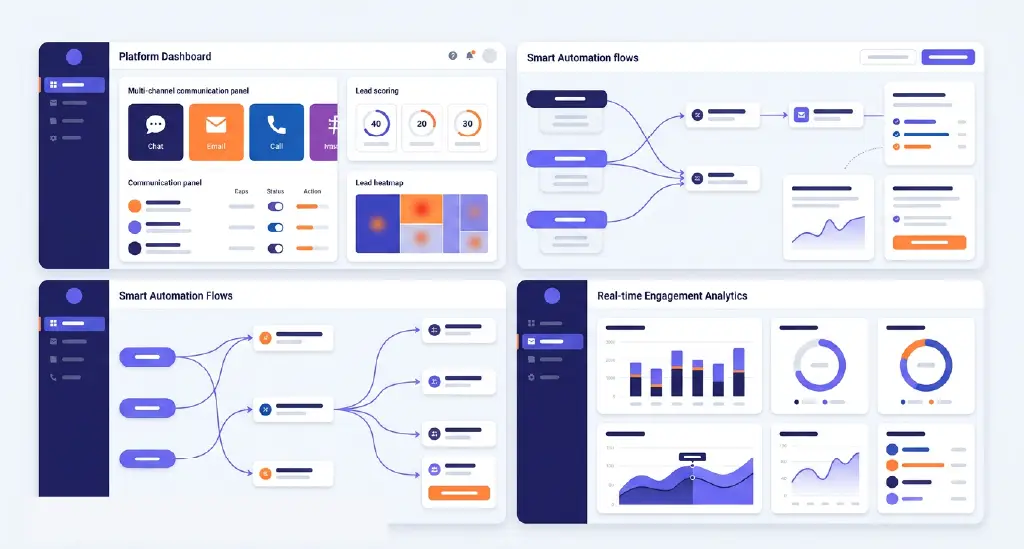
AI systems are different because they centralize behavioral data across touchpoints.
That means follow-ups become coordinated rather than disconnected.
A customer who already spoke with support does not receive redundant onboarding emails. A prospect actively engaging through chat can receive adjusted email pacing automatically. High-intent leads can trigger immediate human outreach instead of waiting inside generic workflows.
This orchestration creates smoother experiences for customers and clearer visibility for sales teams.
More importantly, it prevents prospects from feeling like they are interacting with separate departments instead of one cohesive brand.
There is a misconception that AI succeeds by removing human involvement completely.
In reality, the strongest sales organizations are using AI to improve human timing rather than eliminate human interaction.
That distinction matters enormously.
Sales still depends on trust.
People still buy emotionally before justifying logically.
Relationships still influence decisions.
AI simply helps businesses recognize the right moments to engage more effectively.
A sales rep contacting a prospect at precisely the right stage of consideration will always outperform random outreach timing.
AI helps identify those moments at scale.
That is why modern automated lead follow up systems are becoming less about automation itself and more about intelligence-driven coordination.
The future belongs to businesses that understand when technology should accelerate conversations and when humans should take over.
Also read: The Anatomy of a Winning Sales Conversation: What Top-Performing Teams Do Differently
AI follow-up systems for sales are tools that use automation, customer behavior, and engagement data to send more relevant follow-up messages at the right time.
Traditional drip campaigns follow fixed schedules. AI follow-ups adapt based on real customer actions, such as email clicks, website visits, chat activity, or CRM engagement.
AI follow-up systems are important because buyers expect faster, more personalized communication. They help sales teams avoid generic outreach and respond with better timing.
Yes. AI follow-ups can improve lead conversions by helping businesses prioritize high-intent leads, personalize messaging, and continue conversations before momentum is lost.
No. The best AI follow-up systems support sales reps by handling timing, lead insights, and repetitive tasks while humans focus on trust, relationships, and closing conversations.
AI follow-up systems can support email, SMS, live chat, CRM workflows, social media messages, and other customer communication channels.
The problem with old-school sales sequences is not that they automated follow-ups.
It is that they automated sameness.
Modern buyers expect more.
They expect businesses to recognize intent, respond quickly, communicate contextually, and create experiences that feel connected rather than transactional.
That is exactly why AI-powered follow-ups are outperforming traditional drip campaigns in 2026.
They adapt instead of repeating.
They respond instead of interrupting.
And they help businesses scale meaningful engagement without sacrificing personalization.
The companies growing fastest today are not necessarily sending more messages. They are building smarter systems that understand when, where, and how to continue conversations effectively.
That is where Blazeo helps modern sales teams stand out. From intelligent automation to adaptive customer engagement and AI-driven lead workflows, Blazeo enables businesses to build follow-up systems that feel timely, relevant, and genuinely human, even at scale.